
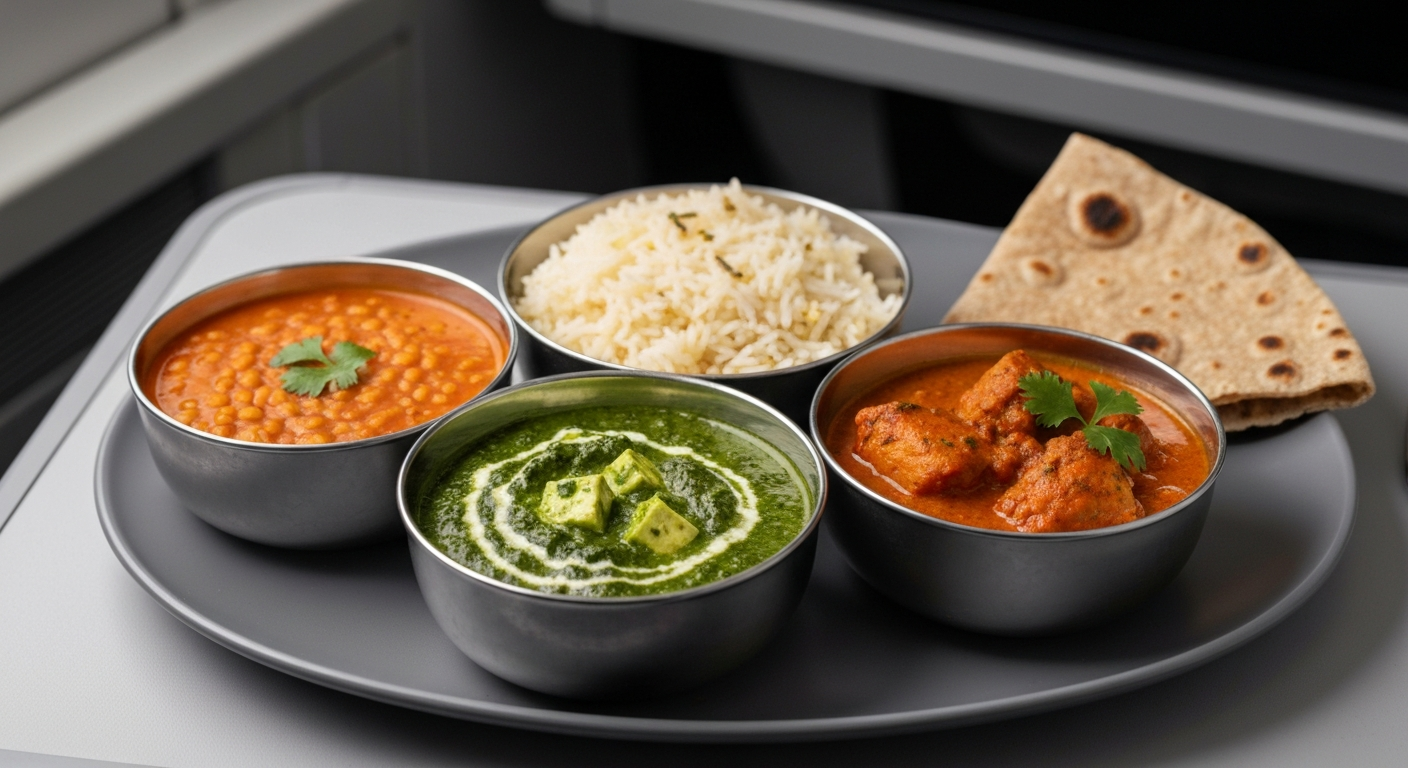
The global travel industry, encompassing airlines and cruise lines, faces an ever-evolving culinary landscape. Passengers today expect not just sustenance, but authentic, flavorful, and culturally appropriate meal options, even at 30,000 feet or in the middle of an ocean. Among these demands, the request for Indian cuisine, particularly special dietary Indian meals, has seen a significant surge. Meeting these diverse needs with speed, consistency, and authenticity is paramount, and achieving travel catering Indian dietary efficiency is a critical operational goal for any successful travel catering operation.
This article delves into the strategies and solutions that enable high-volume travel caterers to streamline the preparation and delivery of authentic Indian dietary meals. We'll explore how menu engineering, smart sourcing, and advanced culinary products can transform complex dietary requirements into efficient, satisfying service.
The Rising Demand for Authentic Indian Dietary Meals in Travel Catering
Modern travel demographics are incredibly diverse. With increasing international travel and a growing appreciation for global cuisines, Indian food has become a staple request. What complicates this demand for airlines and cruise lines is the array of dietary preferences and restrictions that often accompany it. Passengers frequently request:
- Vegetarian and Vegan: A large segment of Indian cuisine is naturally vegetarian, but ensuring strict vegan options (no dairy, no ghee) requires careful planning.
- Halal: For Muslim travelers, Halal-certified meat and poultry, prepared according to Islamic dietary laws, is non-negotiable.
- Gluten-Free: A growing number of travelers require gluten-free options, necessitating alternatives to traditional wheat-based breads and thickeners.
- Dairy-Free: Beyond strict veganism, many individuals avoid dairy due to allergies or intolerance.
- Jain: A highly specific dietary requirement that excludes root vegetables (onions, garlic, potatoes), certain fruits, and all animal products.
Simply offering a generic "Indian meal" is no longer sufficient. Travel caterers must provide authentic flavors while meticulously adhering to these specific dietary guidelines, often under immense time and space constraints.
Core Challenges in Delivering Indian Dietary Meals at Scale
The complexity of Indian cuisine, combined with the unique operational environment of travel catering, presents several significant hurdles:
1. Intricate Culinary Processes and Ingredients
Authentic Indian cooking is often labor-intensive, involving numerous spices, precise tempering, slow-cooked gravies, and fresh ingredients. Replicating this at scale, especially for diverse dietary needs, can be a logistical nightmare. For example, preparing a traditional Dal Makhani from scratch takes hours, and adjusting it for a dairy-free requirement adds another layer of complexity.
2. Space and Equipment Limitations
Airline galleys and cruise ship kitchens, while highly efficient, are fundamentally space-constrained. This limits the amount of fresh prep that can occur and dictates a reliance on efficient, pre-prepared components that minimize on-board cooking.
3. Time-Sensitive Operations
Turnaround times for aircraft are extremely tight, and meal service windows on cruises are equally demanding. There is little margin for error or extended cooking times, making speed and consistency paramount.
4. Consistency and Quality Control
Delivering the same high standard of flavor and texture across thousands of meals, prepared by different chefs and re-thermed under varied conditions, is a constant challenge. This is particularly true for delicate Indian flavors.
5. Stringent Food Safety and Compliance
Travel catering operates under some of the strictest food safety regulations globally. Preventing cross-contamination, maintaining temperature controls, and ensuring ingredient traceability for dietary meals is non-negotiable. Certifications like FSSAI, US FDA, ISO, Halal, HACCP, and GMP are essential benchmarks for any food supplier in this sector.
Strategies for Achieving Travel Catering Indian Dietary Efficiency
Overcoming these challenges requires a multi-faceted approach, integrating smart menu design, advanced culinary products, and optimized workflows.
I. Strategic Menu Engineering for Versatility
Designing a menu with dietary flexibility in mind is the first step towards efficiency. This involves:
- Modular Components: Develop base gravies and sauces that can be adapted with different proteins (chicken, lamb, paneer, vegetables) or legumes. A well-crafted tomato-onion base can be the foundation for numerous dishes.
- Naturally Compliant Dishes: Prioritize Indian dishes that are inherently vegan, gluten-free, or dairy-free, reducing the need for extensive modification. For instance, many lentil dals are naturally gluten-free and can be made vegan.
- Smart Protein Pairing: Offer a core set of proteins (e.g., chicken, paneer, mixed vegetables) that can be incorporated into various gravies, ensuring a diverse offering without an overwhelming number of unique preparations.
II. Leveraging High-Quality Pre-Prepared Indian Bases and Components
This is arguably the most impactful strategy for travel catering Indian dietary efficiency. Professional-grade pre-prepared Indian gravies, pastes, and sauces offer a transformative solution:
- Reduced Prep Time & Labor: Eliminates hours of chopping, grinding, and slow-cooking, allowing kitchen staff to focus on final assembly and presentation.
- Consistent Authenticity: Manufactured under strict quality controls, these bases ensure consistent flavor, texture, and aroma across all batches, regardless of the chef.
- Dietary Compliance Built-In: Reputable suppliers offer bases specifically designed to be vegan, gluten-free, or Halal, simplifying ingredient management and reducing cross-contamination risks. For example, a certified Halal Korma base ensures compliance without complex on-site verification.
- Enhanced Food Safety: Products manufactured in certified facilities adhere to rigorous standards (FSSAI, US FDA, ISO, Halal, HACCP, GMP), providing a robust foundation for food safety in travel catering.
- Customization at the Point of Service: While the base is consistent, chefs retain the flexibility to add fresh garnishes, adjust spice levels slightly, or incorporate specific proteins to meet individual passenger preferences.
For example, a high-quality Makhani gravy can be swiftly transformed into Butter Chicken, Paneer Butter Masala, or a rich vegetable curry, all with consistent flavor and minimal on-board preparation.
III. Smart Sourcing and Inventory Management
Efficient operations depend on a reliable supply chain. For Indian dietary meals, this means:
- Trusted Suppliers: Partner with suppliers that specialize in chef-grade Indian ingredients and understand the unique demands of B2B food service. Look for transparent ingredient lists and clear dietary classifications.
- Strategic Stocking: Given the lead times for specialized ingredients, a balance between just-in-time delivery and strategic stocking of essential pre-prepared bases and bulk spices is crucial. Knowing your supplier's shipping capabilities – for example, 2-day delivery for in-stock items from a US or local-country warehouse, or a 35-60 day lead time for out-of-stock items – allows for precise planning.
- Minimizing Waste: Utilizing versatile bases and accurate demand forecasting reduces spoilage and excess inventory, contributing to overall operational efficiency.
IV. Optimized Kitchen Workflow and Staff Training
Even with the best ingredients, an inefficient kitchen workflow can negate all benefits. Focus on:
- Dedicated Prep Zones: Where feasible, establish separate areas for preparing dietary meals to prevent cross-contamination, especially for allergens or Halal requirements.
- Standard Operating Procedures (SOPs): Detailed SOPs for each dietary meal preparation ensure consistency and compliance, reducing errors and training time.
- Cross-Training: Equip staff with the knowledge to handle various dietary requests, including understanding common Indian ingredients and their dietary implications.
- Efficient Packaging and Labeling: Clear, unambiguous labeling of dietary meals is critical for seamless service and passenger confidence.
V. Technology and Data Utilization
Leveraging technology can further enhance efficiency:
- Demand Forecasting: Utilize historical data and booking trends to accurately predict demand for specific dietary Indian meals, minimizing overproduction or shortages.
- Digital Order Management: Streamline the process of receiving and fulfilling dietary requests from cabin crew or cruise staff.
Partnering for Success: The MITRA Advantage
At ODOD LLC, our MITRA brand specializes in providing chef-grade Indian gravies, pastes, sauces, rice, and spices specifically designed for professional kitchens, including high-volume travel catering operations. Our products are manufactured to stringent quality standards, ensuring both authenticity and operational efficiency.
We understand the critical need for travel catering Indian dietary efficiency. Our range of pre-prepared bases significantly reduces preparation time, labor costs, and the complexity of managing diverse dietary needs. Our products are manufactured under certifications including FSSAI, US FDA, ISO, Halal, HACCP, and GMP, providing the assurance of food safety and compliance essential for airline and cruise line catering.
With a minimum order quantity (MOQ) of 50 kg, our solutions are tailored for B2B scale. We pride ourselves on efficient logistics; if a product is in stock in our US (Houston) or local-country warehouse, it ships in 2 days. For items not in stock, the lead time is 35-60 days, with immediate notification of any delays. We currently serve businesses in the USA, Canada, UK, UAE, Australia, Germany, Italy, India, France, Ireland, Switzerland, and Netherlands, with our network continuously expanding.
Conclusion
Meeting the escalating demand for authentic and diverse Indian dietary meals in travel catering doesn't have to be a daunting task. By strategically implementing menu engineering, leveraging high-quality pre-prepared bases, optimizing workflows, and partnering with reliable suppliers, airlines and cruise lines can achieve significant travel catering Indian dietary efficiency. This not only streamlines operations and reduces costs but, most importantly, enhances the passenger experience by delivering delicious, safe, and culturally relevant meals consistently. Elevate your culinary offerings and operational prowess by embracing smart solutions for Indian dietary meal service.
Ready to enhance your travel catering Indian dietary efficiency? Explore how MITRA's chef-grade products can transform your kitchen operations. Inquire today via ododgroup.com to request a quote or sample.