
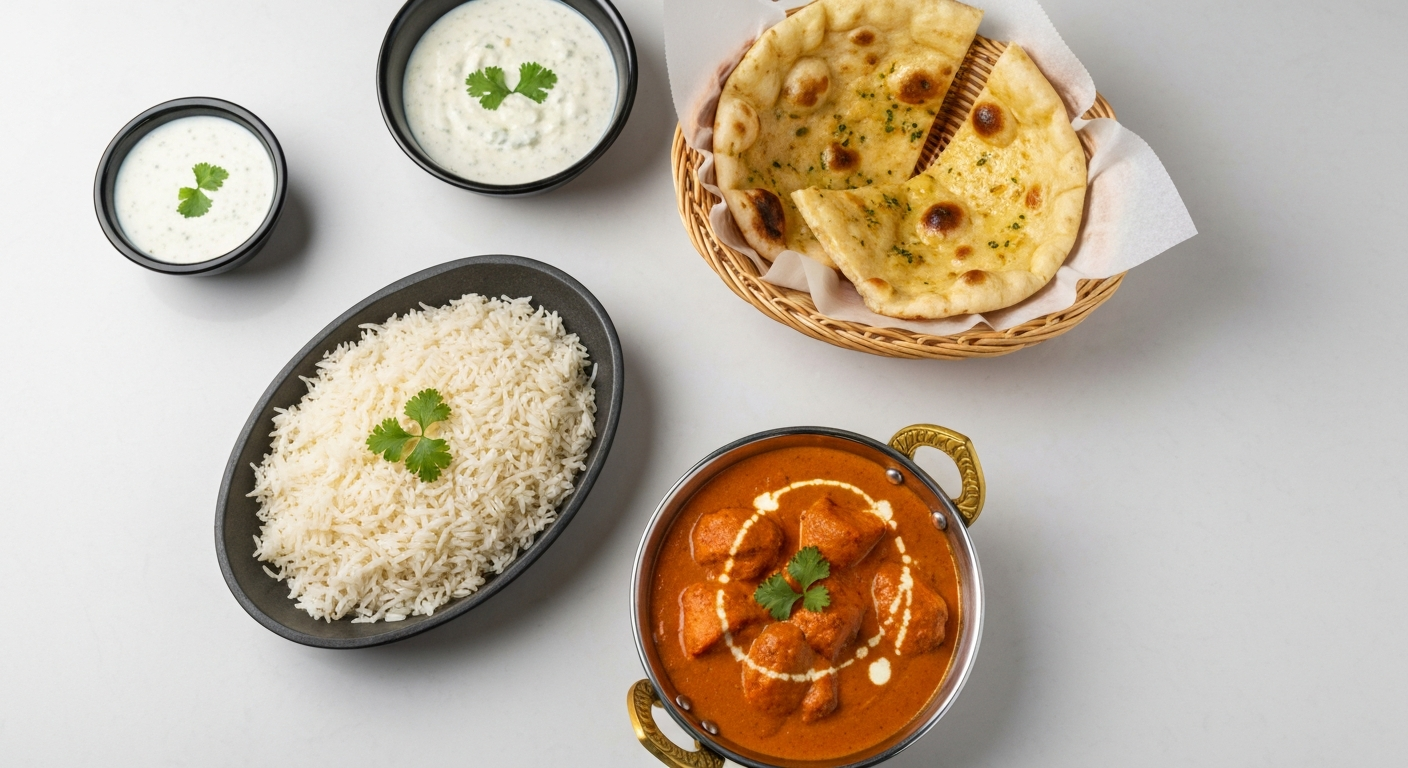
In the highly competitive and rapidly evolving landscape of ghost kitchens, agility and data-driven decision-making are paramount. Success hinges not just on delicious food, but on the ability to understand and swiftly respond to customer preferences. For ghost kitchens specializing in Indian cuisine, this means moving beyond traditional menu development and embracing techniques like rapid A/B testing. This approach allows operators to refine their offerings, optimize profitability, and secure market dominance by making informed choices about every aspect of their ghost kitchen Indian menu A/B testing strategy.
The Imperative of A/B Testing for Ghost Kitchens
Ghost kitchens, by their nature, are digital-first operations. They gather vast amounts of data—from order patterns and delivery times to customer ratings and review comments. Yet, many still rely on intuition or anecdotal evidence for menu changes. A/B testing provides a structured, scientific method to evaluate variations and identify what truly resonates with your target audience.
Moving Beyond Guesswork
Traditional restaurant kitchens often iterate slowly, making changes based on chef preference or a few customer comments. For a ghost kitchen, this slow pace is a liability. A/B testing allows for simultaneous, controlled experiments, providing clear, quantifiable data on which version of a dish, description, or pricing strategy performs better. This data-driven approach minimizes risk and maximizes the chances of success for new or modified menu items.
Responding to Diverse Tastes in Indian Cuisine
Indian cuisine is incredibly diverse, with regional variations, spice levels, and ingredient preferences that can vary significantly even within a single city. What's popular in one neighborhood might not be in another. A/B testing empowers ghost kitchens to:
- Pinpoint regional preferences: Test a Goan Fish Curry against a Bengali Fish Curry to see which gains traction in a specific delivery zone.
- Gauge spice tolerance: Offer a 'mild' and a 'medium' version of a popular dish like Chicken Tikka Masala and measure sales and feedback for each.
- Understand ingredient impact: Test a Paneer dish made with house-made paneer versus a high-quality pre-made option to assess customer perception and operational efficiency.
Minimizing Waste and Maximizing Profitability
Every ingredient purchased and every dish prepared represents an investment. Unpopular menu items lead to food waste, lost labor, and reduced profitability. A/B testing helps identify winning dishes quickly, allowing kitchens to scale up successful items and discontinue underperforming ones before they become significant liabilities. This directly contributes to better inventory management and a leaner operation.
Fundamentals of A/B Testing for Food Service
A/B testing, also known as split testing, involves comparing two versions of something (A and B) to see which one performs better. In the context of a ghost kitchen, this means showing different versions of a dish or menu element to different segments of your customer base and measuring their response.
What to Test on Your Indian Menu
Virtually any variable can be tested, but focus on elements with a direct impact on customer perception and sales:
- Dish Variations: Different recipes, ingredient ratios, cooking methods, or portion sizes for the same base dish (e.g., two versions of a Chicken Korma).
- Descriptions: How a dish is named, its ingredients highlighted, or its origin explained. Try a descriptive name versus a simple one (e.g., "Slow-Cooked Punjabi Butter Chicken" vs. "Butter Chicken").
- Pricing: Testing different price points for popular items or combos to find the elasticity of demand.
- Bundles and Combos: Offering a Thali platter versus individual dishes, or a family meal deal with different combinations.
- Promotions: Different discount percentages, free add-ons, or minimum order thresholds.
- Featured Items: The placement or highlighting of certain dishes on your digital menu interface.
Setting Up a Test: Control vs. Variation
- Define your hypothesis: What do you expect to happen? (e.g., "Adding 'Authentic' to the Biryani description will increase sales by 10%.")
- Isolate one variable: Only change one thing between your control (A) and variation (B). If you change the recipe and the description, you won't know which change caused the outcome.
- Segment your audience: Use your delivery platform or POS system to show version A to one group of customers and version B to another. Ensure both groups are comparable in size and demographics.
- Determine test duration and sample size: Run the test long enough to gather statistically significant data. This might be a few days or weeks, depending on your order volume.
Key Metrics for Success
- Sales Volume: The most straightforward metric. Which version sold more units?
- Conversion Rate: What percentage of customers who viewed the item ultimately ordered it?
- Average Order Value (AOV): Did the variation lead to larger overall orders?
- Customer Feedback: Look at ratings, reviews, and direct comments related to the tested item.
- Repeat Orders: Did customers who ordered the variation return sooner or more often?
- Profit Margin: Account for ingredient costs and labor for each version.
Applying A/B Testing to Your Ghost Kitchen Indian Menu
Here's how to specifically apply these principles to the rich and varied world of Indian cuisine.
1. Dish Variations: The Heart of Culinary Experimentation
- Spice Levels: Offer a 'classic' (medium) Butter Chicken and a 'mild' version. Track which sells more, especially during weekdays vs. weekends, or in different delivery zones.
- Regional Specificity: For a limited time, offer a "South Indian Special" Lamb Rogan Josh alongside your standard North Indian version. Compare performance.
- Vegetarian Alternatives: Test a Jackfruit Biryani against a Mushroom Biryani for your vegan/vegetarian demographic.
- Garnish & Presentation: Experiment with different garnishes or packaging for a signature dish like Daal Makhani to see if visual appeal impacts ratings.
2. Menu Descriptions: Crafting the Story
Effective descriptions can significantly impact perceived value and desirability. A/B test:
- Authenticity Claims: "Grandma's Secret Recipe Chicken Curry" vs. "Traditional Chicken Curry."
- Ingredient Highlights: "Creamy Tomato-Based Sauce with Fenugreek" vs. "Rich, Mild Butter Chicken Sauce."
- Cultural Context: Adding a brief note about the dish's origin (e.g., "A fiery dish from the streets of Mumbai") for a Vada Pav.
- Dietary Information: Clearly marking items as 'gluten-free' or 'dairy-free' can open them up to new customer segments.
3. Pricing Strategies and Bundles
- Tiered Pricing: Test a slight price increase on a top-selling item like Chicken Tikka to see if demand is elastic.
- Combo Deals: Offer a "Curry & Naan Combo" at a bundled price versus individual items. Experiment with different side dish pairings (e.g., Basmati Rice vs. Garlic Naan).
- Family Packs: Design a "Feast for Four" Indian meal kit and compare its sales against ordering four individual entrees.
The MITRA Advantage in Agile Menu Development
Successful A/B testing relies heavily on consistency. When you're testing a new recipe or a slight variation, you need to ensure that the core components remain identical across all batches. This is where MITRA products offer a significant advantage for ghost kitchens.
Unwavering Consistency for Reliable Data
Our chef-grade Indian gravies, pastes, and sauces are manufactured to rigorous quality standards, ensuring a consistent flavor profile and texture every single time. This consistency is critical for A/B testing:
- Eliminates Variables: You can confidently test a new spice blend or a different cooking method without worrying that variations in the base gravy will skew your results.
- Standardized Product: Every batch of Butter Chicken gravy, for example, will taste the same, allowing you to accurately measure customer response to your specific test variable.
- Scalability: Once an A/B test identifies a winning dish, scaling up production is seamless because the consistent quality of our products means the successful version can be replicated reliably.
Operational Efficiency and Reduced Risk
By leveraging ready-to-use gravies and pastes, ghost kitchens can:
- Reduce Prep Time: Free up valuable labor hours that can be reallocated to menu innovation and data analysis.
- Minimize Food Waste: Our products have a longer shelf life and reduce the need for extensive raw ingredient prep, cutting down on spoilage.
- Lower Labor Costs: Less skilled labor is required for consistent Indian dish preparation, allowing chefs to focus on menu creativity and quality control.
- Maintain Quality Under Pressure: Even during peak hours, the consistent quality of our products ensures that every dish prepared meets your high standards, regardless of the chef on duty.
Our products are manufactured to stringent international standards, holding certifications like FSSAI, US FDA, ISO, Halal, HACCP, and GMP. This commitment to quality ensures that your base ingredients are always reliable, forming a solid foundation for any culinary experimentation.
Operationalizing A/B Testing in Your Ghost Kitchen
Integrating A/B testing into your daily operations requires a systematic approach.
Technology Integration
- POS System: Ensure your point-of-sale system can track individual item sales, potentially even by customer segment or specific menu version.
- Delivery Platforms: Work with your delivery platform partners to understand their capabilities for displaying different menu versions to different user groups. Some platforms offer built-in A/B testing tools.
- Feedback Mechanisms: Actively solicit customer feedback through post-order surveys or by monitoring review platforms. Look for patterns related to your tested items.
Staff Training and Buy-In
Educate your kitchen staff and management on the importance of A/B testing. They need to understand the process, ensure accurate preparation of both control and variation dishes, and be vigilant about consistency. Highlight how this process ultimately leads to a more efficient and profitable kitchen, benefiting everyone.
Supply Chain Management for Agility
Reliable supply is crucial. When you identify a winning dish through A/B testing, you need to be able to procure the necessary ingredients quickly. Our robust supply chain ensures that if a product is in stock in our US (Houston) or local-country warehouse, it ships in 2 days. For items not immediately in stock, the lead time is 35-60 days, and customers are notified promptly of any delays. We currently serve kitchens in the USA, Canada, UK, UAE, Australia, Germany, Italy, India, France, Ireland, Switzerland, and the Netherlands, with our network continuously expanding.
Analyzing Results and Iterating
Once a test concludes, meticulously analyze the data. Was your hypothesis proven? What did the customer feedback reveal? Based on your findings, make a decision:
- Implement the winner: If a variation significantly outperformed the control, make it the standard.
- Iterate: If results were inconclusive, or if there's room for further improvement, design a new test based on what you learned.
- Discard the loser: Remove underperforming items or concepts from your menu to streamline operations and reduce waste.
Conclusion
For ghost kitchens specializing in Indian cuisine, mastering ghost kitchen Indian menu A/B testing is not just a competitive advantage—it's a necessity for sustained growth and profitability. By systematically testing menu variations, descriptions, and pricing strategies, you can make data-driven decisions that resonate directly with your customers' evolving tastes. Leveraging consistent, chef-grade ingredients like MITRA gravies and pastes further streamlines this process, ensuring that your culinary experiments are reliable and your successful dishes can be scaled efficiently. Embrace agility, optimize your menu with precision, and solidify your position in the dynamic ghost kitchen market.
Ready to optimize your Indian menu with unparalleled consistency and efficiency? Inquire about our range of chef-grade Indian gravies, pastes, sauces, and spices. We offer a 50 kg minimum order quantity (MOQ) to support your ghost kitchen's needs. Visit ododgroup.com to request a quote or sample today.