
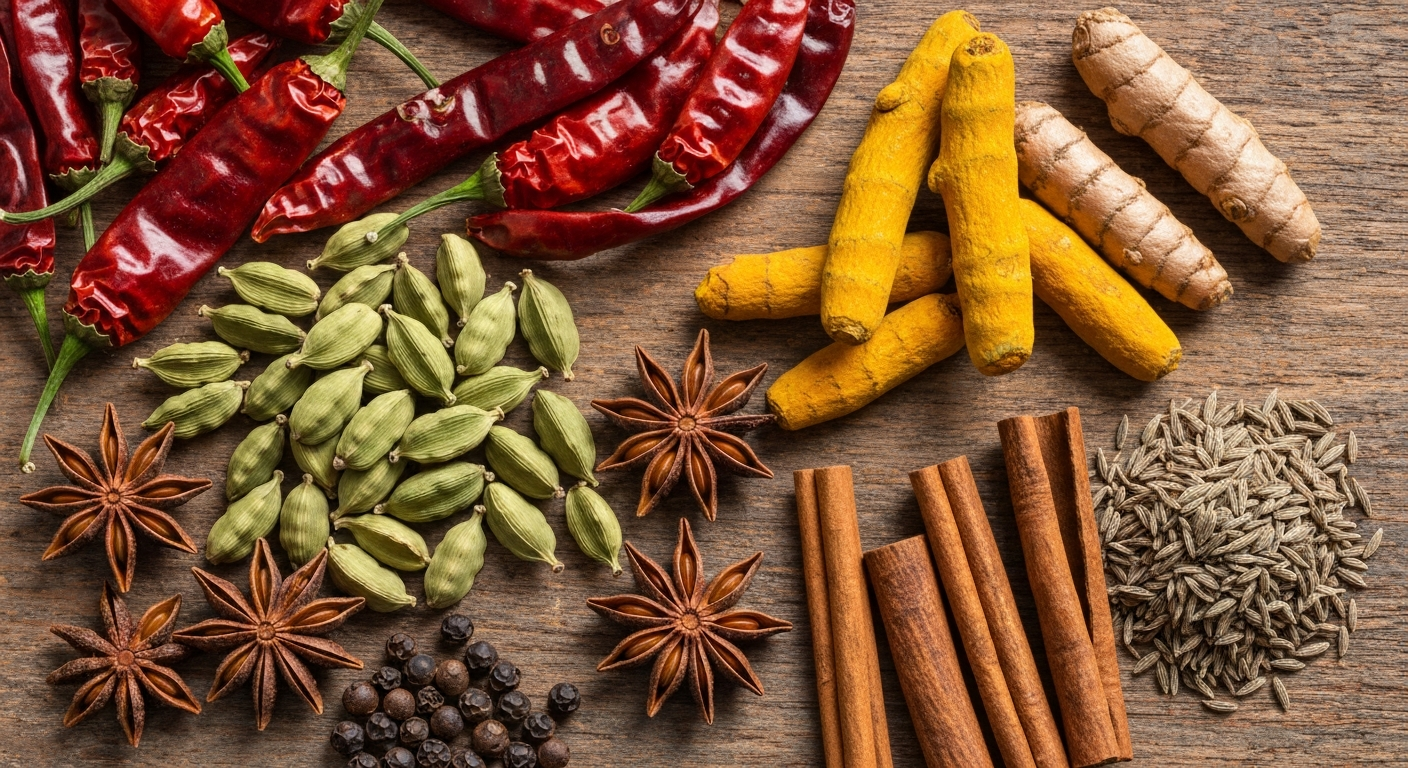
As a foodservice distributor, you frequently encounter clients who prioritize upfront cost savings when sourcing ingredients. While bulk pricing often seems appealing, it frequently overshadows the long-term profitability and operational advantages that premium ingredients offer. This is particularly true for Indian spices, where quality directly impacts flavor, consistency, and ultimately, a restaurant's reputation and bottom line. Understanding and articulating the true foodservice distributor Indian spice ROI is crucial for guiding your clients towards more strategic purchasing decisions.
This article provides a framework for distributors to demonstrate how investing in high-quality Indian spices translates into tangible benefits, moving beyond simple per-pound cost to reveal a deeper, more sustainable path to success for their culinary operations.
The Hidden Costs of Compromising on Spice Quality
Many chefs and operators initially view spices as a commodity, overlooking the significant impact their quality has on a dish. Low-grade spices might offer a lower price point, but they often carry hidden costs that erode profitability and customer satisfaction:
Inconsistent Flavor and Aroma
Inferior spices often lack the vibrant aroma and concentrated flavor profile of their premium counterparts. This inconsistency forces chefs to compensate by using larger quantities, leading to:
- Increased usage rates: What seems cheaper per pound becomes more expensive per serving when you need twice as much to achieve the desired taste.
- Recipe variability: Dishes taste different from batch to batch, frustrating chefs and diners alike.
- Wasted ingredients: Attempts to correct flavor often involve adding more spices, or worse, discarding and re-making dishes.
Shorter Shelf Life and Storage Issues
Poorly processed or stored spices degrade faster, losing potency and developing off-flavors. This results in:
- Spoilage and waste: Expired or compromised spices must be discarded, negating any initial cost savings.
- Inventory management challenges: More frequent ordering or higher stock rotation is needed to maintain freshness.
Reputational Damage and Customer Dissatisfaction
Inconsistent or bland dishes directly impact a restaurant's reputation. Diners seeking authentic Indian cuisine are discerning; they will notice a lack of depth or vibrancy in flavors. This can lead to:
- Negative reviews: Online platforms amplify poor dining experiences.
- Decreased repeat business: Customers seek out establishments that consistently deliver on quality.
- Loss of competitive edge: In a crowded market, culinary excellence is a key differentiator.
Defining "Premium" in Indian Spices
To articulate the ROI, distributors must first help clients understand what defines a premium Indian spice. It's not just about a higher price tag; it's about a commitment to quality at every stage:
- Source Integrity: Premium spices are often sourced from specific regions renowned for optimal growing conditions, ensuring a unique terroir and robust flavor profile. This means working with suppliers who understand the nuances of regional varieties, like Alleppey turmeric or Tellicherry black pepper.
- Optimal Harvesting and Processing: Careful harvesting at peak ripeness, followed by meticulous cleaning, drying, and grinding processes, preserves the spice's essential oils and volatile compounds. This minimizes adulteration and maximizes flavor retention.
- Aroma and Flavor Intensity: A true premium spice will have a potent, complex aroma and a deep, nuanced flavor that is immediately discernible. Less is often more with high-quality spices, as their intensity translates to impactful dishes with smaller quantities.
- Certifications and Quality Assurance: Reputable suppliers adhere to stringent quality standards. MITRA products, for example, are produced under certifications such as FSSAI, US FDA, ISO, Halal, HACCP, and GMP. These certifications provide independent assurance of product safety, quality, and ethical production practices, which is paramount for foodservice operations.
Tangible ROI Metrics for Premium Spices
Now, let's explore how distributors can quantify the foodservice distributor Indian spice ROI for their clients, focusing on clear, measurable benefits:
1. Enhanced Flavor and Authenticity: Driving Customer Loyalty and Premium Pricing
- Customer Satisfaction and Loyalty: Superior flavor directly translates to happier customers. When a dish consistently delivers authentic, vibrant tastes, diners are more likely to return, recommend the restaurant, and leave positive reviews. This forms the bedrock of sustainable business growth.
- Justifying Premium Pricing: Restaurants specializing in authentic Indian cuisine can command higher prices when the quality of their ingredients justifies it. Premium spices enable chefs to create dishes that taste genuinely exceptional, allowing for better margins without alienating customers. The perceived value increases significantly.
- Reduced Ingredient Waste (Beyond Spice): When a dish's core flavor profile is robust and balanced from the outset, there's less need to overcompensate with other expensive ingredients like butter, cream, or additional aromatics to mask deficiencies. This leads to savings across the ingredient list.
2. Operational Efficiency: Streamlining Kitchen Workflows
- Reduced Usage Rates: This is perhaps the most direct financial ROI. Because premium spices are more potent and flavorful, chefs need to use significantly less per serving to achieve the desired taste. This extends the life of a spice inventory, effectively lowering the cost per serving even if the cost per pound is higher. A 50 kg minimum order quantity (MOQ) allows clients to stock efficiently while benefiting from bulk pricing on high-quality goods.
- Consistent Results, Less Rework: High-quality spices provide a predictable flavor foundation. Chefs spend less time adjusting recipes, tasting, and re-tasting, reducing labor costs and minimizing errors. This consistency is invaluable in high-volume kitchens, cloud kitchens, and catering operations where uniformity is critical.
- Improved Kitchen Morale: Chefs take pride in the quality of their ingredients. Providing premium spices empowers them to create their best work, reducing frustration associated with inconsistent or bland ingredients and fostering a more positive and productive kitchen environment.
3. Brand Reputation and Differentiation: Standing Out in a Competitive Market
- Unique Selling Proposition: In a crowded foodservice landscape, using premium, authentic Indian spices can be a powerful differentiator. It allows a restaurant to market itself on quality and authenticity, attracting discerning diners who seek genuine culinary experiences.
- Word-of-Mouth Marketing: Exceptional food is the most effective form of advertising. When customers are delighted by the flavors, they become organic promoters, sharing their experiences with friends, family, and online communities.
- Elevated Menu Positioning: The ability to highlight specific, high-quality spices on a menu (e.g., "saffron-infused biryani," "cardamom-scented korma") adds prestige and appeal, reinforcing the restaurant's commitment to quality.
Strategies for Distributors to Educate Clients on ROI
Distributors play a pivotal role in shifting client perception from cost-per-pound to value-per-dish. Here are effective strategies:
- Sensory Demonstrations: Arrange side-by-side comparative tastings. Prepare two identical dishes, one with a client's current bulk spice and one with a premium MITRA spice. Let the chefs experience the difference in aroma, depth of flavor, and complexity firsthand. The proof is in the palate.
- Cost-in-Use Analysis: Develop a simple spreadsheet or calculator. Show how, even with a higher per-pound cost, the reduced usage of premium spices leads to a lower cost per serving. For example, if a client uses 20g of low-grade cumin per dish but only 10g of premium cumin to achieve superior flavor, the premium option often proves more economical in practice.
- Menu Development Support: Collaborate with clients to identify how premium spices can elevate existing menu items or inspire new, high-margin creations. Suggest signature dishes that highlight the unique qualities of specific spices, giving the restaurant a competitive edge.
- Highlight Certifications: Emphasize the peace of mind and compliance that come with products manufactured under FSSAI, US FDA, ISO, Halal, HACCP, and GMP standards. For professional kitchens, these certifications are not just labels; they represent a commitment to safety, quality, and international best practices.
- Discuss Inventory Optimization: Explain how the higher potency of premium spices can lead to more precise inventory management. With less needed per dish, clients can potentially reduce the frequency of orders or the total volume held, freeing up working capital and storage space.
Partnering for Success: The MITRA Advantage
At ODOD LLC, under the MITRA brand, we understand the critical role distributors play in connecting professional kitchens with the highest quality ingredients. Our range of chef-grade Indian gravies, pastes, sauces, rice, and spices are manufactured to meet the rigorous demands of foodservice operations, ensuring consistency, authenticity, and superior flavor.
We empower our distributor partners to confidently present the true foodservice distributor Indian spice ROI to their clients through:
- Uncompromising Quality: Our products are manufactured to stringent standards, ensuring every batch delivers consistent aroma, flavor, and texture. This reliability is key for chefs maintaining culinary excellence.
- Comprehensive Certifications: All MITRA products adhere to FSSAI, US FDA, ISO, Halal, HACCP, and GMP standards, providing your clients with the assurance of safety and quality they demand.
- Efficient Supply Chain: We support our distributors with a robust logistics network. If a product is in stock in our US (Houston) or local-country warehouse, it ships in 2 days. For items not immediately in stock, the lead time is typically 35-60 days, and customers are notified immediately of any delays. Our minimum order quantity (MOQ) of 50 kg is designed to efficiently serve professional kitchens and cater to distributor needs.
- Global Reach: ODOD LLC currently serves a growing list of countries, including the USA, Canada, UK, UAE, Australia, Germany, Italy, India, France, Ireland, Switzerland, and Netherlands, with ongoing expansion into new markets. This global footprint ensures broad access to our premium products.
By partnering with MITRA, distributors gain access to products that not only meet but exceed culinary expectations, enabling them to build stronger, more profitable relationships with their clients.
Conclusion
The conversation around sourcing Indian spices for foodservice should always extend beyond the initial price tag. By focusing on the long-term benefits of quality—from enhanced flavor and customer loyalty to operational efficiencies and a stronger brand reputation—distributors can effectively demonstrate the profound foodservice distributor Indian spice ROI to their clients. This strategic approach not only elevates the culinary offerings of restaurants, cloud kitchens, caterers, and hotels but also strengthens the distributor-client relationship, built on a foundation of shared success and culinary excellence.
Ready to explore how MITRA's premium Indian spices can drive value for your clients? Inquire today via ododgroup.com to learn more about our products and partnership opportunities.