
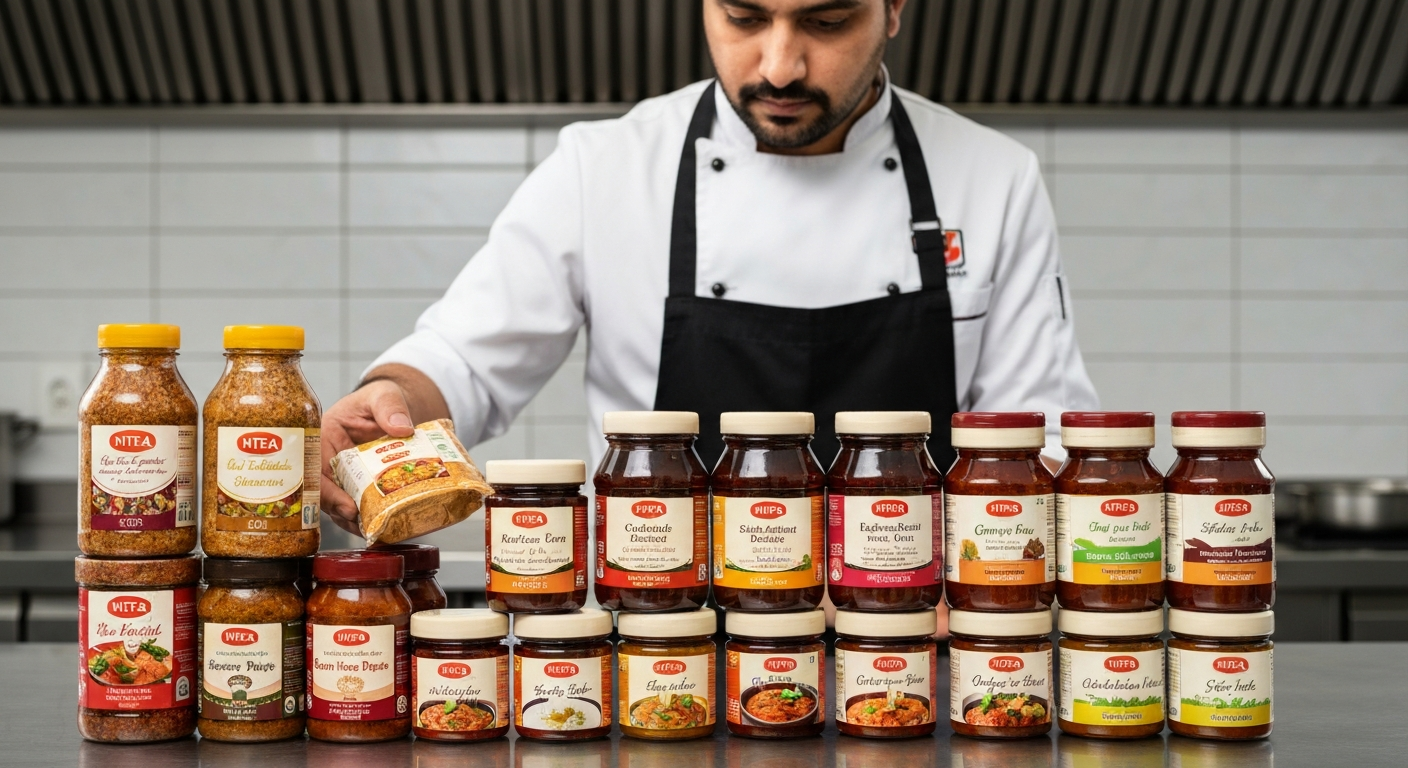
Beyond Compliance: Elevating Food Safety Standards for Indian Products in Your Distribution Network
In the dynamic world of food distribution, maintaining stringent safety and quality standards is not just a regulatory requirement; it's the bedrock of your business reputation and client trust. For food distributor indian product safety standards are particularly critical, given the intricate supply chains, diverse ingredients, and specific handling requirements often associated with authentic Indian cuisine. As the demand for Indian gravies, pastes, sauces, rice, and spices continues to grow across professional kitchens—from restaurants and caterers to hotel groups and cloud kitchens—distributors play an indispensable role in ensuring these products reach their destination in impeccable condition, ready to inspire culinary excellence.
This article delves into the comprehensive strategies distributors can implement to not only meet but exceed food safety expectations for Indian food products. We'll explore the importance of robust internal protocols, the significance of internationally recognized certifications, and how strategic partnerships with suppliers committed to quality can fortify your entire distribution network.
The Critical Role of Food Distributors in Ensuring Product Integrity
Food distributors are the vital link between manufacturers and professional kitchens. Your network is responsible for the safe transit, storage, and delivery of products that will ultimately be consumed by the public. When it comes to specialized categories like authentic Indian cuisine ingredients, this responsibility intensifies. These products, often rich in spices and complex flavor profiles, demand careful handling to preserve their quality, aroma, and, most importantly, their safety.
Unique Challenges and Opportunities with Indian Products
Distributing Indian food products presents a unique set of considerations:
- Ingredient Complexity: Authentic Indian gravies and pastes often contain a wide array of spices, herbs, and other ingredients, each with specific storage and handling needs.
- Sensory Integrity: The aroma and flavor profile are paramount. Improper storage can lead to degradation, impacting the final dish and client satisfaction.
- Perishability: While many Indian gravies and pastes are shelf-stable or require refrigeration, understanding the specific requirements for each product type (e.g., fresh ingredients vs. processed sauces) is crucial.
- Regulatory Landscape: Navigating both local and international food safety regulations requires diligence, especially for products sourced globally.
By proactively addressing these challenges, distributors can transform them into opportunities, building a reputation as a reliable and quality-focused partner for professional kitchens seeking authentic Indian ingredients.
Foundation of Trust: Understanding and Implementing Key Certifications
For any food distributor indian product safety standards begin with verifying the credentials of their suppliers and the products themselves. Certifications are not mere bureaucratic hurdles; they are independent assurances that products have been manufactured, handled, and stored according to rigorous international and national benchmarks. These provide a critical layer of trust and risk mitigation for your distribution network.
Essential Food Safety Certifications to Prioritize
When evaluating Indian food products and their suppliers, look for adherence to the following key certifications:
- FSSAI: This certification is a fundamental indicator of compliance with food safety standards relevant to products from India.
- US FDA: For products entering the United States, US FDA registration signifies adherence to American food safety regulations, ensuring products meet the country's stringent import requirements.
- ISO: ISO certifications, particularly ISO 22000 (Food Safety Management Systems), demonstrate a systematic approach to managing food safety risks throughout the supply chain.
- Halal: This certification assures that products are prepared in accordance with Islamic dietary laws, catering to a significant market segment and demonstrating ethical sourcing.
- HACCP: Hazard Analysis and Critical Control Points is a preventive system designed to identify, evaluate, and control food safety hazards. It is a globally recognized standard for proactive food safety management.
- GMP: Good Manufacturing Practices ensure that products are consistently produced and controlled according to quality standards, covering all aspects from raw materials to manufacturing and packaging.
Suppliers whose products are manufactured under these certifications, such as MITRA's range of chef-grade Indian gravies and spices, provide distributors with a strong foundation of trust. These certifications signify a supplier's commitment to quality and safety from the very beginning of the supply chain, reducing your risk and enhancing the integrity of your offerings.
Beyond the Label: Implementing Robust Internal Protocols for Indian Products
While supplier certifications are crucial, a distributor's own internal protocols are equally vital in upholding food distributor indian product safety standards. Your operational procedures from receiving to delivery must be meticulously designed and rigorously followed to prevent contamination, spoilage, and quality degradation.
Receiving and Inspection Protocols
The point of entry for any product is a critical control point. Implement detailed receiving procedures:
- Documentation Check: Verify that all shipping documents, invoices, and certificates of analysis (COAs) match the incoming product and meet regulatory requirements.
- Packaging Integrity: Visually inspect all packaging for signs of damage, tampering, leaks, or pest infestation. Reject any compromised shipments.
- Temperature Verification: For temperature-sensitive products, check internal product temperatures immediately upon arrival using calibrated thermometers. Ensure they fall within specified safe ranges.
- Labeling Accuracy: Confirm that product labels are clear, legible, and contain all necessary information, including batch numbers, expiry dates, and ingredient lists.
Storage and Inventory Management
Proper storage is paramount for preserving product quality and safety:
- Temperature and Humidity Control: Maintain appropriate ambient, refrigerated, or frozen conditions as specified for each product type. Monitor temperatures regularly and have contingency plans for equipment failure.
- Segregation: Store different product types (e.g., raw ingredients, prepared gravies, spices) separately to prevent cross-contamination. Use designated areas for allergens.
- First-In, First-Out (FIFO): Implement a strict FIFO system to ensure older stock is used before newer stock, minimizing waste and preventing expired products from reaching clients.
- Pest Control: Maintain a comprehensive pest management program for all storage facilities.
- Cleanliness: Regularly clean and sanitize storage areas, shelves, and equipment.
Traceability Systems
An effective traceability system is indispensable for managing food safety risks. This system should allow you to track every product backward to its source and forward to its destination:
- Batch Tracking: Record batch numbers for all incoming and outgoing products.
- Digital Records: Utilize inventory management software to log product movements, storage locations, and client deliveries.
- Rapid Recall Capability: In the event of a recall, your system should enable quick identification and isolation of affected products, minimizing public health risk and financial impact.
Handling and Transportation
The final leg of the journey to the client's kitchen requires equal diligence:
- Sanitary Handling: Ensure all personnel involved in picking, packing, and loading adhere to strict hygiene protocols.
- Secure Packaging: Use appropriate packaging materials and methods to protect products during transit.
- Temperature-Controlled Transportation: For items requiring refrigeration or freezing, use vehicles equipped with reliable temperature control systems. Monitor temperatures during transit.
- Delivery Vehicle Hygiene: Regularly clean and sanitize delivery vehicles.
Building Client Confidence: Communicating Your Food Safety Commitment
Beyond internal operations, effectively communicating your commitment to food distributor indian product safety standards to your clients is a powerful differentiator. Transparency builds trust and reinforces your reputation as a reliable partner.
Proactive Communication Strategies
- Share Certifications: Inform clients about the certifications held by the products you distribute (e.g., FSSAI, US FDA, ISO, Halal, HACCP, GMP) and explain what these mean for product quality and safety.
- Provide Documentation: Be ready to provide relevant safety data sheets, certificates of analysis, and product specifications upon request.
- Educate Clients: Offer guidance on proper storage, handling, and preparation of Indian products to their staff, especially for those new to these ingredients.
- Open Dialogue: Establish clear channels for clients to provide feedback or report concerns, demonstrating your responsiveness and commitment to continuous improvement.
Partnering for Excellence: Choosing Suppliers Who Prioritize Food Safety
Your food safety efforts are only as strong as the weakest link in your supply chain. Therefore, selecting suppliers who share your unwavering commitment to food distributor indian product safety standards is paramount.
When evaluating potential suppliers for Indian food products, consider:
- Certifications: As discussed, verify that their products are manufactured under internationally recognized food safety certifications like FSSAI, US FDA, ISO, Halal, HACCP, and GMP.
- Quality Control Processes: Inquire about their internal quality control measures, from ingredient sourcing to finished product testing.
- Traceability: Ensure they have robust traceability systems that allow for quick and accurate recall if necessary.
- Supply Chain Transparency: A reputable supplier will be transparent about their sourcing, manufacturing processes, and logistics.
- Logistical Capabilities: Assess their ability to deliver reliably and efficiently. For instance, reputable suppliers like ODOD LLC offer clear shipping timelines: products in stock in our US (Houston) or local-country warehouses typically ship within 2 days. For items not immediately in stock, a lead time of 35-60 days applies, with immediate notification of any potential delays to ensure client awareness.
- B2B Focus: Partner with suppliers who understand the specific needs of professional kitchens and large-scale operations. Our focus on B2B clients is reflected in our 50 kg minimum order quantity (MOQ), designed to efficiently serve restaurants, caterers, and other commercial entities.
- Market Reach: A supplier with a broad distribution network demonstrates robust operational capabilities. ODOD LLC currently serves clients in the USA, Canada, UK, UAE, Australia, Germany, Italy, India, France, Ireland, Switzerland, and Netherlands, with plans for further expansion.
By partnering with suppliers like ODOD LLC, distributors can confidently offer chef-grade Indian gravies, pastes, sauces, rice, and spices to their clients, knowing that every product is backed by rigorous safety protocols and a dedication to quality.
Conclusion
Elevating food distributor indian product safety standards is a continuous journey that requires vigilance, robust protocols, and strategic partnerships. By prioritizing comprehensive certifications, implementing stringent internal controls, and fostering transparent communication with clients, distributors can build an unshakeable reputation for reliability and quality. This commitment not only ensures regulatory compliance but also strengthens client relationships, drives business growth, and ultimately contributes to the success of professional kitchens serving authentic Indian cuisine.
For distributors seeking to enhance their offerings with high-quality, safely produced Indian food ingredients, we invite you to explore the MITRA range of products. Request a quote or sample today to learn how ODOD LLC can be your trusted partner in culinary excellence. Inquire via ododgroup.com to discuss your wholesale needs.