
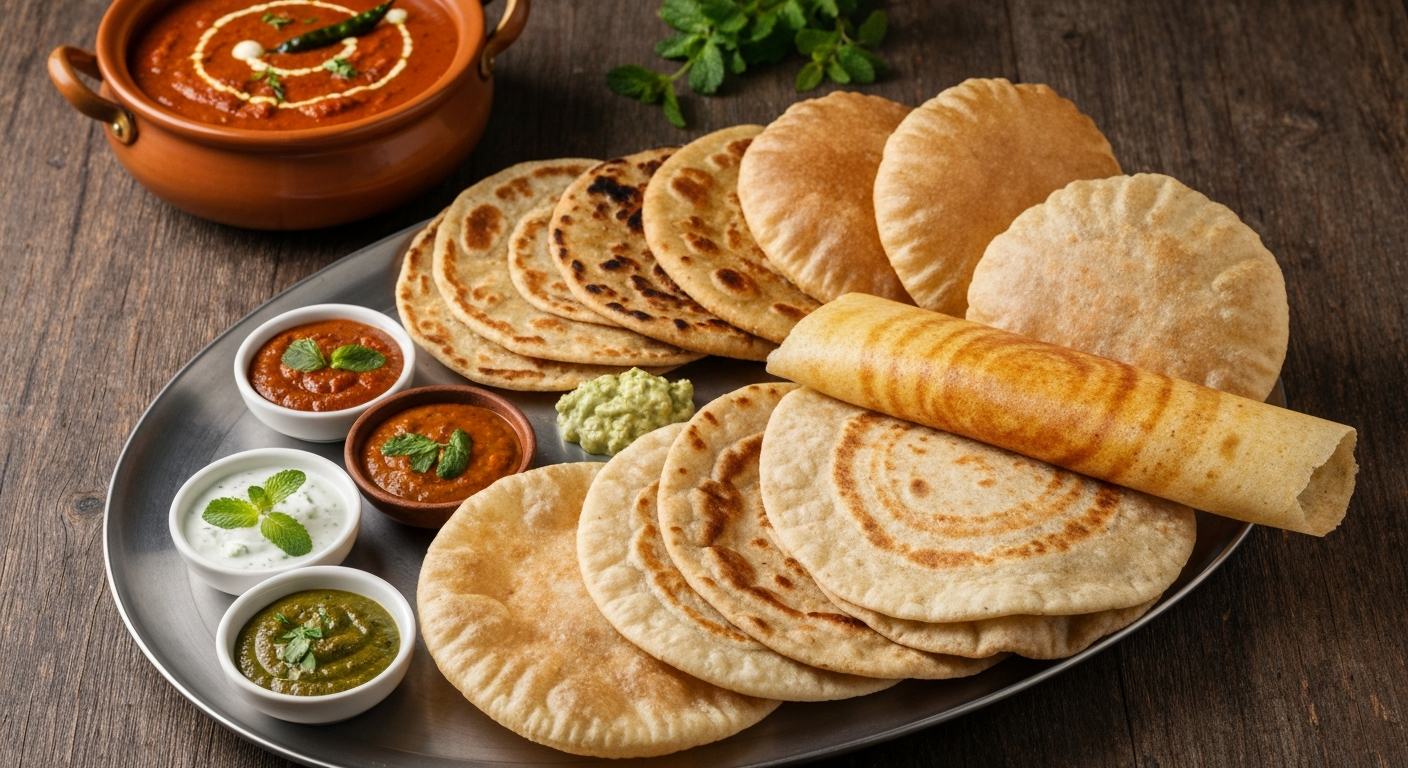
The allure of Indian cuisine often begins with its aromatic gravies and ends with the perfect accompaniment: its diverse range of breads. For many restaurant owners and chefs, the thought of offering an extensive array of Indian breads immediately conjures images of a traditional tandoor oven—a specialized, often costly, and space-intensive piece of equipment. However, the good news is that achieving significant indian bread menu expansion restaurant does not necessarily require this investment. With strategic planning, existing kitchen equipment, and a focus on quality ingredients, your establishment can offer a rich variety of authentic Indian breads and complementary sides that delight customers and enhance your menu.
This article explores practical, equipment-agnostic methods to diversify your Indian bread and side offerings, ensuring operational efficiency and customer satisfaction without the need for a tandoor. We'll delve into the techniques, ingredients, and menu ideas that allow you to bring the authentic flavors of India to your diners, leveraging the equipment you already have.
The Tandoor Conundrum: Why Look Beyond?
The tandoor oven is iconic for its role in creating beloved Indian breads like Naan and Tandoori Roti. Its intense, radiant heat and unique cooking environment impart a distinct flavor, texture, and char. However, for many commercial kitchens, the decision to install a tandoor comes with significant considerations:
- Upfront Cost: Tandoors can be expensive to purchase, import, and install, often requiring specialized gas lines or electrical connections.
- Space Requirements: These ovens are bulky and demand dedicated kitchen real estate, which can be a premium in many restaurant layouts.
- Operational Complexity: Tandoors require skilled operators trained in specific dough handling and cooking techniques. Maintaining consistent heat and product quality demands expertise.
- Maintenance and Cleaning: The unique design of a tandoor can make cleaning and routine maintenance more involved than standard kitchen equipment.
- Energy Consumption: Operating a tandoor at its optimal temperature can be energy-intensive.
While a tandoor offers unparalleled results for certain breads, it's a misconception that truly authentic Indian breads must emerge from its clay walls. Many traditional Indian flatbreads and sides are, and always have been, prepared using conventional methods like griddles, stovetops, and deep fryers. Embracing these methods opens up a world of possibilities for your indian bread menu expansion restaurant without the associated overhead of a tandoor.
Unlocking Pan-Cooked & Griddle-Prepared Indian Breads
Your existing stovetop, griddle (tawa), and deep fryer are powerful tools for creating a diverse range of Indian breads. These methods allow for flexibility, easier staff training, and faster turnaround times.
Roti and Chapati: The Everyday Essential
Roti and Chapati are staple whole wheat flatbreads, fundamental to Indian cuisine. They are traditionally cooked on a flat griddle (tawa) and then briefly exposed to an open flame (or a hot pan) to puff up, resulting in a soft, pliable bread perfect for scooping up gravies.
- Preparation: A simple dough of whole wheat flour (atta), water, and a pinch of salt. Kneading is crucial for elasticity.
- Cooking: Roll out thin discs, cook on a hot griddle until brown spots appear, then finish on an open flame or by pressing gently with a cloth on the griddle to puff.
- Serving: Best served hot, brushed with a touch of ghee or butter. A versatile accompaniment to almost any Indian dish.
Paratha: The Layered, Flavorful Flatbread
Parathas are layered, pan-fried flatbreads that offer immense versatility. They can be plain, flaky, or stuffed with a variety of fillings, making them a satisfying meal in themselves or a hearty side.
- Lachha Paratha: A multi-layered, flaky paratha achieved by folding the dough multiple times with oil or ghee before rolling and pan-frying. Its distinct spiral layers are visually appealing and texturally rich.
- Plain Paratha: Similar to roti but often thicker, enriched with a bit of oil or ghee in the dough, and pan-fried until golden and slightly crispy.
- Stuffed Paratha: A culinary canvas for fillings like spiced potatoes (Aloo Paratha), paneer (Paneer Paratha), cauliflower (Gobi Paratha), or even minced meat (Keema Paratha). The filling is enclosed within the dough before rolling and pan-frying.
- Cooking: Cooked on a griddle with oil or ghee until both sides are golden brown and crisp.
- Serving: Excellent with yogurt, pickles, chutneys, or as a substantial accompaniment to curries.
Puri and Bhatura: The Puffed, Deep-Fried Delights
These breads offer a different textural experience – light, airy, and slightly crispy, perfect for soaking up rich gravies.
- Puri: Small, unleavened bread made from whole wheat flour, rolled thinly, and deep-fried until it puffs up like a balloon. It's a popular choice for breakfast or special occasions.
- Bhatura: A leavened, slightly chewy bread made from all-purpose flour (maida), often with a hint of yogurt or yeast in the dough, deep-fried to a golden puff. Bhatura is famously paired with Chole (chickpea curry).
- Cooking: Both are deep-fried in hot oil until golden and puffed.
- Serving: Puri is often served with potato curry (Aloo Bhaji) or halwa. Bhatura is almost exclusively served with Chole.
Dosa and Uttapam: South Indian Griddle Specialties
Expanding your bread menu doesn't have to be limited to North Indian styles. South Indian fermented crepes and pancakes are incredibly popular and made entirely on a griddle.
- Dosa: Thin, crispy crepes made from a fermented batter of rice and lentils. They can be plain, buttered, or stuffed with spiced potato filling (Masala Dosa).
- Uttapam: Thicker, savory pancakes made from a similar fermented batter, often topped with finely chopped vegetables like onions, tomatoes, and chilies.
- Cooking: Poured and spread on a hot griddle, cooked until crispy (Dosa) or golden (Uttapam).
- Serving: Typically served with an array of chutneys (coconut, tomato, mint) and sambar (a lentil and vegetable stew).
Leveraging Quality Ingredients for Consistency and Flavor
Regardless of the cooking method, the foundation of exceptional Indian breads lies in the quality of your ingredients. Using premium flours, fresh fats, and appropriate leavening agents ensures consistent results and authentic flavor profiles. For the gravies and main dishes these breads accompany, partnering with a reliable supplier like MITRA (an ODOD LLC brand) can significantly enhance your kitchen's efficiency and product consistency. Our chef-grade Indian gravies, pastes, sauces, rice, and spices are manufactured to FSSAI, US FDA, ISO, Halal, HACCP, GMP standards, ensuring both quality and safety. This allows your culinary team to focus their expertise on fresh bread preparation, knowing the core flavors of your main dishes are consistently outstanding.
Creative Side Dishes: Expanding Beyond Breads
Beyond breads, a well-rounded Indian menu benefits immensely from a diverse selection of side dishes. These additions elevate the dining experience, offer variety, and can be prepared with minimal specialized equipment.
Rice Varieties: The Foundation of Many Meals
Rice is a staple across India, and offering a few distinct preparations can significantly enhance your menu.
- Basmati Rice: Simple, aromatic, and fluffy, perfect as a base for any curry.
- Jeera Rice: Basmati rice tempered with cumin seeds and a touch of ghee, adding a subtle aromatic note.
- Vegetable Pulao: Rice cooked with mixed vegetables and whole spices, offering a flavorful and satisfying side.
- Lemon Rice (South Indian): Basmati rice flavored with lemon juice, mustard seeds, curry leaves, and peanuts – a bright, tangy option.
- Curd Rice (South Indian): Cooked rice mixed with yogurt and tempered with spices, a cooling and comforting accompaniment.
Raita: The Cooling Counterpart
Raita is a yogurt-based side dish, often spiced and mixed with vegetables or fruits. It provides a refreshing contrast to rich and spicy gravies.
- Cucumber Raita: Grated cucumber mixed with seasoned yogurt, often with roasted cumin powder and mint.
- Boondi Raita: Small fried gram flour pearls (boondi) mixed into seasoned yogurt, offering a delightful crunch.
- Mint Raita: Fresh mint paste blended with yogurt and spices for an invigorating flavor.
Salads and Kachumber: Freshness and Crunch
Simple, fresh salads are essential for balancing a rich Indian meal.
- Kachumber Salad: A classic Indian salad of finely chopped onions, tomatoes, cucumbers, and sometimes chilies, dressed with lemon juice, salt, and pepper. It's vibrant, fresh, and easy to prepare.
Chutneys & Pickles: Flavor Boosters
While often overlooked, chutneys and pickles are indispensable accompaniments that add depth, tang, and spice to every bite. Consider offering a selection of these, many of which can be sourced ready-made to ensure consistency and reduce labor.
- Mint Chutney: Fresh, spicy, and herbaceous.
- Tamarind Chutney: Sweet and tangy, often paired with fried snacks.
- Mango Chutney: Sweet, fruity, and sometimes spicy.
- Mixed Pickle: A classic spicy and tangy condiment featuring various pickled vegetables and fruits.
Dal Preparations: Beyond the Main Course
Some simpler dal preparations can function wonderfully as side dishes, adding protein and earthy flavors.
- Dal Tadka: Yellow lentils tempered with ghee, cumin, garlic, and chilies. A comforting and nutritious option.
- Dal Makhani (simplified): Black lentils slow-cooked with cream and butter. While traditionally a main, a smaller portion can serve as a rich side.
Operational Efficiency and Cost-Effectiveness
Expanding your Indian bread and side menu using existing equipment is inherently cost-effective. It minimizes capital expenditure and allows for greater flexibility in kitchen operations.
- Cross-Utilization: Many ingredients (flour, oil, yogurt, spices) are used across different bread and side preparations, simplifying inventory management.
- Batch Preparation: Doughs for rotis, parathas, puris, and dosa batter can be prepared in larger batches, reducing prep time during service hours.
- Skill Transferability: Chefs accustomed to griddle work or deep frying can quickly adapt to preparing these Indian breads, requiring less specialized training than a tandoor operator.
- Reduced Labor for Main Courses: By using high-quality, pre-made gravies and bases from MITRA, your kitchen staff can dedicate more time and focus to perfecting freshly made breads and sides. This optimizes labor allocation and ensures consistency across your menu.
- Increased Revenue Potential: A diverse and appealing bread and side menu can increase customer satisfaction, encourage repeat visits, and potentially increase average check sizes through upselling these complementary items.
Implementing Your Expanded Menu
Successfully integrating these new offerings requires a systematic approach:
- Recipe Standardization: Develop clear, consistent recipes for each bread and side, ensuring repeatable quality regardless of the chef.
- Staff Training: Train your kitchen team on the specific techniques for each bread, focusing on consistency in rolling, cooking, and presentation.
- Ingredient Sourcing: Ensure a reliable supply of high-quality flours, dairy, and fresh produce. For gravies and spices, consider our wholesale options at ODOD LLC to streamline your supply chain.
- Menu Integration and Marketing: Clearly highlight your new bread and side offerings on your menu. Consider pairing suggestions (e.g., "Paneer Paratha served with mint raita" or "Chole Bhature"). Educate your front-of-house staff to recommend these items effectively.
Partnering for Success: The MITRA Advantage
At ODOD LLC, under our MITRA brand, we understand the challenges and opportunities faced by professional kitchens. Our extensive range of chef-grade Indian gravies, pastes, sauces, rice, and spices is designed to empower restaurants, cloud/ghost kitchens, caterers, cruise-line and hotel kitchens, and food distributors to deliver authentic Indian flavors with consistency and efficiency. By providing high-quality, ready-to-use bases, we enable your team to focus on the fresh elements of your menu, such as expanding your bread and side offerings.
We offer a 50 kg minimum order quantity (MOQ) to meet the demands of commercial operations. For products in stock in our US (Houston) or local-country warehouse, orders ship in just 2 days. For items not immediately in stock, the lead time is 35-60 days, and customers are notified immediately of any potential delays. We proudly serve a growing list of countries, including the USA, Canada, UK, UAE, Australia, Germany, Italy, India, France, Ireland, Switzerland, and Netherlands.
Conclusion
Expanding your indian bread menu expansion restaurant and side offerings doesn't have to be a daunting task or require significant capital investment in specialized equipment. By embracing traditional pan-cooked, griddle-prepared, and deep-fried methods, your kitchen can introduce a diverse and authentic range of Indian breads and complementary sides. This approach not only enhances your menu's appeal and customer satisfaction but also optimizes kitchen efficiency and cost-effectiveness. Focus on quality ingredients, smart preparation techniques, and leverage reliable partners like MITRA for your core Indian gravies and spices, and watch your culinary offerings flourish.
Ready to explore how MITRA products can support your menu expansion? Inquire via ododgroup.com for samples, a quote, or to discuss a wholesale partnership.