
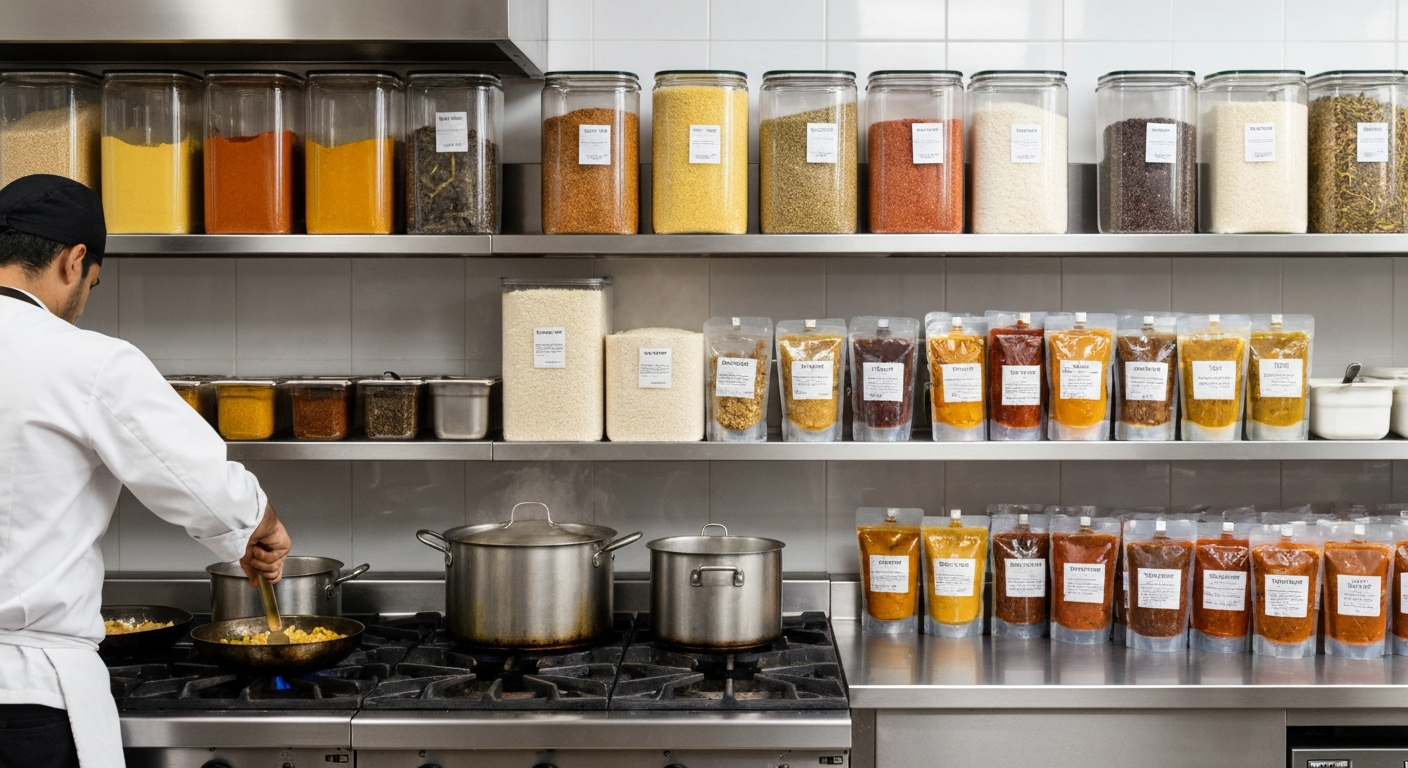
Cut Catering Waste: Leveraging Long Shelf Life Indian Ingredients for Leaner Event Operations
In the dynamic world of catering, efficiency and cost control are paramount. Event operators constantly grapple with unpredictable demand, perishable ingredients, and the specter of food waste. For caterers specializing in Indian cuisine, the complexity can be even greater, given the array of fresh produce, specific spices, and labor-intensive preparations often involved. However, a strategic shift towards leveraging long shelf life Indian ingredients offers a powerful pathway to implement robust catering Indian food waste reduction strategies, leading to leaner operations, improved profitability, and enhanced sustainability.
This article explores how professional kitchens can transform their approach to inventory, preparation, and supply chain management by embracing the benefits of high-quality, extended shelf life Indian gravies, pastes, spices, and other staples. We'll delve into practical strategies that not only minimize waste but also ensure consistent quality and operational agility for any catering business.
The Pervasive Challenge of Food Waste in Catering
Food waste is a significant concern across the entire food service industry, but it presents unique challenges for caterers. Unlike a restaurant with a relatively stable daily menu, catering operations often involve highly variable event sizes, last-minute menu adjustments, and specific client demands. These factors contribute to several common sources of waste:
- Over-preparation: Anticipating demand can be difficult. Erring on the side of caution often leads to preparing more food than consumed, especially for buffets or events with fluctuating guest counts.
- Spoilage of Perishables: Fresh herbs, vegetables, and dairy products, crucial for authentic Indian dishes, have limited shelf lives. Unused or improperly stored items quickly become unusable.
- Inconsistent Demand for Specific Ingredients: Specialized ingredients for certain regional Indian dishes might only be used for particular events, leading to inventory sitting idle and expiring.
- Labor Costs Associated with Prep: Extensive preparation of gravies, spice blends, and marinades for each event is labor-intensive. If an event is cancelled or scaled down, the labor invested in these preparations can also be considered a form of wasted resource.
- Quality Degradation: Even if not fully spoiled, ingredients that lose freshness compromise the quality of the final dish, potentially leading to customer dissatisfaction and further waste.
Collectively, these issues erode profit margins, strain operational resources, and contribute to environmental impact. Addressing them requires a proactive and strategic approach, starting with the very ingredients used.
Leveraging Long Shelf Life Indian Ingredients for Waste Reduction
The inherent stability and versatility of many Indian culinary components make them ideal candidates for extended shelf life solutions. When professionally prepared and packaged, these ingredients offer caterers a significant advantage in reducing waste without compromising authenticity or flavor.
1. Pre-Made Gravies and Pastes: The Foundation of Efficiency
Authentic Indian cuisine is often built upon complex, slow-cooked gravies and spice pastes. Preparing these from scratch for every event is time-consuming and prone to waste if quantities are misjudged. High-quality, long shelf life Indian gravies and pastes, such as those offered by MITRA, provide a crucial solution:
- Reduced Spoilage Risk: These products are often shelf-stable or have significantly extended refrigerated shelf lives compared to their freshly made counterparts. This allows caterers to maintain a ready stock without the immediate pressure of spoilage.
- Precise Portion Control: Ready-to-use gravies enable accurate portioning, minimizing over-preparation for specific dishes. Need a small batch of Butter Chicken for a private dinner or a large quantity for a wedding buffet? Simply measure out what's required.
- Consistent Quality and Flavor: Professionally manufactured gravies ensure a consistent flavor profile every time, regardless of the chef on duty. This consistency is vital for maintaining brand reputation and customer satisfaction.
- Reduced Labor Costs: Eliminating the need for extensive, daily gravy preparation frees up valuable kitchen staff time, allowing them to focus on finishing dishes, presentation, or other critical tasks.
- Simplified Inventory Management: Fewer raw ingredients for gravy bases mean a streamlined inventory, easier tracking, and less risk of individual components expiring.
Imagine a caterer preparing a large Indian buffet. Instead of spending hours roasting, grinding, and blending spices for a dozen different gravies, they can simply open pre-made bases for dishes like Dal Makhani, Paneer Butter Masala, or Chicken Tikka Masala, and focus on adding fresh proteins and garnishes. This dramatically cuts down on potential waste from unused raw ingredients and simplifies the entire cooking process.
2. Dried Spices, Pulses, and Grains: Staples with Longevity
Many core Indian ingredients are naturally long-lasting, and optimizing their procurement and storage is fundamental to catering Indian food waste reduction strategies.
- Bulk Purchasing Advantages: Dried spices, pulses (lentils, beans), and various rice varieties (Basmati, Sona Masoori) have excellent shelf lives, making them ideal for bulk purchasing. This not only often reduces per-unit cost but also minimizes frequent reordering and associated logistics.
- Proper Storage is Key: While long-lasting, these ingredients still require proper storage in cool, dry, airtight conditions to prevent moisture absorption, pest infestation, and loss of aroma or flavor. Implementing a robust FIFO (First-In, First-Out) system is crucial here.
- Versatility: A well-stocked pantry of quality bulk spices and pulses allows caterers to create a vast array of Indian dishes without constantly buying small, expensive packets that might expire before full use.
- Reduced Risk of Spoilage: Unlike fresh produce, these staples are far less susceptible to rapid spoilage, offering a stable backbone to your catering inventory.
Implementing Effective Waste Reduction Strategies for Caterers
Beyond simply using long shelf life ingredients, caterers must adopt holistic strategies to maximize their impact on waste reduction.
1. Robust Inventory Management Systems
- Digital Tracking: Utilize inventory software to track all ingredients, including long shelf life items. Monitor usage rates, reorder points, and expiration dates.
- FIFO Principle: Strictly adhere to the First-In, First-Out method. Older stock should always be used before newer stock to prevent items from expiring in storage.
- Regular Audits: Conduct weekly or bi-weekly inventory audits to identify slow-moving items, potential spoilage, and opportunities for menu adjustments.
2. Strategic Menu Planning and Customization
- Flexible Menus: Design menus that allow for ingredient commonality. Can a particular gravy base be slightly adapted for two different dishes? This reduces the need for highly specialized, single-use ingredients.
- Portion Control Guidelines: Establish clear portion control guidelines for all dishes. Train staff on consistent plating and serving to minimize over-serving.
- Pre-Order Analysis: For events, analyze historical data and client preferences to make more accurate predictions about guest consumption patterns.
3. Staff Training and Engagement
- Waste Awareness: Educate kitchen staff on the financial and environmental impact of food waste. Foster a culture where waste reduction is a shared responsibility.
- Proper Storage Techniques: Train staff on correct storage for all ingredients, from fresh produce to bulk spices and pre-made gravies.
- Efficient Preparation Techniques: Encourage methods that minimize trim waste and maximize ingredient utilization.
- Repurposing Leftovers: Explore safe and compliant ways to repurpose prepared ingredients for staff meals or other internal uses, where appropriate and permitted by food safety regulations.
4. Leveraging Supplier Partnerships
Collaborating with a reliable supplier like ODOD LLC (MITRA brand) is a cornerstone of effective waste reduction. A good supplier offers:
- High-Quality, Consistent Products: Ensures that the ingredients you receive are of premium quality, reducing the likelihood of rejection due to defects.
- Reliable Supply Chain: Minimizes delays and ensures you receive what you need, when you need it, preventing last-minute rushes and potential ingredient shortages that might lead to costly substitutions or event disruptions.
- Certifications for Food Safety: Products manufactured under stringent certifications like FSSAI, US FDA, ISO, Halal, HACCP, and GMP provide assurance of quality and safety, reducing risks associated with product integrity.
- Flexible Ordering: While ODOD LLC maintains a 50 kg MOQ, understanding your usage patterns allows for efficient bulk ordering that aligns with your lean inventory goals.
Beyond Waste: Additional Benefits for Caterers
Implementing catering Indian food waste reduction strategies through long shelf life ingredients extends far beyond simply cutting waste. It drives a cascade of positive outcomes for your business:
- Significant Cost Savings: Less spoilage, optimized inventory, and reduced labor for basic prep directly translate to lower operational costs and improved profit margins.
- Enhanced Consistency and Quality: Standardized gravies and pastes ensure that every dish tastes the same, regardless of the chef or event. This builds client trust and strengthens your brand reputation.
- Improved Food Safety: Relying on professionally manufactured, certified products (FSSAI, US FDA, ISO, Halal, HACCP, GMP) minimizes the risk of foodborne illnesses associated with improperly stored or prepared ingredients. This is a critical factor for any B2B food service operation.
- Increased Operational Efficiency: Streamlined prep work, predictable ingredient availability, and simplified inventory management lead to a smoother, less stressful kitchen environment.
- Greater Menu Flexibility: With reliable, ready-to-use bases, caterers can offer a broader and more diverse Indian menu without the added complexity of managing numerous fresh, perishable components.
- Sustainability and Brand Image: Reducing food waste is a powerful statement of environmental responsibility. This resonates with increasingly eco-conscious clients and enhances your catering company's sustainable brand image.
MITRA's Role in Supporting Lean Catering Operations
ODOD LLC, an American food-supply company, understands the unique demands of professional kitchens and caterers. Our MITRA brand offers a comprehensive range of chef-grade Indian gravies, pastes, sauces, rice, and spices specifically designed to support efficient, high-quality, and waste-conscious operations.
Our products are manufactured to stringent quality standards, holding certifications including FSSAI, US FDA, ISO, Halal, HACCP, and GMP. This ensures not only exceptional flavor and authenticity but also the extended shelf life and food safety that are critical for modern catering businesses.
We serve a growing list of countries including the USA, Canada, UK, UAE, Australia, Germany, Italy, India, France, Ireland, Switzerland, and the Netherlands. For caterers, our commitment to efficient supply means:
- Reliable Delivery: If a product is in stock in our US (Houston) or local-country warehouse, it ships in 2 days. For items not immediately in stock, the lead time is 35-60 days, and customers are notified promptly of any delays, allowing for proactive planning.
- Bulk Supply: Our 50 kg minimum order quantity (MOQ) is tailored for the volume needs of caterers, enabling cost-effective bulk purchasing that aligns with waste reduction goals.
- Consistent Quality: Every batch of MITRA products delivers the same authentic taste and performance, eliminating guesswork and ensuring your Indian dishes are consistently excellent.
By integrating MITRA's long shelf life ingredients into your operations, you can significantly streamline your supply chain, reduce ingredient spoilage, minimize labor costs, and ultimately enhance your catering business's profitability and reputation.
Conclusion
For caterers specializing in Indian cuisine, adopting robust catering Indian food waste reduction strategies is not just an ideal—it's a business imperative. By strategically leveraging high-quality, long shelf life Indian ingredients like pre-made gravies, pastes, and bulk spices, alongside effective inventory management and staff training, catering operations can achieve remarkable improvements in efficiency, cost control, and sustainability.
The benefits extend beyond simply cutting waste, leading to more consistent quality, enhanced food safety, and a stronger competitive edge in the market. Explore how ODOD LLC's MITRA brand can become your partner in building a leaner, more profitable, and more sustainable catering future.
---
Ready to optimize your catering operations and reduce waste? Inquire about our range of chef-grade Indian ingredients and discuss your specific needs. Visit ododgroup.com to request a quote or sample today.