
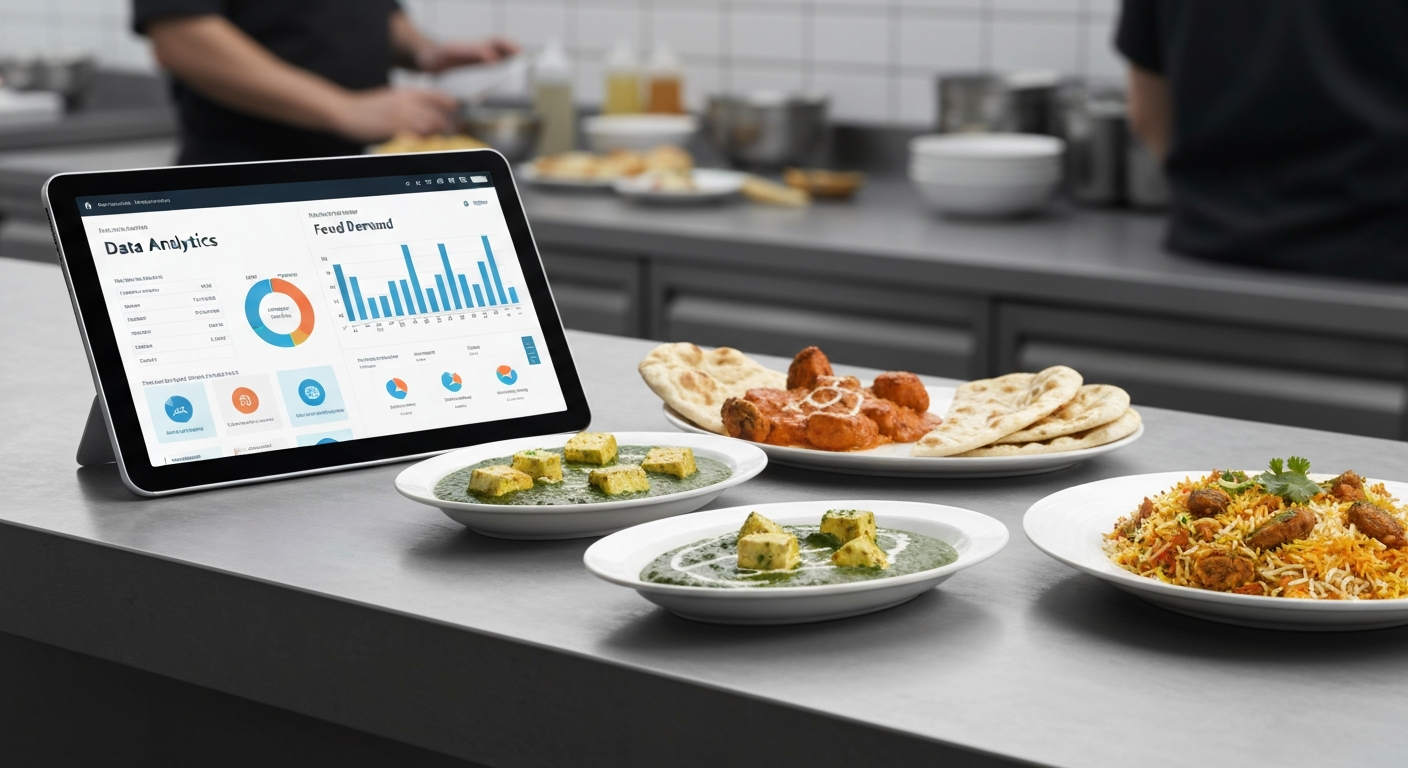
The landscape of food service is constantly evolving, with ghost kitchens leading the charge in efficiency and digital-first operations. However, this innovative model brings its own set of challenges, particularly when managing diverse and complex cuisines like Indian food. One of the most critical factors for success in a ghost kitchen environment is the ability to accurately predict customer demand. Mastering ghost kitchen Indian demand forecasting is not just about guessing what customers want; it's about leveraging data to optimize every aspect of your operation, from ingredient procurement to staff scheduling, ensuring peak profitability and minimal waste.
The Unique Operational Demances of Indian Cuisine in Ghost Kitchens
Indian cuisine, celebrated globally for its rich flavors and aromatic spices, presents a unique set of operational considerations for any professional kitchen, especially a ghost kitchen operating without a traditional storefront. The complexity of many Indian dishes, often requiring multiple steps, fresh ingredients, and precise spice blends, can make demand management particularly challenging.
Consider the typical Indian kitchen: it often involves extensive prep work, including grinding fresh spices, making ginger-garlic paste, chopping numerous vegetables, and slow-cooking gravies to perfection. While this dedication to authenticity is what makes Indian food so beloved, it also means a higher risk of food waste if demand is misjudged, or a scramble to meet unexpected surges in orders if underprepared.
For a ghost kitchen, these challenges are magnified. You're operating in a high-volume, delivery-centric model where speed, consistency, and efficiency are paramount. There's no opportunity for a chef to 'wing it' during a rush; every dish needs to be prepared quickly and to a consistent standard. This is where the strategic application of data-driven forecasting becomes indispensable. Without accurate predictions, ghost kitchens risk:
- Excessive Food Waste: Over-prepping perishable ingredients and gravies that don't sell.
- Stockouts and Lost Sales: Running out of popular dishes during peak hours, leading to customer dissatisfaction and missed revenue.
- Inefficient Labor Costs: Overstaffing during slow periods or understaffing during rushes, impacting service quality and employee morale.
- Inconsistent Product Quality: Rushing orders or using suboptimal ingredients due to poor planning.
Foundational Data Points for Robust Indian Demand Forecasting
Effective demand forecasting for Indian dishes in a ghost kitchen relies on collecting and analyzing a variety of data points. These can be broadly categorized into internal sales data and external influencing factors.
Historical Sales Data: Your Most Valuable Asset
Your past sales records are a treasure trove of information. To make this data actionable, it needs to be granular and meticulously maintained. Key aspects to track include:
- Dish-Level Sales: Not just total orders, but specific quantities of each dish sold. This helps identify individual dish popularity trends.
- Hourly and Daily Trends: Analyze sales patterns throughout the day and across the week. Do Biryani orders spike at lunch, while Butter Chicken is a dinner favorite? Are weekends significantly busier than weekdays?
- Day-of-the-Week Analysis: Mondays might see more vegetarian options, while Fridays and Saturdays are peak for indulgent curries and biryanis.
- Promotional Impact: Track the sales lift (or dip) associated with specific promotions, discounts, or menu changes. Did a 'Palak Paneer Special' significantly increase its sales, and for how long?
- Average Order Value (AOV): Understanding how many items customers typically order together can inform bundling strategies and ingredient needs.
External Factors: Beyond Your Kitchen Walls
While your internal data shows what has happened, external data helps predict what will happen. These factors often have a significant, albeit sometimes subtle, impact on demand for Indian food.
- Weather Patterns: Cold weather might increase demand for hearty curries and hot chai, while hot weather could favor lighter options or cooler beverages. Integrating local weather forecasts can be a powerful predictive tool.
- Local Events and Holidays: Major sporting events, concerts, festivals (both local and cultural, like Diwali or Eid), or even school holidays can dramatically alter demand. Proactively monitoring local event calendars is crucial.
- Seasonal Trends: Beyond daily weather, consider broader seasonal shifts. Are certain ingredients more popular in specific seasons? Does demand for tandoori items increase in warmer months?
- Economic Indicators: While less directly applicable to daily forecasting, understanding broader economic trends can provide context for long-term planning.
- Competitor Activity: Keep an eye on local competitors. Their promotions, new menu items, or even temporary closures can shift demand in your direction.
- Delivery Platform Data: Leverage any insights provided by your third-party delivery partners regarding peak times, popular search terms, or geographic demand hotspots.
Marketing and Promotion Data: Driving and Predicting Demand
Your own marketing efforts directly influence demand. Tracking the performance of your campaigns is essential for forecasting their future impact.
- Digital Ad Performance: Which ads led to the most conversions for specific dishes? What was the cost per acquisition for a new customer ordering Indian food?
- Social Media Engagement: While not a direct sales metric, high engagement on posts featuring a particular dish can signal upcoming interest.
- Email Marketing Campaigns: Track open rates, click-through rates, and conversion rates from specific offers.
Key Methodologies for Ghost Kitchen Indian Demand Forecasting
Once you have robust data collection in place, you can apply various methodologies to turn raw numbers into actionable forecasts.
Time Series Analysis
This is a fundamental technique that involves analyzing data points collected over time to identify patterns, trends, and cycles. For Indian cuisine, this might mean recognizing that:
- Demand for vegetarian curries peaks on Tuesdays and Thursdays.
- Biryani sales consistently increase by 15% on Friday evenings.
- There's a noticeable dip in demand during specific national holidays or local festivals where people might dine out or cook at home.
Time series models help you understand seasonality (e.g., higher demand for certain dishes in winter), trends (e.g., a gradual increase in plant-based Indian options), and irregular fluctuations.
Regression Analysis
Regression analysis helps you understand the relationship between different variables. For example, you might use it to determine how much a 10-degree drop in temperature influences the sales of a specific lentil soup or a hearty meat curry. You could also analyze the correlation between a local event and a surge in orders for party-sized portions of dishes.
Qualitative Forecasting
While data is king, don't discount the value of expert judgment. Experienced chefs and kitchen managers often have an intuitive understanding of customer behavior and upcoming events. This qualitative input should complement, not replace, your quantitative data. For instance, a chef might know that a specific local cultural event, even if small, always brings in a rush for a particular regional specialty that isn't reflected in broad sales data.
Leveraging Technology for Advanced Forecasting
For ghost kitchens with significant data volumes, specialized software or even basic spreadsheet tools with statistical functions can automate much of this analysis. Some advanced POS systems and inventory management platforms offer built-in forecasting features. For even greater precision, machine learning algorithms can analyze vast datasets and identify complex, non-obvious patterns, though this typically requires a more significant investment in data science expertise or sophisticated platforms.
Implementing Data-Driven Forecasting in Practice: A Step-by-Step Guide
Translating forecasting theory into practical kitchen operations involves a systematic approach:
Step 1: Data Collection and Integration
Ensure your Point-of-Sale (POS) system, online ordering platforms, and delivery service integrations are capturing all necessary data. Consider integrating external data sources like weather APIs or local event calendars. The more comprehensive and accurate your raw data, the better your forecasts will be.
Step 2: Data Cleaning and Analysis
Raw data can be messy. Clean it by removing duplicates, correcting errors, and addressing outliers (e.g., an unusually high sales day due to a catering order that skews typical demand). Once clean, begin analyzing trends, seasonality, and correlations using your chosen methodologies.
Step 3: Model Selection and Training
Based on your data and resources, select the most appropriate forecasting model. Start simple, perhaps with moving averages and seasonal adjustments, and gradually introduce more complex methods if needed. 'Train' your model by feeding it historical data and testing its predictive accuracy against known outcomes.
Step 4: Forecast Generation and Review
Generate your forecasts for upcoming periods (e.g., daily, weekly, monthly). Crucially, compare your predictions against actual sales outcomes. This feedback loop is vital for refining your model and improving accuracy over time. Don't be afraid to adjust your forecasts manually if qualitative insights suggest a deviation.
Step 5: Operational Adjustments
This is where the rubber meets the road. Translate your forecasts into concrete operational plans:
- Inventory Orders: Adjust your ingredient orders based on predicted demand. For example, if you anticipate a surge in Butter Chicken, ensure you have sufficient chicken, tomatoes, and dairy.
- Prep Schedules: Plan your batch cooking for gravies, rice, and other foundational components. If a specific Indian bread is predicted to be popular, schedule more dough preparation.
- Staffing Levels: Adjust chef and kitchen assistant schedules to match predicted peak and off-peak hours.
Optimizing Kitchen Operations with Accurate Forecasts
Inventory Management and Waste Reduction
Accurate ghost kitchen Indian demand forecasting is a direct pathway to significant cost savings. By knowing what to expect, you can:
- Minimize Food Waste: Reduce spoilage of perishable ingredients by ordering only what you realistically expect to use. This is especially critical for fresh produce, dairy, and meat often used in Indian cooking.
- Optimize Ingredient Ordering: Leverage bulk purchasing for non-perishables and high-volume items. For example, for consistent quality and supply of essential bases, consider B2B suppliers like MITRA. Our products are designed for professional kitchens, and with a 50 kg minimum order quantity (MOQ), they are ideal for optimizing inventory for popular Indian dishes without overstocking.
- Reduce Storage Costs: Less waste means less need for extensive cold storage, reducing energy consumption and potential equipment wear.
- Ensure Product Availability: Avoid disappointing customers by running out of popular dishes. Forecasting helps maintain a healthy stock of all menu items.
Staffing and Scheduling Efficiency
Labor costs are a significant expense for any ghost kitchen. Forecasting allows you to:
- Align Staffing with Demand: Schedule more staff during predicted peak hours and fewer during slower periods, optimizing labor costs and improving efficiency. This avoids idle staff during lulls and prevents kitchen overwhelm during rushes.
- Improve Employee Morale: A well-staffed kitchen runs smoother, reduces stress on employees, and prevents burnout.
- Cross-Train Staff: Knowing which stations will be busiest allows for strategic cross-training, ensuring flexibility during unexpected surges.
Prep and Production Streamlining
The complex nature of Indian cuisine makes prep time a critical factor. Forecasting helps you streamline this process:
- Strategic Batch Cooking: Identify which gravies, rice, or other components can be prepared in advance during off-peak hours, ready for assembly during busy periods. For instance, knowing that Butter Chicken and Palak Paneer are consistent bestsellers on weekends allows you to pre-batch their respective gravies.
- "Mise en Place" Optimization: Ensure all necessary ingredients are prepped, portioned, and ready before service begins, minimizing frantic last-minute chopping and measuring.
- Leveraging Ready-to-Use Products: Incorporating high-quality, chef-grade Indian gravies and pastes from suppliers like MITRA significantly reduces on-site prep time and ensures consistency. These products arrive ready to use, allowing your kitchen staff to focus on finishing dishes and managing orders during peak demand.
The Role of High-Quality, Consistent Ingredients in Forecasting Success
Even the most accurate forecast can fall short if your ingredient supply is inconsistent or unreliable. This is where partnering with a trusted B2B food supplier becomes critical. MITRA supplies chef-grade Indian gravies, pastes, sauces, rice, and spices, which are manufactured to rigorous standards.
Our products are produced under FSSAI, US FDA, ISO, Halal, HACCP, and GMP certifications, ensuring consistent quality and safety. This consistency is invaluable for ghost kitchens, as it eliminates variability in your base ingredients, making your demand forecasts more predictable and your final dishes reliably delicious, regardless of which chef is on duty.
By utilizing ready-to-use gravies and pastes, you reduce the reliance on highly specialized chefs for every single step of traditional Indian cooking. This not only speeds up service during peak hours but also allows for easier training of kitchen staff and ensures that the authentic flavors of Indian cuisine are maintained consistently across all orders.
For operational planning, understanding supply chain logistics is also key. If products are in stock in our US (Houston) or local-country warehouses, they ship in 2 days. For items not immediately in stock, the lead time is 35-60 days, with immediate notification of any delays. This transparency allows your ghost kitchen to plan its bulk orders effectively, ensuring you have the necessary supplies to meet forecasted demand without interruption. We currently serve a growing list of countries including the USA, Canada, UK, UAE, Australia, Germany, Italy, India, France, Ireland, Switzerland, and Netherlands.
Conclusion
In the competitive world of ghost kitchens, efficiency and profitability hinge on smart operational strategies. Mastering ghost kitchen Indian demand forecasting is not just an advantage; it's a necessity. By systematically collecting and analyzing data, you can move beyond guesswork to make informed decisions that optimize inventory, streamline prep, manage labor costs, and ultimately, enhance customer satisfaction.
Partnering with reliable B2B suppliers like MITRA, who provide consistent, high-quality Indian ingredients manufactured to global standards, further strengthens your operational backbone. This combination of data-driven insights and premium ingredients ensures your ghost kitchen is always prepared to deliver authentic Indian culinary experiences, even during the busiest peak hours.
---
Ready to optimize your ghost kitchen's Indian menu with consistent, chef-grade ingredients? Inquire today to learn more about our wholesale options and request a sample. Visit ododgroup.com to get started.