
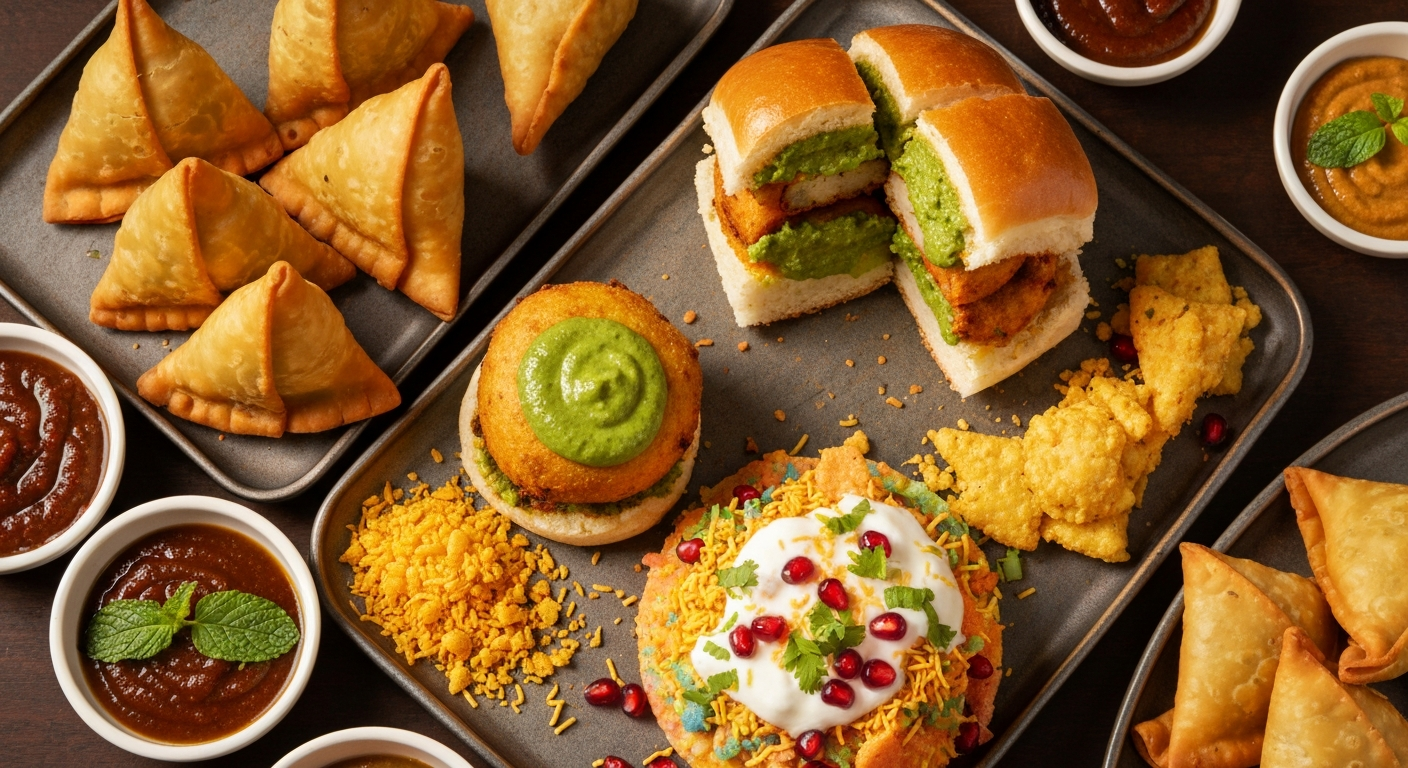
The culinary landscape is constantly evolving, and Indian cuisine, particularly its vibrant snack segment, presents a significant growth opportunity for food service operators. From bustling food trucks to upscale restaurants and large-scale catering operations, Indian snacks like samosas, chaats, vada pavs, and kathi rolls are gaining immense popularity beyond traditional Indian establishments. For distributors, this trend represents a chance to not only supply essential ingredients but also to become invaluable partners to their clients by helping them leverage this demand for maximum profitability. This article delves into the strategic approach of distributor Indian snack menu engineering, offering insights and actionable strategies to empower your clients to optimize their offerings.
The Untapped Potential of Indian Snacks in Modern Foodservice
Indian snacks are more than just appetizers; they are a diverse category encompassing a vast array of flavors, textures, and regional specialties. Their appeal lies in their portability, shareability, and often vegetarian-friendly nature, making them suitable for various dining formats—from quick-service to banqueting. For operators, the challenge often lies in managing the complexity of preparing these items authentically and consistently, while also ensuring they contribute positively to the bottom line.
Many kitchens struggle with the labor-intensive nature of traditional Indian snack preparation, requiring skilled chefs, extensive mise en place, and precise spice blends. This is where the concept of menu engineering, combined with the right supply chain solutions, becomes critical. Distributors who can guide their clients through this process offer a distinct competitive advantage.
What is Menu Engineering and Why It Matters for Indian Snacks?
Menu engineering is a strategic approach to menu design and pricing that analyzes the profitability and popularity of individual menu items. The goal is to maximize the overall profitability of a menu by encouraging customers to choose high-profit, high-popularity dishes. For Indian snacks, this means understanding which items are 'stars,' 'plough horses,' 'puzzles,' and 'dogs' within a given menu.
- Stars: High profitability, high popularity. These are your best sellers that also bring in significant revenue. For Indian snacks, this might be a perfectly executed samosa with a unique chutney, or a popular chaat that commands a good price.
- Plough Horses: High popularity, low profitability. These items sell well but don't generate much profit. Examples could be a standard vada pav priced too low, or a large portion of pakoras with high ingredient costs.
- Puzzles: Low popularity, high profitability. These are often unique or specialty items that customers might overlook but have excellent margins. A distributor might help a client identify a regional snack with high profit potential and strategize how to promote it.
- Dogs: Low popularity, low profitability. These items should be considered for removal or significant re-evaluation.
Applying this framework to an Indian snack menu allows operators to move beyond guesswork and make data-driven decisions about what to feature, how to price, and what to promote. For distributors, understanding this framework enables them to recommend products that directly support their clients' menu engineering goals.
Data-Driven Strategies for Indian Snack Menu Engineering
Guiding clients through menu engineering requires a systematic approach. Here are key strategies distributors can share:
1. Accurate Costing and Pricing Analysis
The foundation of menu engineering is precise costing. Many operators underestimate the true cost of their Indian snacks, especially when factoring in labor. Distributors should advise clients to:
- Calculate Ingredient Costs: Beyond raw material, consider the cost of spices, oils, and garnishes.
- Factor in Labor Costs: This is crucial for snacks. How much time does it take a skilled chef to prepare the base, blend spices, cook, and assemble? Pre-made ingredients can drastically reduce this.
- Overhead Allocation: A portion of rent, utilities, and equipment depreciation should be considered.
- Competitive Pricing: Research local market prices but don't price solely based on competitors. Understand the value proposition.
By helping clients accurately assess costs, distributors can demonstrate how leveraging high-quality, ready-to-use ingredients can significantly improve profit margins by reducing labor and waste.
2. Analyzing Sales Data for Popularity
Clients need to track what sells. POS data is invaluable here. Distributors can encourage clients to:
- Identify Top Sellers: Which snacks consistently fly off the menu?
- Monitor Sales Volume: Understand peak times and seasonal variations.
- Customer Feedback: Gather direct input on favorite items and potential new additions.
Combining sales data with profitability analysis allows for the categorization of each snack item into the 'star,' 'plough horse,' 'puzzle,' or 'dog' matrix.
3. Strategic Menu Design and Placement
Once items are categorized, the menu itself becomes a tool for persuasion. Distributors can advise clients on:
- Highlighting Stars and Puzzles: Use visual cues (boxes, bolding, photos), strategic placement (top right/left of a menu section), and descriptive language to draw attention to high-profit items.
- Repositioning Plough Horses: Can a plough horse be made more profitable? Perhaps by adjusting portion size, offering a premium version, or bundling it with a higher-margin item.
- Removing Dogs: Free up kitchen space, reduce inventory, and streamline operations.
4. Leveraging Prepared Ingredients for Enhanced Profitability
This is where MITRA's product range becomes a game-changer for your clients. Our chef-grade Indian gravies, pastes, sauces, rice, and spices are designed to streamline kitchen operations without compromising authenticity or flavor. For distributor Indian snack menu engineering, our products offer several key advantages:
- Consistency and Quality: Indian snacks rely heavily on precise spice blends and cooking techniques. MITRA's products ensure uniform taste and quality across all batches, regardless of the chef on duty. This consistency builds customer loyalty and reduces variability.
- Significant Labor Cost Reduction: Preparing authentic Indian gravies and spice mixes from scratch is incredibly labor-intensive. Our ready-to-use products drastically cut down on prep time, allowing kitchen staff to focus on assembly and presentation. This means fewer skilled labor hours, a critical factor in snack profitability.
- Waste Reduction: Pre-portioned or easy-to-measure gravies and pastes minimize ingredient waste. Their extended shelf life also reduces spoilage compared to fresh ingredients that require immediate processing.
- Expanded Menu Potential: With the foundational work handled by MITRA's products, kitchens can afford to offer a wider variety of Indian snacks without overwhelming their staff or inventory. This allows them to experiment with 'puzzle' items with less risk.
- Speed of Service: In fast-paced environments like food trucks or catering events, quick assembly is vital. Our products enable rapid preparation, leading to faster service and higher customer throughput.
#### MITRA Products in Action: Examples for Indian Snacks
- Samosa Fillings: A base gravy can be quickly customized for potato, paneer, or even meat fillings, ensuring rich, consistent flavor every time.
- Vada Pav & Dabeli: Our chutneys and spice mixes are perfect for crafting the authentic taste of these popular street foods, eliminating the need for extensive grinding and blending.
- Pav Bhaji: A consistent, flavorful bhaji base can be quickly prepared, reducing cooking time significantly while maintaining the signature taste.
- Kathi Rolls & Frankies: Marinades and sauces for paneer, chicken, or vegetable fillings can be rapidly assembled, ensuring tender, flavorful results.
- Aloo Tikki & Ragda Pattice: Components for the rich, spicy chickpea curry (ragda) or the potato patties (tikki) can be standardized for consistent quality.
- Chaat Components: Bases for tamarind chutney, mint chutney, and other essential chaat elements can be prepared quickly, ensuring the complex flavor profile is always on point.
Empowering Your Clients: The Distributor's Consultative Role
For distributors, the goal is to move beyond being just a supplier to becoming a trusted culinary partner. By understanding distributor Indian snack menu engineering and the solutions MITRA provides, you can:
- Offer Expert Recommendations: Suggest specific MITRA gravies, pastes, or spice blends that directly address a client's menu engineering challenges, whether it's reducing labor for a 'plough horse' or enhancing the flavor of a 'puzzle.'
- Provide Product Demonstrations: Show clients firsthand how MITRA products can simplify preparation, improve consistency, and elevate flavor.
- Share Market Insights: Keep clients informed about emerging Indian snack trends, regional specialties gaining popularity, and consumer preferences.
- Facilitate Menu Optimization Workshops: Host sessions where clients can bring their menu data and collaboratively explore optimization strategies using MITRA ingredients.
Operational Excellence and Supply Chain Advantage with ODOD LLC
As a distributor, reliability and quality in your supply chain are paramount. ODOD LLC, through its MITRA brand, is committed to providing chef-grade Indian food supplies manufactured to the highest standards. Our products undergo rigorous quality control and are produced under certifications including FSSAI, US FDA, ISO, Halal, HACCP, and GMP, ensuring safety and consistency for your clients.
We understand the logistical needs of foodservice operations. Our minimum order quantity (MOQ) is 50 kg, designed to support wholesale and bulk purchasing for professional kitchens. For products in stock at our US (Houston) or other local-country warehouses, shipping occurs within 2 days. If a product is not immediately in stock, we provide an upfront lead time of 35-60 days and immediately notify customers of any potential delays, maintaining transparency and reliability.
ODOD LLC serves a growing global market, currently shipping to the USA, Canada, UK, UAE, Australia, Germany, Italy, India, France, Ireland, Switzerland, and Netherlands, with continuous expansion into new territories. This extensive reach ensures that your clients, regardless of their location, can access authentic, high-quality Indian ingredients.
Conclusion: Driving Profitability Together
Distributor Indian snack menu engineering is a powerful tool for enhancing profitability and operational efficiency in professional kitchens. By leveraging data-driven strategies and incorporating MITRA's chef-grade Indian gravies, pastes, and spices, distributors can guide their clients toward optimized menus that delight customers and boost the bottom line. This partnership approach not only strengthens client relationships but also positions distributors as essential advisors in a competitive culinary landscape.
Ready to empower your clients with the finest Indian ingredients and strategic menu solutions? Inquire via ododgroup.com to learn more about partnering with MITRA and how our products can transform your clients' Indian snack offerings.