
In the dynamic landscape of modern foodservice, meeting diverse dietary requirements is no longer a niche offering but a fundamental expectation. For foodservice distributors, this evolving demand presents both a challenge and a significant opportunity to add value. By proactively guiding clients on certified ingredient sourcing, particularly for complex cuisines like Indian food, distributors can solidify their role as indispensable partners. This article will explore how understanding and leveraging foodservice distributor Indian dietary certification can enhance your market credibility, expand your client base, and streamline operations for your customers.
The Expanding Horizon of Dietary Needs in Modern Foodservice
The contemporary diner is more informed and discerning than ever before, with dietary preferences and restrictions extending far beyond traditional allergies. Lifestyle choices, ethical considerations, and religious observances now dictate what many consumers choose to eat. For restaurants, cloud kitchens, caterers, and institutional foodservice providers, accommodating these needs is crucial for customer satisfaction and market relevance.
Indian cuisine, with its rich tapestry of flavors and naturally vegetarian-friendly dishes, holds immense appeal across diverse demographics. However, its very diversity also introduces complexity when it comes to dietary compliance. A client might require Halal-certified ingredients, strictly vegan options, or verifiable gluten-free preparations. Navigating these requirements without compromising authenticity or flavor demands a reliable supply chain built on trust and verified standards. This is where the discerning foodservice distributor steps in, offering not just products, but solutions.
Deciphering Indian Dietary Compliance: More Than Just Ingredients
For kitchen operators, ensuring dietary compliance for Indian dishes involves meticulous attention to detail at every stage, from sourcing to preparation. Here are some common dietary considerations relevant to Indian cuisine:
- Vegetarian and Vegan: While many Indian dishes are inherently vegetarian, ensuring they are truly vegan (free from dairy, ghee, or honey) requires careful ingredient selection. Cross-contamination in a busy kitchen is another concern that certified products can help mitigate.
- Halal: This is a critical requirement for a significant consumer segment. Halal compliance extends beyond meat products to include ingredients, processing aids, and manufacturing processes, ensuring no forbidden ingredients or practices are used. Sourcing Halal-certified Indian gravies and spices is non-negotiable for clients targeting this market.
- Gluten-Free: Many traditional Indian staples like rice, lentils, and chickpea flour are naturally gluten-free. However, wheat-based breads (naan, roti), certain spice blends, or even cross-contamination in shared facilities can introduce gluten. Certified gluten-free ingredients provide assurance.
- Dairy-Free: Indian cuisine often features dairy products like paneer, ghee, and yogurt. For dairy-free clients, sourcing alternative products or ensuring gravies are prepared without dairy is essential.
The onus on kitchen operators to verify every ingredient and process can be overwhelming. This creates a significant opportunity for distributors to provide pre-certified solutions, simplifying their clients' operations and reducing their risk.
The Assurance of Certification: Elevating Trust and Safety
Certifications are not merely badges; they are documented assurances that products meet specific, rigorous standards. For foodservice distributors, understanding and promoting products with relevant certifications is paramount. These certifications extend beyond basic food safety to encompass specific dietary requirements, providing a framework for verifiable compliance.
Here's how key certifications underpin dietary compliance and overall product integrity:
- FSSAI: As a primary standard for food products, FSSAI certification ensures that food items meet specific quality and safety benchmarks, which forms the foundation for any dietary claim.
- US FDA: For products imported into the United States, US FDA compliance is mandatory, ensuring they meet stringent American food safety regulations and are accurately labeled.
- ISO: ISO certifications, particularly those related to quality management systems (e.g., ISO 9001), indicate a commitment to consistent processes, which translates to consistent product quality and reliable adherence to specifications, including dietary ones.
- Halal: This certification is directly related to dietary compliance, verifying that products are prepared and processed in accordance with Islamic dietary laws. For clients serving Muslim communities, Halal certification is a non-negotiable requirement.
- HACCP: HACCP (Hazard Analysis and Critical Control Points) is a systematic preventive approach to food safety. While primarily focused on preventing physical, chemical, and biological hazards, its principles are crucial for preventing cross-contamination of allergens or non-compliant ingredients, directly supporting dietary claims.
- GMP: Good Manufacturing Practices (GMP) ensure that products are consistently produced and controlled according to quality standards. This covers all aspects of production, from raw materials to manufacturing and packaging, ensuring the integrity of dietary claims like vegetarian or gluten-free.
By offering products backed by these certifications, distributors provide their clients with documented proof of adherence to standards, significantly reducing their liability and enhancing their customers' trust. This moves beyond simple food safety to encompass a broader spectrum of dietary assurance.
Foodservice Distributor Indian Dietary Certification: Your Competitive Edge
For distributors, leveraging certified Indian ingredients is not just about meeting client demands; it's about strategically positioning your business for growth and leadership. Here’s how becoming a specialist in foodservice distributor Indian dietary certification can give you a significant competitive advantage:
Value-Add for Clients
Instead of just supplying ingredients, you become a solutions provider. By offering certified products, you help your clients easily meet complex dietary demands without having to conduct extensive research or risk non-compliance. This empowers them to expand their menus and confidently serve a broader customer base.
Risk Mitigation
Non-compliance with dietary requirements can lead to severe consequences, including reputational damage, legal issues, and financial penalties. By supplying ingredients with verifiable certifications, you help your clients mitigate these risks, positioning yourself as a trusted and responsible partner.
Market Expansion
Offering certified Halal, vegan, or gluten-free Indian options can open doors to new client segments. This includes institutions with strict dietary policies (hospitals, schools, corporate cafeterias), cruise lines, airlines, and catering companies serving specific ethnic or health-conscious communities. Your ability to meet these niche demands broadens your addressable market.
Operational Efficiency for Clients
When clients source pre-certified gravies and pastes, they save valuable time and resources that would otherwise be spent on ingredient verification, internal audits, or complex menu adjustments. Standardized, certified products simplify inventory management, recipe development, and staff training, allowing kitchens to operate more efficiently.
Building Trust and Loyalty
Reliability and consistency are paramount in the foodservice industry. By consistently providing high-quality, certified products, you build deep trust and loyalty with your clients. They will come to rely on your expertise and product integrity, fostering long-term partnerships.
MITRA's Role in Empowering Your Supply Chain
At ODOD LLC, under our MITRA brand, we understand the critical role foodservice distributors play in connecting professional kitchens with premium, compliant ingredients. Our comprehensive range of chef-grade Indian gravies, pastes, sauces, rice, and spices is manufactured to stringent international and national standards, ensuring consistent quality and verifiable dietary compliance.
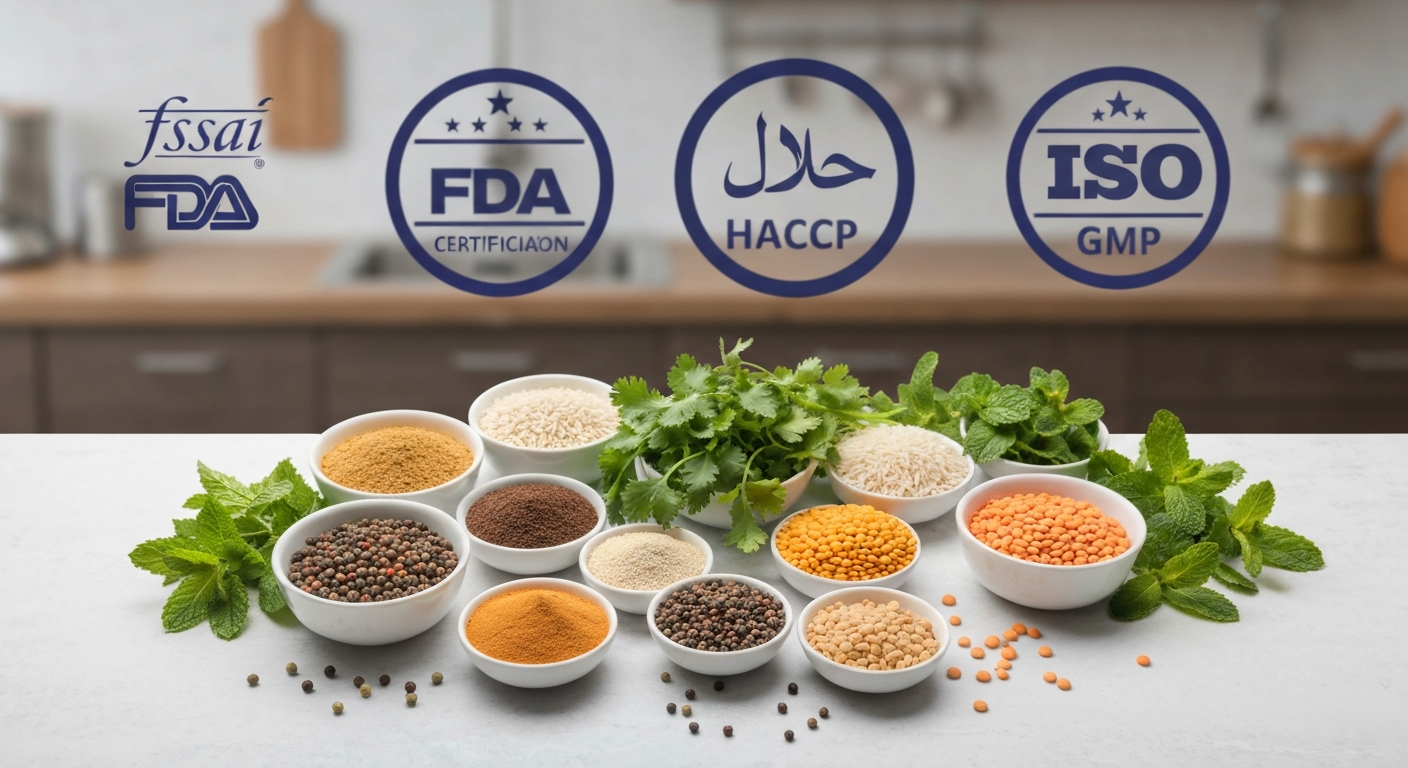
Our products consistently hold FSSAI, US FDA, ISO, Halal, HACCP, and GMP certifications. These certifications are a testament to our commitment to quality, safety, and adherence to specific dietary requirements, enabling your clients to confidently serve diverse patrons.
We support your operational needs with clear logistical information: our minimum order quantity (MOQ) for wholesale orders is 50 kg. For products in stock at our US (Houston) or local-country warehouses, we ensure shipping within 2 days. If a product is not immediately in stock, the lead time is typically 35-60 days, and we notify customers promptly of any potential delays. We proudly serve a growing list of countries, including USA, Canada, UK, UAE, Australia, Germany, Italy, India, France, Ireland, Switzerland, and Netherlands, with more markets continuously being added.
Practical Steps for Distributors to Guide Clients
To effectively leverage your expertise in foodservice distributor Indian dietary certification, consider these practical steps:
- Educate Your Sales Team: Equip your sales representatives with in-depth knowledge about the certifications held by your Indian product range and what each certification means for dietary compliance. They should be able to articulate the benefits clearly to clients.
- Highlight Certified Products: Clearly mark and highlight certified products in your catalogs, online portals, and marketing materials. Make it easy for clients to identify compliant options.
- Offer Samples and Consultations: Provide samples of certified products and offer consultations to discuss how these ingredients can seamlessly integrate into clients' existing menus or help them develop new, compliant offerings.
- Communicate Specifications Proactively: Share detailed product specifications, including allergen information and certification details, upfront. Transparency builds confidence.
Partnering for Success in Indian Foodservice
In an increasingly competitive market, foodservice distributors who go beyond basic product delivery to offer expert guidance on critical issues like dietary compliance will emerge as true leaders. By focusing on foodservice distributor Indian dietary certification, you not only enhance your own brand's reputation but also empower your clients to thrive in a diverse and demanding culinary landscape. Partner with suppliers who prioritize these certifications to ensure your supply chain is robust, reliable, and ready for the future of food.
To learn more about MITRA's certified Indian gravies, pastes, sauces, rice, and spices, or to request a quote or sample, please visit ododgroup.com. We are committed to supporting your success in delivering exceptional and compliant Indian cuisine to kitchens worldwide.