
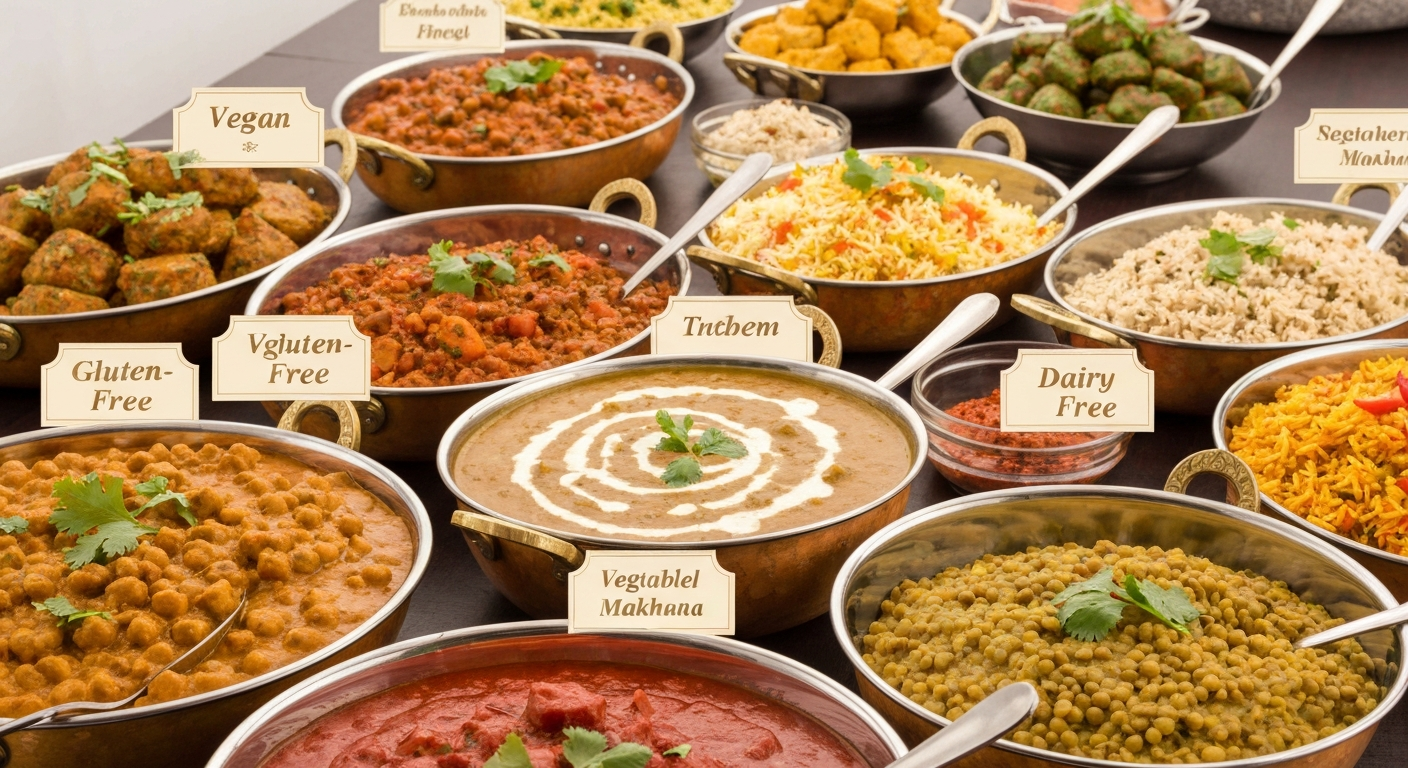
In the dynamic world of event catering, meeting diverse dietary requirements is no longer a niche request but a fundamental expectation. Caterers are constantly challenged to deliver menus that not only delight the palate but also accommodate an ever-growing array of allergies, intolerances, and lifestyle choices. For those specializing in or looking to expand into Indian cuisine, crafting an inclusive Indian catering menu presents both a unique opportunity and a complex logistical puzzle. This article explores how professional kitchens can expertly navigate these demands, leveraging the inherent adaptability of Indian food and the operational efficiencies of high-quality, prepared ingredients.
The Evolving Landscape of Dietary Needs in Catering
The demand for specialized meal options has surged. Guests are more informed about their health and dietary preferences, and they expect caterers to provide safe, delicious, and clearly labeled choices. Common dietary considerations include:
- Vegetarian and Vegan: Driven by ethical, environmental, and health concerns, plant-based diets are increasingly prevalent.
- Gluten-Free: Celiac disease and gluten sensitivity require strict avoidance of wheat, barley, and rye.
- Dairy-Free: Lactose intolerance and dairy allergies necessitate alternatives to milk, cheese, and butter.
- Nut Allergies: Peanuts and tree nuts are common allergens, requiring meticulous cross-contamination prevention.
- Other Allergies/Intolerances: Soy, shellfish, eggs, and specific spices can also be problematic for some guests.
Failing to address these needs can lead to negative guest experiences, reputational damage, and even health risks. For caterers, proactively designing an inclusive menu is a competitive advantage, demonstrating professionalism and a commitment to guest well-being.
Indian Cuisine: A Foundation for Inclusivity
Indian cuisine is inherently well-suited for catering to a wide range of dietary needs. Its rich tapestry of regional dishes, emphasis on vegetables, lentils, grains, and a vast spice palette offers natural flexibility. Unlike many cuisines that rely heavily on single staple ingredients, Indian food's diversity allows for easy adaptation without sacrificing authenticity or flavor.
Naturally Vegetarian and Vegan-Friendly
Many traditional Indian dishes are plant-based by design. The cuisine boasts an extensive repertoire of vegetarian options, from hearty dals (lentil stews) and vibrant vegetable curries to rice-based biryanis and aromatic pulaos. With minor adjustments, many of these can be made entirely vegan:
- Dals: Most dals are naturally vegan, made with lentils, spices, and water. A classic `Dal Tadka` or `Dal Makhani` (when made with plant-based cream or without butter) are excellent choices.
- Vegetable Curries: Dishes like `Aloo Gobi` (potato and cauliflower), `Chana Masala` (chickpea curry), `Baingan Bharta` (smoked eggplant mash), and `Bhindi Masala` (okra curry) are typically vegan.
- Rice Preparations: `Vegetable Pulao` and `Biryani` (using vegetable broth and no dairy) are naturally satisfying and inclusive.
Gluten-Free Adaptations
While wheat-based breads like naan and roti are iconic, Indian cuisine offers numerous naturally gluten-free alternatives and dishes:
- Rice: The cornerstone of many Indian meals, rice (basmati, sella, sona masoori) is naturally gluten-free. Dishes like `Jeera Rice`, `Lemon Rice`, and `Biryani` are safe bets.
- Lentils and Legumes: All dals and chickpea-based dishes (`Chana Masala`, `Pakoras` made with chickpea flour) are gluten-free.
- Chickpea Flour (Besan): Used in `Pakoras`, `Dhokla`, and various flatbreads (like `Besan Roti` or `Pudla`), offering gluten-free bread options.
- Millet and Sorghum: Increasingly popular, these grains can be used in various preparations.
- Traditional Dishes: Many gravies and curries, especially those not thickened with wheat flour, are gluten-free. It's crucial to verify all ingredients, especially in pre-made spice blends or sauces.
Navigating Dairy and Nut Sensitivities
Dairy and nuts are used in some Indian dishes, particularly in North Indian cuisine, for richness and texture. However, many dishes are naturally free of these or can be easily adapted:
- Dairy-Free: Many South Indian dishes, such as `Sambar`, `Rasam`, and most dry vegetable preparations, are dairy-free. For North Indian dishes, plant-based yogurts, creams, and milks (cashew, almond, coconut) can substitute dairy in gravies like `Korma` or `Butter Chicken` (creating a vegan 'butter chicken'). Opting for tomato-based or onion-ginger-garlic gravies naturally reduces dairy dependence.
- Nut-Free: While cashews and almonds are common in richer gravies, many everyday Indian dishes are nut-free. `Dal Tadka`, `Aloo Gobi`, `Chana Masala`, and many stir-fried vegetables are typically prepared without nuts. When developing an inclusive Indian catering menu, clearly identify dishes with nuts and ensure separate preparation areas to prevent cross-contamination.
Crafting an Inclusive Indian Catering Menu: Practical Strategies for Caterers
Developing a truly inclusive menu requires more than just offering a few alternative dishes. It demands a systematic approach to ingredient sourcing, preparation, labeling, and staff training.
1. Modular Menu Design
Think of your menu as a set of building blocks. Design components that can be combined to form complete meals for different dietary needs. For example:
- Base: Basmati rice (GF, Vegan), Lemon Rice (GF, Vegan).
- Protein/Main: Chana Masala (GF, Vegan), Dal Makhani (can be made Vegan/DF), Paneer Butter Masala (Vegetarian, can be made DF with plant-based paneer alternative).
- Vegetable Side: Aloo Gobi (GF, Vegan), Bhindi Masala (GF, Vegan).
- Bread: Gluten-free flatbreads or traditional Naan/Roti for those without gluten restrictions.
This approach simplifies kitchen operations and reduces waste, as core ingredients are utilized across multiple offerings.
2. Meticulous Ingredient Sourcing and Management
Knowing exactly what goes into every dish is paramount. Work with trusted suppliers and scrutinize ingredient labels. For critical allergens, ensure dedicated storage to prevent accidental cross-contact.
3. Preventing Cross-Contamination
This is non-negotiable for severe allergies. Implement strict protocols:
- Separate Prep Areas: Designate specific zones for allergen-free meal preparation.
- Dedicated Equipment: Use separate cutting boards, utensils, pots, and pans for allergen-free dishes.
- Cleaning Procedures: Thoroughly clean and sanitize all surfaces and equipment between uses.
- Staff Training: Ensure all kitchen staff understand the severity of allergies and the importance of strict protocols.
4. Clear and Comprehensive Labeling
Guests need to trust that their food is safe. Provide clear, concise, and accurate labeling for every dish, indicating:
- Dietary Icons: Use universally recognized symbols for Vegetarian, Vegan, Gluten-Free, Dairy-Free, Nut-Free.
- Ingredient Lists: A detailed list of ingredients for each dish is ideal, especially for buffet settings.
- Allergen Disclaimers: Include a disclaimer about potential cross-contamination for severe allergies, even with best practices.
5. Leveraging High-Quality Prepared Ingredients
This is where strategic partnerships can transform your catering operations. Using chef-grade, pre-prepared Indian gravies, pastes, and sauces, such as those from MITRA, offers significant advantages for crafting an inclusive Indian catering menu:
- Consistency: Ensures uniform flavor and texture across all batches, critical when adapting recipes.
- Reduced Prep Time: Frees up kitchen staff to focus on specialized preparation and plating, rather than hours of spice grinding and base gravy cooking.
- Allergen Control: Reputable suppliers provide detailed ingredient lists, allowing caterers to confidently identify and select products that align with specific dietary needs. This minimizes the risk of hidden allergens often found in scratch-made spice blends.
- Scalability: Easily scale up production for larger events without compromising quality or safety.
- Food Safety and Certifications: Products manufactured under stringent quality controls and certifications like FSSAI, US FDA, ISO, Halal, HACCP, and GMP offer an added layer of assurance regarding ingredient integrity and safety.
For example, a high-quality tomato-onion gravy base can be the foundation for a `Chana Masala` (vegan, GF, DF, nut-free) or adapted for a `Paneer Butter Masala` (vegetarian, can be made DF). A pre-made `Dal Makhani` base, if certified vegan and dairy-free, simplifies serving this popular dish to a broader audience.
Sample Inclusive Indian Catering Menu Items
Here are examples of dishes that can be easily incorporated into an inclusive Indian catering menu:
Vegan & Vegetarian Options:
- Appetizers: Vegetable Pakoras (chickpea flour-based, GF), Samosas (can be made with GF pastry), Aloo Tikki (potato patties).
- Main Courses: Chana Masala, Aloo Gobi, Bhindi Masala, Vegetable Korma (made with coconut milk/cashew paste, ensuring nut-free if needed), Dal Tadka, Vegetable Biryani (using vegetable broth).
- Sides: Jeera Rice, Lemon Rice, Cucumber Raita (can be made with plant-based yogurt).
Gluten-Free Options:
- Appetizers: All the above vegan/vegetarian appetizers (ensure GF pastry/flour).
- Main Courses: All rice-based dishes, all dal preparations, most vegetable curries (verify no wheat thickeners), Chicken Tikka (marinade is typically GF).
- Breads: Besan Roti (chickpea flour flatbread), Rice flour Dosas.
Dairy-Free Options:
- Appetizers: All vegan appetizers.
- Main Courses: Most South Indian curries (Sambar, Rasam), dry vegetable preparations (Aloo Gobi, Bhindi Masala), Chana Masala, Dal Tadka. North Indian gravies can be adapted with coconut milk or cashew paste instead of cream/yogurt.
Nut-Free Options:
- Appetizers: Samosas, Pakoras, Aloo Tikki.
- Main Courses: Dal Tadka, Chana Masala, Aloo Gobi, many simple chicken or lamb curries (verify gravy ingredients).
- Sides: Jeera Rice, Lemon Rice.
Operational Excellence with MITRA Products
For professional caterers and restaurant operators, the partnership with a reliable B2B food supplier like MITRA is invaluable. Our range of chef-grade Indian gravies, pastes, sauces, rice, and spices are designed to support high-volume kitchens in delivering authentic flavors efficiently, especially when catering to specific dietary needs.
Our products are manufactured to stringent quality standards, holding certifications such as FSSAI, US FDA, ISO, Halal, HACCP, and GMP. These certifications provide peace of mind regarding product integrity, crucial for allergen management and food safety.
By incorporating MITRA's prepared ingredients, caterers can:
- Enhance Consistency: Ensure every dish, regardless of dietary modification, maintains a consistent, high-quality flavor profile.
- Streamline Operations: Reduce labor costs and kitchen complexity by minimizing scratch preparation for base gravies and sauces.
- Improve Allergen Control: Access detailed ingredient information for each product, simplifying menu labeling and reducing risks.
- Scale with Confidence: Easily manage large-scale events and sudden increases in demand, knowing that high-quality, pre-approved ingredients are readily available.
We understand the importance of timely delivery. For products in stock at our US (Houston) or local-country warehouses, shipping typically occurs within 2 days. For items not in stock, the lead time is 35-60 days, and customers are notified immediately of any delays. Our minimum order quantity (MOQ) is 50 kg, designed to meet the needs of professional kitchens and food distributors. We proudly serve clients in the USA, Canada, UK, UAE, Australia, Germany, Italy, India, France, Ireland, Switzerland, and Netherlands, with our network continually expanding.
Conclusion
Crafting an inclusive Indian catering menu is a testament to a caterer's culinary skill and operational foresight. Indian cuisine, with its inherent versatility and rich vegetarian tradition, offers a powerful foundation for meeting diverse dietary requirements without compromising on authenticity or flavor. By adopting modular menu design, implementing rigorous allergen protocols, and strategically leveraging high-quality prepared ingredients from trusted suppliers like MITRA, caterers can not only meet but exceed client expectations. This approach ensures every guest enjoys a safe, delicious, and memorable dining experience, solidifying your reputation as a leader in inclusive event catering.
---
Ready to elevate your inclusive Indian catering menu with chef-grade ingredients? Inquire about our wholesale solutions, request a quote, or explore product samples by visiting ododgroup.com today.