
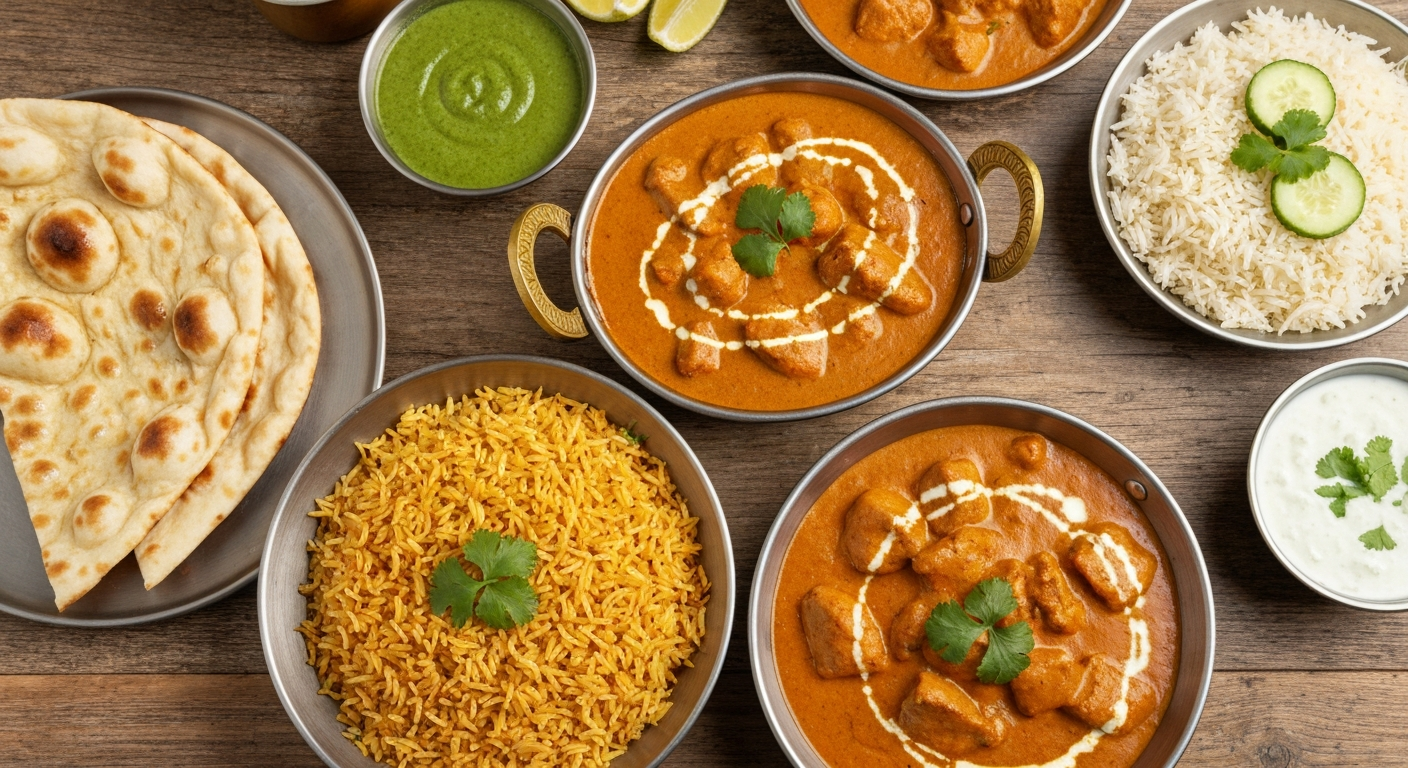
As a foodservice distributor, your role extends far beyond merely supplying ingredients. In today's competitive culinary landscape, your most valuable offering can be insights and solutions that directly impact your clients' bottom line. For restaurants specializing in Indian cuisine, understanding and optimizing profitability is particularly critical, given the complexity of ingredients, preparation, and labor involved.
This guide is designed to equip you with the knowledge and tools to provide data-driven foodservice distributor Indian menu profit analysis to your restaurant and catering clients. By helping them meticulously dissect their costs, streamline operations, and enhance menu efficiency, you not only strengthen your partnership but also position yourself as an indispensable strategic advisor.
The Unique Profitability Dynamics of Indian Cuisine
Indian cuisine is celebrated globally for its rich flavors, diverse regional variations, and aromatic spices. Its growing popularity presents a significant opportunity for restaurants, but also unique operational challenges:
- Complex Ingredient Lists: Many Indian dishes require a wide array of spices, fresh produce, and specialized ingredients, leading to higher inventory complexity and potential waste.
- Labor-Intensive Preparation: Authentic Indian cooking often involves extensive prep work—chopping, grinding spices, slow-cooking gravies, and skilled culinary techniques—which drives up labor costs.
- Consistency Challenges: Maintaining consistent flavor and quality across a diverse menu, especially with multiple chefs or high staff turnover, can be difficult.
- Portion Control: Varied dish types, from curries and biryanis to breads and sides, necessitate meticulous portion management to control costs effectively.
By helping your clients navigate these complexities, you empower them to transform a beloved cuisine into a highly profitable venture. This starts with a robust profit analysis.
Your Role in Foodservice Distributor Indian Menu Profit Analysis
Distributors are uniquely positioned to offer value-added services in profit analysis. You have visibility into ingredient costs, market trends, and often, operational best practices across various clients. Leveraging this position allows you to:
- Identify Cost-Saving Opportunities: Pinpoint where clients might be overspending on raw ingredients or inefficient processes.
- Recommend Optimized Product Solutions: Introduce high-quality, pre-prepared ingredients that reduce labor and waste, such as MITRA's chef-grade gravies, pastes, and spices.
- Advise on Menu Engineering: Help clients strategically price and position dishes based on popularity and profitability.
- Enhance Operational Efficiency: Suggest ways to streamline kitchen workflows, inventory management, and staff training.
Key Metrics for Indian Menu Profitability Analysis
To conduct a thorough profit analysis, several key metrics must be evaluated:
1. Food Cost Percentage (FCP)
This is the most fundamental metric. For each dish, FCP is calculated as: `(Cost of Ingredients / Selling Price) x 100`. Indian dishes can have varying FCPs due to ingredient costs and preparation. A typical target FCP for restaurants is between 25-35%, but this can vary.
- How to help: Encourage clients to track precise ingredient costs, including spices and garnishes, for every dish. Highlight how pre-made gravies can stabilize FCP by ensuring consistent ingredient usage and reducing waste.
2. Plate Contribution Margin
Also known as contribution margin, this metric is `Selling Price - Cost of Ingredients`. It represents the profit generated by each plate sold before accounting for labor and overheads. Dishes with a high contribution margin are often the most profitable, even if their FCP is slightly higher.
- How to help: Guide clients to identify high-contribution dishes and promote them on the menu. This is crucial for effective menu engineering.
3. Labor Cost Percentage
Indian cuisine is notoriously labor-intensive. This metric is `(Total Labor Cost / Total Revenue) x 100`. High labor costs can significantly erode profits.
- How to help: Showcase how products like MITRA's ready-to-use gravies and pastes drastically cut down prep time, skilled labor requirements, and cooking time, directly impacting labor cost savings. For example, a chef no longer needs hours to roast and grind spices or slow-cook a base gravy.
4. Waste Percentage
Waste includes spoilage, over-portioning, preparation errors, and expired ingredients. For complex Indian menus with many fresh ingredients and spices, waste can be a hidden profit killer.
- How to help: Recommend inventory management best practices. Emphasize how stable, long-shelf-life products like MITRA's bulk spices and gravies reduce spoilage and simplify inventory, leading to less waste and more predictable costs.
Deep Dive into Cost Components for Indian Dishes
Understanding where costs originate is paramount for an effective foodservice distributor Indian menu profit analysis.
Ingredient Costs
- Spices: While often bought in bulk, the sheer variety and specific blends for Indian cooking can be costly and require careful sourcing. Quality matters, as does shelf life.
- Base Gravies and Pastes: Traditionally, these are made from scratch, involving significant raw material cost (onions, tomatoes, ginger, garlic, cashews, cream) and cooking fuel.
- Fresh Produce: Vegetables, herbs, and dairy products are often used in large quantities and are highly perishable.
- Proteins: Chicken, lamb, paneer, and seafood are significant cost drivers.
Labor Costs
- Prep Time: Chopping, dicing, grinding, marinating.
- Cooking Time: Slow-cooking gravies, precise tempering of spices, multi-stage cooking processes.
- Skilled Labor: Indian cuisine often requires chefs with specialized knowledge and experience, commanding higher wages.
Overhead Costs
- Utilities: Gas for long cooking times, refrigeration for numerous ingredients.
- Rent/Lease, Equipment Maintenance, Marketing: Standard restaurant overheads that must be covered by profitable menu items.
Leveraging MITRA Products for Enhanced Profitability
This is where ODOD LLC's MITRA brand becomes a strategic asset for your clients and, by extension, for your distribution business. Our chef-grade Indian gravies, pastes, sauces, rice, and spices are designed to address the core challenges of Indian kitchen profitability.
- Consistent Quality and Flavor: Our products are manufactured to stringent quality standards, ensuring that every dish prepared using MITRA ingredients delivers authentic, consistent taste, which is vital for repeat customers. Our products are produced under FSSAI, US FDA, ISO, Halal, HACCP, and GMP certifications, guaranteeing purity and safety.
- Significant Labor Savings: Ready-to-use gravies and pastes eliminate hours of prep time, allowing chefs to focus on finishing dishes, plating, and innovation rather than foundational cooking. This reduces the need for extensive skilled labor for basic preparations.
- Reduced Food Waste: With stable, long-shelf-life products, spoilage of perishable base ingredients is minimized. Precise portioning becomes easier, further cutting down on waste.
- Predictable Food Costs: Using standardized, high-quality bulk ingredients helps stabilize food costs, making FCP calculations more accurate and reliable. Our minimum order quantity is a 50 kg MOQ, ensuring efficiency for professional kitchens.
- Scalability: For cloud kitchens, caterers, and multi-unit restaurants, MITRA products enable rapid scalability without compromising quality or increasing labor exponentially. A new chef can quickly learn to use our products, maintaining brand consistency.
- Inventory Simplification: Consolidating ingredient lists by using versatile gravies and pastes simplifies ordering, storage, and inventory management.
By integrating MITRA products, your clients can significantly lower their operational costs while elevating the quality and consistency of their Indian menu offerings. This directly translates to improved profitability.
Menu Engineering for Indian Restaurants
Once cost data is clear, you can help clients apply menu engineering principles to their Indian menus. This involves classifying dishes based on their popularity and profitability:
- Stars: High popularity, high contribution margin. These are your most profitable and beloved dishes. Promote them prominently.
- Plow Horses: High popularity, low contribution margin. Customers love them, but they don't make much money. Consider slight price increases or ingredient cost reductions (e.g., using MITRA gravies).
- Puzzles: Low popularity, high contribution margin. These dishes are profitable but don't sell well. Can they be re-promoted, renamed, or repositioned? Or perhaps removed if they tie up too many unique ingredients?
- Dogs: Low popularity, low contribution margin. These should be removed from the menu to free up kitchen space, inventory, and reduce complexity.
Your analysis can help clients make data-driven decisions on pricing, placement, and promotion of their Indian dishes.
Inventory Management and Waste Reduction Strategies
Effective inventory management is critical for Indian cuisine due to the sheer volume and variety of ingredients. You can advise clients on:
- Just-in-Time (JIT) Ordering: Minimizing on-hand inventory for highly perishable items, while stocking stable products like MITRA's gravies and spices.
- First-In, First-Out (FIFO): Ensuring older stock is used before newer stock to prevent spoilage.
- Standardized Recipes: Consistent use of recipes ensures accurate portioning and reduces over-usage of costly ingredients. MITRA products facilitate this by providing a consistent base.
- Supplier Consolidation: Streamlining suppliers can lead to better pricing and simpler logistics. As a distributor, you can offer a comprehensive range of Indian culinary essentials from MITRA.
Building Long-Term Client Relationships Through Value-Add
Offering foodservice distributor Indian menu profit analysis transforms your relationship with clients from transactional to strategic. When you help them achieve tangible financial improvements, you become an invaluable partner. This fosters loyalty, increases their reliance on your expertise, and ultimately strengthens your position as their preferred supplier.
By presenting clear data, actionable recommendations, and high-quality product solutions like those from MITRA, you demonstrate a deep understanding of their business challenges and a genuine commitment to their success.
Reliable Supply Chain for Your Clients
Ensuring a consistent and reliable supply chain is fundamental to your clients' operational stability and profitability. ODOD LLC prides itself on efficient logistics to support your distribution network.
For products in stock at our US (Houston) or local-country warehouses, we can ship within 2 business days. If a product is not immediately in stock, we notify customers promptly, and the lead time is typically 35-60 days. We currently serve a growing list of countries, including the USA, Canada, UK, UAE, Australia, Germany, Italy, India, France, Ireland, Switzerland, and the Netherlands, ensuring broad reach and consistent availability for your diverse clientele.
Conclusion
In the dynamic world of foodservice, providing a data-driven approach to Indian menu profitability is a powerful differentiator for distributors. By understanding the unique cost structures of Indian cuisine and leveraging high-quality, efficient products like MITRA's range of gravies, pastes, sauces, rice, and spices, you can empower your clients to optimize their operations, reduce waste, manage labor costs, and significantly boost their bottom line.
This strategic partnership approach not only enhances your clients' success but also solidifies your role as an indispensable resource in the competitive foodservice market. Explore how ODOD LLC and the MITRA brand can support your value proposition.
Ready to elevate your clients' profitability and strengthen your distribution offering? Inquire today via ododgroup.com to learn more about partnering with us and accessing our range of chef-grade Indian culinary solutions.