
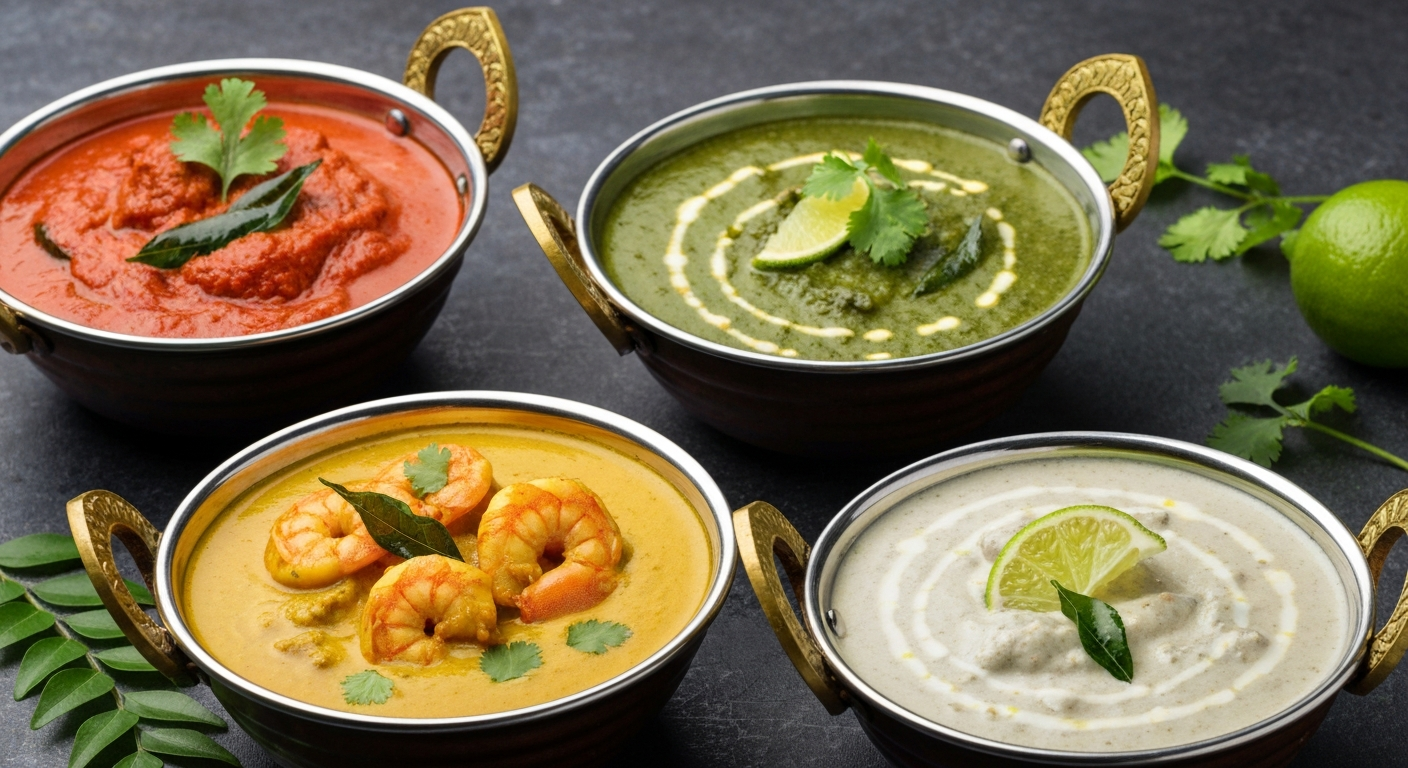
As a food distributor, your role extends beyond logistics; you are a vital partner in your clients' culinary success. In a competitive foodservice landscape, offering innovative solutions for menu differentiation is paramount. One of the most impactful strategies currently emerging is the mastery of niche regional Indian flavors. This guide is designed to equip you with the knowledge and tools for effective distributor regional Indian menu consulting, enabling your clients to captivate diners and significantly enhance their profitability.
The Untapped Potential of Regional Indian Cuisine for Menu Differentiation
The perception of "Indian food" often defaults to a limited set of popular dishes like Chicken Tikka Masala, Butter Chicken, and Naan. While these staples are beloved, they represent only a fraction of India's vast and diverse culinary heritage. India is a subcontinent with 28 states and 8 union territories, each boasting distinct languages, cultures, and, crucially, unique culinary traditions shaped by geography, climate, and local ingredients. This diversity presents an immense opportunity for restaurants, caterers, and ghost kitchens to stand out.
Consumers today are increasingly adventurous. They seek authentic experiences, new flavors, and stories behind their food. Generic menus struggle to capture this evolving palate. By introducing authentic regional Indian dishes, your clients can:
- Attract New Demographics: Appeal to diners looking for more than the usual, including those with personal connections to specific regional Indian cuisines.
- Command Premium Pricing: Niche, authentic dishes are often perceived as more special and can justify higher price points, boosting profit margins.
- Create a Unique Brand Identity: A restaurant known for its specific regional specialties, such as Goan seafood curries or Bengali mustard-infused gravies, builds a stronger, more memorable brand.
- Generate Buzz and Media Interest: Unique offerings are newsworthy and can attract critical acclaim and social media attention, driving organic marketing.
Your role as a distributor is to illuminate these opportunities and provide the practical pathways for your clients to seize them.
Understanding India's Culinary Geography: A Consultant's Primer
To effectively consult, a basic understanding of India's culinary regions is invaluable. This isn't about memorizing every dish, but recognizing broad flavor profiles and signature ingredients.
#### North India: Rich, Creamy, and Robust
Northern Indian cuisine is often characterized by its rich gravies, liberal use of dairy (ghee, cream, yogurt), and aromatic spices like cardamom, cloves, and cinnamon. Wheat-based breads (Naan, Roti, Paratha) are staples. Key regions include Punjab, Uttar Pradesh, Rajasthan, and Kashmir.
- Signature Flavors: Tandoori cooking, slow-cooked curries like Rogan Josh (Kashmir), and creamy Kormas. Lentil dishes like Dal Makhani are also prominent.
- Differentiation Opportunity: Beyond Butter Chicken, explore dishes like _Nihari_ (slow-cooked lamb stew), _Laal Maas_ (spicy Rajasthani mutton curry), or _Chole Bhature_ (chickpea curry with fried bread).
#### South India: Light, Tangy, and Spice-Forward
Southern Indian cuisine, particularly from states like Kerala, Tamil Nadu, Karnataka, and Andhra Pradesh, is known for its lighter, often coconut-based gravies, liberal use of curry leaves, mustard seeds, tamarind, and fresh seafood. Rice is the primary staple.
- Signature Flavors: Sambar, Dosa, Idli, and a variety of seafood curries. The heat level can be significant, especially in Andhra Pradesh.
- Differentiation Opportunity: Introduce _Malabar Fish Curry_ (Kerala), _Chettinad Chicken_ (Tamil Nadu, known for its complex spice blend), _Bisi Bele Bath_ (Karnataka's lentil and rice dish), or _Gongura Mutton_ (Andhra Pradesh, sour sorrel leaves).
#### East India: Subtle, Sweet, and Mustard-Infused
Eastern Indian cuisine, primarily from West Bengal and Odisha, often features a delicate balance of sweet, sour, and spicy notes. Mustard oil and mustard seeds are common, as is the use of fish and a variety of vegetables. Rice is the main staple.
- Signature Flavors: Fish curries, mustard-based preparations, and a focus on fresh produce. Sweets are also a significant part of the cuisine.
- Differentiation Opportunity: Offer _Machher Jhol_ (Bengali fish curry), _Shorshe Ilish_ (Hilsa fish in mustard sauce), or _Aloo Posto_ (potatoes with poppy seeds).
#### West India: Diverse, Sweet-Sour, and Coastal Influences
Western Indian cuisine encompasses a broad spectrum from the coastal flavors of Maharashtra and Goa to the vegetarian traditions of Gujarat. There's a notable use of peanuts, sesame, jaggery, and coconut.
- Signature Flavors: Seafood curries (Goa), sweet-and-sour Gujarati thalis, and spicy Maharashtrian dishes. _Vindaloo_ (Goa) and _Pav Bhaji_ (Mumbai street food) are well-known.
- Differentiation Opportunity: Beyond Vindaloo, consider _Goan Prawn Balchão_ (spicy, tangy prawn pickle), _Gujarati Kadhi_ (yogurt-based curry), or _Kolhapuri Chicken_ (spicy Maharashtrian chicken).
#### Central India: Robust and Hearty
States like Madhya Pradesh and Chhattisgarh offer hearty, often spicy dishes influenced by both North and South. Lentils, wheat, and local vegetables form the backbone.
- Signature Flavors: Simpler, robust preparations, often with a focus on local grains and legumes.
- Differentiation Opportunity: Explore dishes like _Dal Bafla_ (lentils with baked wheat balls) or _Bhutte ka Kees_ (grated corn dish).
This overview provides a starting point. Your deep dive with clients will involve identifying which regional profiles best align with their existing menu, target audience, and operational capabilities.
Practical Strategies for Distributors: Your Role as Culinary Consultant
Your expertise as a distributor regional Indian menu consulting partner can be invaluable. Here’s how to guide your clients effectively:
#### 1. Assess Client Needs and Capabilities
Before suggesting new dishes, understand your client's current situation:
- Existing Menu: What are their current bestsellers? What gaps exist? Is there a desire to move beyond common Indian dishes?
- Kitchen Infrastructure: What equipment do they have? Do they have chefs experienced in Indian cuisine, or are they open to semi-prepared solutions?
- Target Demographics: Who are their primary customers? Are they seeking adventurous eaters, or a broader appeal?
- Operational Goals: Are they looking to reduce labor costs, increase speed of service, or enhance consistency?
#### 2. Introduce Niche Flavors Strategically
Don't overwhelm clients with too many options. Start with a few well-chosen regional dishes that complement their existing offerings or fill a market gap.
- Flavor Profiles: Suggest gravies or pastes that introduce new flavor profiles (e.g., tangy tamarind, smoky mustard, delicate coconut) distinct from their current menu.
- Ingredient Focus: Highlight dishes that feature unique regional ingredients or preparation methods that are easily replicable with quality pre-made bases.
- Cross-Utilization Potential: Can a regional gravy be used as a base for multiple dishes (e.g., a Goan Vindaloo paste for chicken, lamb, or even vegetables)?
#### 3. Emphasize Operational Efficiency and Consistency with MITRA Products
This is where ODOD LLC's MITRA brand becomes a game-changer for your clients. Traditional regional Indian cooking often requires specialized knowledge, extensive ingredient sourcing, and significant prep time. Our chef-grade gravies, pastes, and sauces mitigate these challenges:
- Reduced Labor Costs: Pre-made bases eliminate hours of chopping, grinding, and slow-cooking, allowing kitchen staff to focus on finishing and plating.
- Consistent Quality and Flavor: Each batch of MITRA product is manufactured to exacting standards, ensuring that every dish tastes authentic and consistent, regardless of the chef on duty.
- Authentic Flavor Profiles: Our products are developed to capture the true essence of regional Indian cuisines, giving your clients access to complex, genuine flavors without needing a regional specialist chef.
- Simplified Inventory Management: Fewer raw ingredients to stock and manage, reducing waste and complexity.
- Scalability: Easily scale production of regional dishes to meet demand without compromising quality or increasing labor exponentially.
#### 4. Demonstrate Profitability and Premium Positioning
Help your clients understand the financial benefits:
- Higher Perceived Value: Authentic regional dishes are often seen as specialty items, justifying higher menu prices compared to common curries.
- Cost-Effective Innovation: Investing in high-quality pre-made gravies is often more cost-effective than hiring specialized chefs or sourcing rare ingredients.
- Reduced Food Waste: Precise portioning with ready-to-use products helps manage ingredient costs and reduce spoilage.
#### 5. Offer Ongoing Support and Training
Your consulting doesn't end with a sale. Provide ongoing value:
- Recipe Suggestions: Offer simple, adaptable recipes using MITRA gravies for regional dishes.
- Plating and Presentation Tips: Guide clients on how to present regional dishes authentically and appealingly.
- Marketing Language: Help clients craft menu descriptions that highlight the authenticity and regional origin of their new dishes.
MITRA's Role in Streamlining Regional Indian Menu Expansion
ODOD LLC, through its MITRA brand, is committed to being your partner in this endeavor. Our extensive range of chef-grade Indian gravies, pastes, sauces, rice, and spices are designed precisely for professional kitchens looking to innovate and differentiate.
Our products are manufactured to stringent quality standards, holding certifications such as FSSAI, US FDA, ISO, Halal, HACCP, and GMP. These certifications provide assurance of safety, quality, and consistency, which is critical for any commercial kitchen.
By leveraging MITRA products, your clients can confidently add complex regional Indian dishes to their menus, knowing they are delivering authentic flavors with operational ease. From the rich, robust gravies of North India to the tangy, coconut-infused bases of the South, and the subtle mustard notes of the East, our range covers a spectrum of regional culinary traditions.
Logistics and Partnership with ODOD LLC
We understand the importance of reliable supply for your distribution business. ODOD LLC maintains a robust logistics network to support your needs:
- Minimum Order Quantity: We facilitate wholesale orders with a 50 kg MOQ.
- Efficient Shipping: If a product is in stock in our US (Houston) or local-country warehouse, it ships in 2 days. For items not in stock, the lead time is typically 35-60 days, and customers are notified immediately of any delays.
- Global Reach: We currently serve customers in the USA, Canada, UK, UAE, Australia, Germany, Italy, India, France, Ireland, Switzerland, and Netherlands, with our network continually expanding.
Partnering with ODOD LLC means you're not just selling products; you're offering your clients a pathway to culinary innovation and sustained growth. Our commitment to quality, authenticity, and operational efficiency empowers you to be the indispensable distributor regional Indian menu consulting expert your clients need.
Ready to empower your clients with the next wave of culinary innovation? Explore the full range of MITRA chef-grade Indian gravies, pastes, sauces, rice, and spices. Request a quote or sample today to experience the quality firsthand and begin your journey as a leading culinary consultant.
Visit ododgroup.com to learn more and connect with our team.