
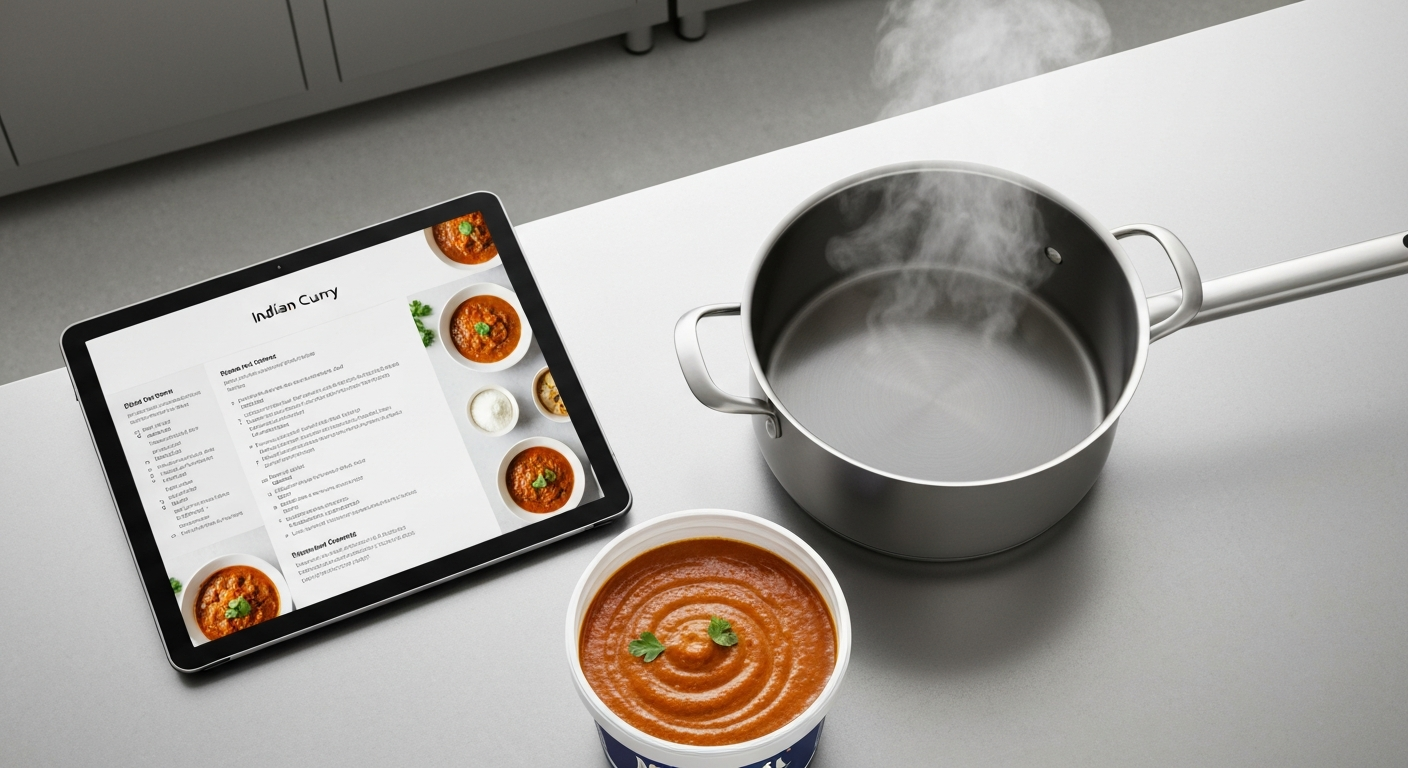
The Ghost Kitchen Imperative: Speed, Consistency, and Profit
Ghost kitchens, by their very nature, operate on principles of maximum efficiency, rapid order fulfillment, and stringent cost control. Without a physical storefront, their success hinges entirely on the seamless integration of technology and streamlined operational workflows. For ghost kitchens specializing in Indian cuisine, the challenge is amplified. Indian food, renowned for its rich flavors and complex preparations, traditionally demands extensive prep time, a vast array of spices, and highly skilled labor. Reconciling this culinary tradition with the high-volume, delivery-focused model of a ghost kitchen requires a strategic approach. This is where smart kitchen Indian menu integration becomes not just an advantage, but a necessity.
Smart kitchen technology offers a comprehensive solution to these inherent complexities, transforming the traditional Indian kitchen into a data-driven, highly efficient operation. By leveraging intelligent systems, ghost kitchens can standardize recipes, optimize inventory, reduce waste, and ensure consistent quality across all orders, ultimately driving profitability and customer satisfaction. The integration of ready-to-use, chef-grade Indian ingredients further accelerates this transformation, providing a foundation for efficiency that complements advanced kitchen technology.
Understanding Smart Kitchen Technology in a Commercial Context
Smart kitchen technology encompasses a range of interconnected digital tools and automated equipment designed to enhance efficiency, reduce errors, and provide actionable insights in a commercial kitchen environment. For ghost kitchens, these technologies are particularly impactful due to their reliance on optimized workflows and data-driven decision-making.
Key components of smart kitchen technology include:
- Point-of-Sale (POS) Systems: Integrated with kitchen display systems (KDS) to manage orders, track sales data, and streamline communication between front-end and back-end operations.
- Inventory Management Software: Provides real-time tracking of ingredients, automates reordering, minimizes waste, and offers insights into cost of goods sold (COGS).
- Recipe Management Platforms: Digitizes recipes, ensuring standardization, accurate portioning, and consistent quality across all dishes and locations.
- Kitchen Display Systems (KDS): Replaces paper tickets, displaying orders, prep instructions, and timing to optimize workflow and reduce errors.
- IoT-enabled Equipment: Smart ovens, fryers, and other appliances that can be programmed, monitored remotely, and provide data on usage and performance.
- Data Analytics Tools: Consolidate information from all systems to provide insights into sales trends, labor costs, ingredient usage, and overall operational efficiency.
Together, these tools create a cohesive ecosystem that allows ghost kitchens to operate with unprecedented precision and responsiveness.
The Unique Operational Hurdles of Indian Cuisine in a Ghost Kitchen
While incredibly popular, Indian cuisine presents several operational challenges that can hinder the efficiency of a ghost kitchen without proper technological intervention:
Labor-Intensive Preparations
Traditional Indian cooking often involves lengthy preparatory stages: grinding fresh spices, slow-cooking gravies for hours, chopping numerous vegetables, and intricate tempering processes. This demands significant skilled labor, which can be expensive and difficult to source consistently in a high-turnover ghost kitchen environment.
Consistency and Quality Control
The nuanced balance of spices and cooking techniques in Indian dishes often relies on the individual chef's expertise. In a multi-chef, high-volume setting, maintaining consistent flavor, texture, and appearance across all dishes, shifts, and locations is a major hurdle. Variations can lead to inconsistent customer experiences and negative reviews.
Complex Inventory Management
An authentic Indian menu requires a vast inventory of spices, herbs, fresh produce, and dairy products. Managing dozens of individual spice SKUs, each with its own shelf life and storage requirements, complicates inventory tracking, increases the risk of spoilage, and makes accurate cost calculation challenging.
Waste Reduction
With numerous fresh ingredients and time-consuming preparations, traditional Indian kitchens can generate significant waste from spoilage, over-prepping, or inaccurate portioning. In a ghost kitchen, where every penny counts, minimizing waste is critical for profitability.
Data Blind Spots
Without integrated systems, it's difficult to accurately track real-time ingredient usage, identify popular dishes, understand true food costs per plate, or pinpoint areas of inefficiency. This lack of data makes informed decision-making and menu optimization a guesswork process.
Smart Kitchen Indian Menu Integration: A Strategic Advantage
Integrating smart kitchen technology directly addresses these challenges, providing ghost kitchens with a robust framework for managing complex Indian menus effectively.
1. Recipe Standardization and Precision
Digital recipe management platforms ensure that every Indian dish is prepared according to exact specifications. Chefs follow step-by-step instructions, precise ingredient measurements, and cooking times displayed on KDS screens. This eliminates guesswork, guarantees consistent quality, and simplifies training for new staff. For a Tandoori Chicken, for instance, the marinade recipe, resting time, and cooking temperature are standardized, ensuring the same delicious result every time.
2. Streamlined Inventory Control and Waste Reduction
Integrated inventory software tracks every ingredient, from a bag of basmati rice to a jar of garam masala, in real-time. This allows for automated reordering based on forecasted demand, preventing both stockouts and overstocking. By precisely monitoring ingredient usage against sales, ghost kitchens can identify and rectify inefficiencies, significantly reducing waste from spoilage or over-preparation. For ingredients like fresh herbs or specialty vegetables common in Indian cuisine, this level of precision is invaluable.
3. Optimized Labor Utilization
Smart kitchen tech reduces the reliance on highly specialized labor for routine or foundational tasks. With standardized digital recipes and KDS guiding preparation, less experienced staff can execute complex dishes with greater accuracy. Automated equipment can handle repetitive tasks, freeing up skilled chefs to focus on finishing touches, quality control, and menu innovation. This is particularly beneficial for tasks like precise portioning of gravies or assembly of complex thalis.
4. Data-Driven Menu Engineering and Cost Control
By integrating sales data with ingredient costs and prep times, smart kitchen systems provide deep insights into menu profitability. Ghost kitchens can analyze which Indian dishes are most popular, which have the highest profit margins, and where costs can be optimized. This data-driven approach allows for strategic menu engineering, enabling operators to adjust pricing, introduce specials, or refine ingredient sourcing to maximize profitability. Understanding the true cost of a Chicken Tikka Masala, factoring in all ingredients and labor, becomes possible.
5. Accelerated Order Fulfillment
KDS systems streamline the order flow from POS to the kitchen, organizing orders by prep station and alerting staff to critical timings. This reduces bottlenecks, minimizes errors, and ensures that dishes are prepared and assembled efficiently, leading to faster delivery times—a critical factor for customer satisfaction in the ghost kitchen model. For a multi-dish Indian order, the KDS can orchestrate the cooking of various components to finish simultaneously.
The MITRA Advantage: Elevating Smart Kitchens with Ready-to-Use Indian Ingredients
While smart kitchen technology provides the framework for efficiency, the quality and format of ingredients play a crucial role in maximizing its benefits. MITRA's range of chef-grade Indian gravies, pastes, sauces, rice, and spices are engineered to integrate seamlessly into a smart kitchen environment, offering a significant advantage for ghost kitchens.
Simplified Recipe Integration
Instead of listing dozens of individual spices and ingredients for a traditional curry base, a digital recipe can specify a single MITRA gravy or paste. This dramatically simplifies recipe data entry and execution, ensuring that the foundational flavor profile of dishes like Butter Chicken or Saag Paneer is consistently perfect with minimal effort.
Streamlined Inventory and Reduced SKUs
MITRA's ready-to-use products consolidate numerous raw ingredients into a single SKU. For example, instead of tracking cumin, coriander, turmeric, ginger, garlic, tomatoes, and onions for a basic gravy, a kitchen tracks just one MITRA gravy product. This drastically reduces the number of items in inventory, making tracking, reordering, and waste management far more efficient and accurate within smart inventory systems.
Unwavering Consistency and Quality
MITRA products are manufactured to stringent quality standards, ensuring consistent flavor, texture, and color every time. This removes the variability inherent in scratch-made gravies, guaranteeing that the final dish, regardless of which chef prepares it or which shift it's made on, meets the exact quality expectations of the customer. This consistency is automatically built into any digital recipe utilizing MITRA products.
Dramatic Labor Savings
By eliminating the need for hours of grinding, sautéing, and slow-cooking gravies from scratch, MITRA products free up valuable labor. Chefs can focus on assembling, finishing, and plating, rather than foundational prep. This allows ghost kitchens to operate with smaller, more efficient teams, or to reallocate labor to higher-value tasks, directly impacting profitability.
Reduced Waste and Predictable Costs
MITRA's products come in bulk, professional-grade packaging, offering precise portion control and longer shelf life compared to fresh, raw ingredients. This reduces spoilage and minimizes waste. Furthermore, the stable pricing of a single, high-quality ingredient like a MITRA gravy allows for more accurate food costing and predictable profit margins, which is crucial for data-driven cost control in smart kitchens.
Enhanced Data Accuracy
Tracking the usage and cost of a single, consistent MITRA gravy SKU within an inventory system is far more accurate than attempting to track the fractional use of dozens of individual spices and raw ingredients. This leads to more reliable data for COGS calculations, menu engineering, and overall financial analysis, empowering ghost kitchen operators with better insights.
Practical Steps for Smart Kitchen Indian Menu Integration
For ghost kitchens looking to implement smart kitchen Indian menu integration, a structured approach is key:
- Audit Current Operations: Identify bottlenecks, areas of waste, and inconsistencies in your current Indian menu preparation.
- Select Appropriate Technology: Invest in integrated POS, KDS, inventory, and recipe management software that aligns with your operational scale and budget.
- Integrate MITRA Products: Begin by incorporating MITRA's ready-to-use gravies and pastes into your core Indian menu items. Update your digital recipes to reflect these ingredients.
- Digitize All Recipes: Convert all your Indian menu recipes into the chosen recipe management platform, including precise measurements, cooking instructions, and allergen information.
- Train Your Team: Provide comprehensive training on the new software and equipment. Emphasize the benefits of standardization and data accuracy.
- Monitor and Optimize: Continuously use the data generated by your smart kitchen systems to refine recipes, optimize inventory levels, manage labor, and adjust menu offerings for maximum profitability and customer satisfaction.
MITRA: Your Partner in Modern Indian Cuisine Operations
At ODOD LLC, we understand the unique demands of professional kitchens, especially in the fast-paced ghost kitchen environment. Our MITRA brand is dedicated to providing chef-grade Indian gravies, pastes, sauces, rice, and spices that enable efficiency without compromising authenticity or flavor.
Our products are manufactured to stringent quality standards, holding FSSAI, US FDA, ISO, Halal, HACCP, and GMP certifications. We ensure that every product meets the highest benchmarks for safety and quality.
We facilitate seamless supply chain integration, with a minimum order quantity (MOQ) of 50 kg to support your bulk needs. If a product is in stock in our US (Houston) or local-country warehouse, it ships in 2 days. If it is not in stock, the lead time is 35-60 days, and the customer is notified immediately of any delay. We serve clients across the USA, Canada, UK, UAE, Australia, Germany, Italy, India, France, Ireland, Switzerland, Netherlands, and are continuously expanding our reach.
Conclusion
For ghost kitchens aiming to master the art of Indian cuisine, smart kitchen Indian menu integration is a transformative strategy. By combining cutting-edge technology with high-quality, ready-to-use ingredients like those from MITRA, operators can overcome traditional challenges, achieve unparalleled efficiency, ensure consistent quality, and drive profitability. This integrated approach not only streamlines operations but also empowers ghost kitchens to scale effectively, meet high demand, and deliver authentic Indian flavors with modern precision.
To learn more about how MITRA can support your smart kitchen Indian menu integration and elevate your Indian menu offerings, request a quote or sample via ododgroup.com today.