
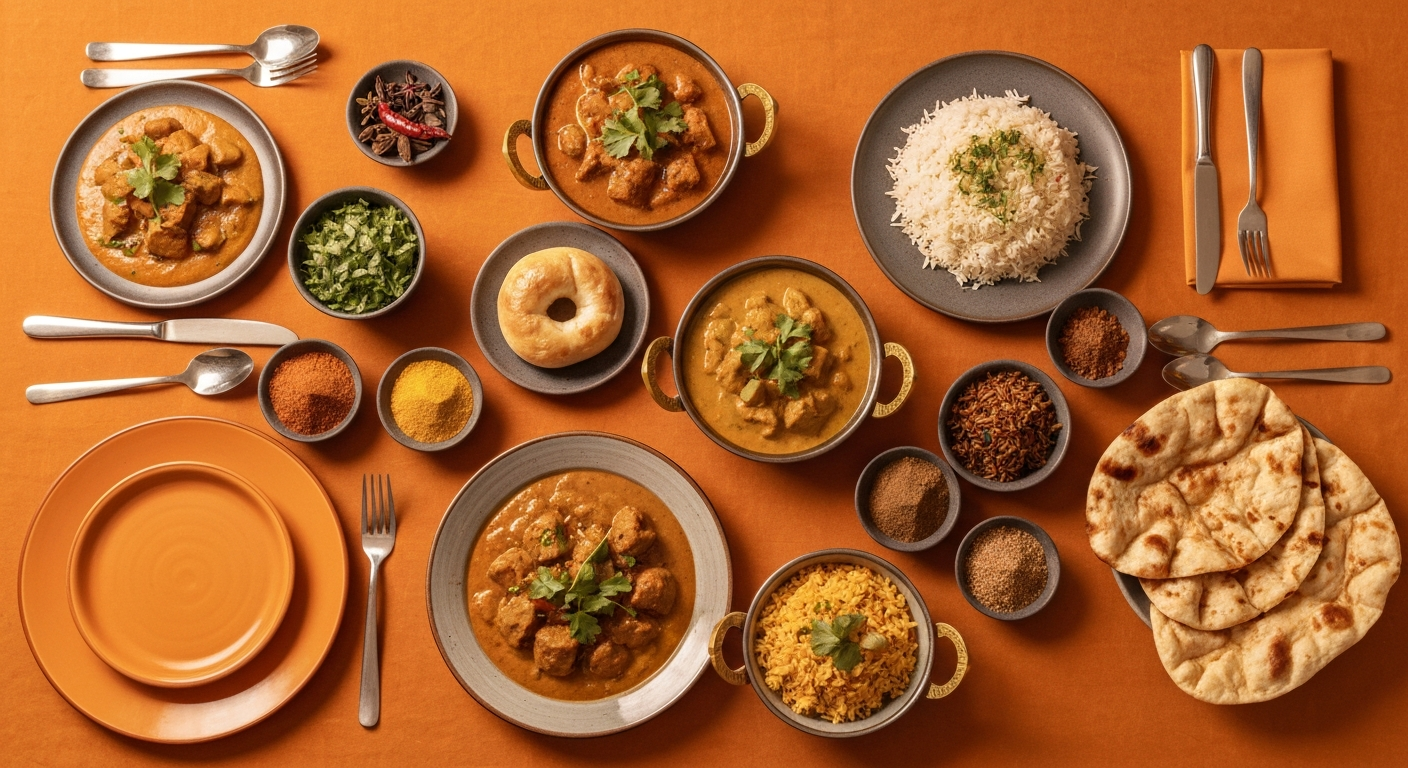
Corporate caterers face a unique set of challenges when delivering authentic Indian banquets at high volume. The demand for consistent quality, diverse menus, and timely execution requires a finely tuned operational strategy. Achieving true corporate caterer Indian banquet efficiency isn't just about speed; it's about smart sourcing, streamlined kitchen processes, and a deep understanding of scalable culinary techniques. For professional kitchens serving hundreds or thousands of guests, the ability to produce exquisite Indian cuisine consistently, without compromising authenticity or quality, is paramount.
This article delves into practical strategies for high-volume Indian banquet production, focusing on how strategic ingredient sourcing and optimized kitchen workflows can transform your catering operations, reduce labor costs, and elevate customer satisfaction.
The Unique Demands of High-Volume Corporate Indian Banquets
Indian cuisine, with its rich tapestry of flavors, complex spice blends, and diverse regional dishes, presents a particular challenge for large-scale catering. Unlike simpler cuisines, many traditional Indian preparations are time-intensive, requiring extensive mise en place, slow cooking, and precise seasoning. When scaled up for corporate events, these complexities multiply.
Key Challenges for Caterers:
- Scale and Consistency: Producing hundreds or thousands of portions of multiple dishes, each maintaining the exact flavor profile and texture, is a monumental task. Inconsistency can damage a caterer's reputation.
- Variety and Dietary Requirements: Corporate clients often demand a wide array of dishes, including vegetarian, vegan, gluten-free, and nut-free options. Managing these diverse requirements efficiently without cross-contamination is critical.
- Labor Intensity: Traditional Indian cooking often requires skilled chefs and extensive manual labor for chopping, grinding, slow-cooking, and stirring. Staffing shortages or high turnover can severely impact production.
- Timing and Logistics: Corporate events adhere to strict schedules. Delays in food preparation or service can have significant repercussions, affecting the overall event flow and client satisfaction.
- Cost Control: Managing ingredient costs, labor expenses, and waste becomes more complex at higher volumes. Any inefficiency is amplified across hundreds of plates.
Strategic Sourcing: The Foundation of Efficiency
The most significant leap in corporate caterer Indian banquet efficiency often begins long before the first ingredient hits the pan: it starts with strategic sourcing. Relying on high-quality, pre-prepared bases, gravies, and pastes can revolutionize your kitchen's output.
Harnessing Chef-Grade Indian Gravies and Pastes
For high-volume operations, scratch-making every gravy and paste is often impractical. This is where chef-grade, ready-to-use Indian gravies and pastes, like those offered by MITRA, become invaluable. These products are developed specifically for professional kitchens, offering several key advantages:
- Unwavering Consistency: Every batch of gravy or paste is manufactured to exact specifications, ensuring that your Butter Chicken or Dal Makhani tastes identical, whether you're serving 50 or 500 guests. This consistency builds client trust and brand reputation.
- Significant Time and Labor Savings: Imagine eliminating hours of onion caramelization, tomato pureeing, and spice grinding. Pre-prepared bases reduce prep time dramatically, allowing your skilled chefs to focus on finishing and presentation rather than foundational cooking.
- Reduced Waste: With standardized products, you minimize the risk of over-preparation or spoilage of individual ingredients, leading to better inventory management and cost control.
- Authentic Flavor Profiles: High-quality commercial gravies are developed by culinary experts to deliver authentic regional tastes, allowing you to offer a diverse menu without needing a specialist for every regional cuisine.
- Assured Quality and Safety: Our products are manufactured to rigorous international standards, holding certifications such as FSSAI, US FDA, ISO, Halal, HACCP, and GMP. These certifications provide peace of mind regarding food safety and quality, a critical factor for any professional kitchen.
When considering bulk sourcing, our minimum order quantity (MOQ) is 50 kg. This allows caterers to benefit from economies of scale, ensuring you have sufficient stock for large events while maintaining cost-effectiveness.
The Importance of Quality Spices and Rice
Beyond gravies and pastes, the quality of your foundational ingredients like spices and rice cannot be overstated. High-grade, consistently sourced whole and ground spices are essential for building complex flavor layers. Similarly, premium Basmati rice, known for its aromatic fragrance and long, separate grains, is a non-negotiable for many Indian dishes.
Sourcing these ingredients from a reliable supplier ensures that your final dishes are always of the highest caliber, complementing the quality of your pre-prepared bases.
Optimizing Kitchen Workflow for High-Volume Indian Production
Even with the best ingredients, an inefficient kitchen workflow can derail your efforts. Implementing smart processes is crucial for maximizing corporate caterer Indian banquet efficiency.
Standardized Recipes and Portion Control
For large-scale catering, every recipe must be standardized. This means precise measurements for all ingredients, including pre-prepared gravies, and clear instructions for every step. Standardized recipes ensure consistency in taste, texture, and appearance, regardless of who is cooking.
- Leverage Pre-prepared Bases: When using commercial gravies, standardization becomes simpler. Your chefs start from a consistent base, reducing variables and ensuring predictable outcomes.
- Portion Control: Implement strict portion control measures to manage costs and ensure consistent serving sizes. This can involve using specific scoops, ladles, or even weighing portions for critical components.
Batch Cooking and Mise en Place
The principles of batch cooking and advanced mise en place are cornerstones of high-volume efficiency.
- Prep Ahead: Chop vegetables, marinate proteins, and prepare garnishes in advance. Store them properly until needed.
- Cook in Batches: Utilize large steam kettles, combi ovens, and industrial woks to cook large quantities of gravies, dals, and rice. For dishes like curries, the base can be cooked in bulk, and proteins/vegetables added and finished closer to service time.
- Component Cooking: Break down complex dishes into simpler components that can be prepared separately and combined later. For example, a Rogan Josh sauce can be made in bulk, and then lamb pieces cooked and added as needed.
Assembly Line Approach to Plating
When serving hundreds of plates, an assembly line approach is often the most efficient. Designate specific stations for each component of the meal:
- Rice Station: Dedicated staff for portioning rice.
- Main Dish Station: Staff to ladle gravies and proteins.
- Side Dish Station: For vegetables, dals, or accompaniments.
- Garnish Station: For fresh herbs, fried onions, or other finishing touches.
- Bread Station: If serving naan or roti, a dedicated area for heating and serving.
This method minimizes bottlenecks, ensures consistent plating, and significantly speeds up service.
Equipment Utilization
Invest in and effectively utilize industrial-grade kitchen equipment designed for high volume:
- Large Capacity Cookware: Steam kettles, tilting skillets, and large woks for batch cooking.
- Combi Ovens: Versatile for baking, roasting, steaming, and reheating, ensuring even cooking for large quantities.
- Blast Chillers: Essential for rapidly cooling cooked food for safe storage and later reheating, critical for food safety and preventing spoilage.
- Hot Holding Equipment: Ensure you have sufficient heated cabinets and chafing dishes to maintain food at safe serving temperatures during transport and service.
Staff Training and Management for Peak Performance
Your kitchen staff are your most valuable asset. Investing in their training and implementing effective management strategies are vital for corporate caterer Indian banquet efficiency.
- Cross-Training: Train staff across multiple stations and tasks to ensure flexibility and cover during peak times or staff absences.
- Clear Roles and Responsibilities: Every team member should understand their specific role and how it contributes to the overall production process.
- Quality Control Checkpoints: Implement regular taste tests and visual checks at various stages of preparation and before service to catch any inconsistencies early.
- Communication: Foster an environment of clear and open communication to address issues quickly and efficiently.
Menu Design for Scalability and Impact
Designing a menu that is both appealing and practical for high-volume production is an art. Focus on dishes that scale well without losing their integrity or requiring excessive last-minute preparation.
- Balance Complex and Simple: Include a mix of richer, more complex gravies (which benefit from pre-made bases) alongside simpler vegetable preparations or dals that are easier to scale.
- Offer Variety Smartly: Curate a diverse menu that showcases different regional flavors but avoids an overwhelming number of distinct preparations. For example, one versatile gravy base can be adapted slightly to create two different dishes.
- Dietary-Friendly Options: Plan for vegetarian, vegan, and gluten-free dishes from the outset. Many Indian dishes are naturally vegetarian or can be easily adapted, especially when using dedicated plant-based gravies.
Logistics and Delivery Considerations
The journey from your kitchen to the corporate event is the final, critical step in your catering process. Efficient logistics are key to maintaining food quality and meeting deadlines.
- Appropriate Packaging: Use sturdy, insulated containers that maintain food temperatures during transit. Ensure packaging is leak-proof and easy to handle.
- Temperature Control: Adhere strictly to food safety guidelines for hot and cold holding temperatures during transport. Utilize refrigerated trucks for cold items and heated transport for hot dishes.
- Efficient Loading and Unloading: Plan the loading sequence to match the event's serving order. Ensure the venue has adequate access for unloading and setup.
Regarding product delivery, if a product is in stock in our US (Houston) or local-country warehouse, it ships in 2 days. If it is not in stock, the lead time is 35-60 days, and the customer is notified immediately of any delay. We currently serve businesses in the USA, Canada, UK, UAE, Australia, Germany, Italy, India, France, Ireland, Switzerland, and Netherlands, with more countries being added regularly.
Conclusion
Achieving corporate caterer Indian banquet efficiency is a multi-faceted endeavor that combines strategic sourcing, meticulous kitchen planning, skilled staff management, and robust logistics. By embracing chef-grade, pre-prepared Indian gravies and pastes, optimizing your workflow with batch cooking and assembly lines, and focusing on quality and consistency at every step, your catering business can master the rush of high-volume Indian banquets. This not only leads to significant cost savings and reduced stress but also enhances your reputation for delivering exceptional, authentic Indian cuisine consistently.
To explore how MITRA's chef-grade Indian gravies, pastes, and spices can enhance your catering efficiency and consistency, we invite you to visit ododgroup.com. Request a quote or sample today and discover the difference quality sourcing makes for your professional kitchen.