
For hotel kitchens specializing in Indian cuisine, mastering hotel kitchen Indian food cross-contamination prevention is not just a best practice—it's a critical imperative. The rich diversity of ingredients, complex preparation methods, and varied dietary needs associated with Indian food present unique challenges that demand robust, systematic food safety protocols. Ensuring the safety of every dish served protects guest health, upholds your hotel's reputation, and guarantees compliance with stringent food safety regulations.
This guide outlines essential strategies and best practices for hotel kitchens to effectively prevent cross-contamination when preparing authentic Indian cuisine, from raw ingredient handling to final plate presentation.
The Unique Cross-Contamination Challenges of Indian Cuisine
Indian cuisine is celebrated globally for its incredible array of flavors, textures, and aromas. However, this very diversity can introduce specific cross-contamination risks:
- Extensive Use of Raw Ingredients: Many Indian dishes begin with a wide range of raw ingredients, including various meats (chicken, lamb, goat), seafood, dairy products (paneer, yogurt, cream), and a vast assortment of fresh vegetables, lentils, and legumes. Each category carries its own microbial load and potential for transfer.
- Complex Spice Blends: Spices are the heart of Indian cooking. While generally safe, improper handling, shared grinders, or common storage can lead to cross-contamination, especially concerning allergens. Some spices themselves can be allergens (e.g., mustard, fenugreek), and cross-contamination can occur if spices are processed on shared equipment with nuts or other allergens.
- Vegetarian and Non-Vegetarian Segregation: A significant portion of Indian diners are vegetarian, and many follow strict dietary customs. Maintaining absolute separation between vegetarian and non-vegetarian ingredients, utensils, and cooking surfaces is paramount to prevent both microbial and cultural cross-contamination.
- Allergen Proliferation: Common allergens like dairy (milk, paneer, ghee), nuts (cashews, almonds in gravies, peanuts in some regional dishes), gluten (wheat in rotis, naan), and mustard are staples. Managing these effectively to prevent accidental transfer is a constant challenge.
- Multi-Stage Preparations: Many Indian dishes involve marinating, slow cooking, tempering, and multiple additions of ingredients over time. Each stage presents an opportunity for contamination if protocols are not strictly followed.
Critical Control Points for Preventing Cross-Contamination
Effective cross-contamination prevention requires a holistic approach, addressing potential risks at every stage of food preparation. Hotel kitchens must identify and control these critical points:
1. Receiving and Storage
- Segregation of Raw Materials: Upon delivery, raw meats, poultry, seafood, dairy, and produce must be immediately separated. Use distinct, clearly labeled containers and store them on separate shelves, with raw animal products placed below ready-to-eat items to prevent drips.
- Temperature Control: Ensure all perishable ingredients are stored at appropriate temperatures immediately upon receipt. Refrigerators and freezers must be regularly monitored and maintained.
- Proper Labeling: Implement a strict labeling system for all stored ingredients, indicating contents, date of receipt, and use-by date (First-In, First-Out – FIFO).
2. Preparation Areas and Equipment
- Dedicated Zones: Ideally, establish physically separate areas for raw meat/poultry/seafood preparation and for vegetable/ready-to-eat food preparation. If physical separation isn't possible, strict time-based separation and thorough sanitization between uses are essential.
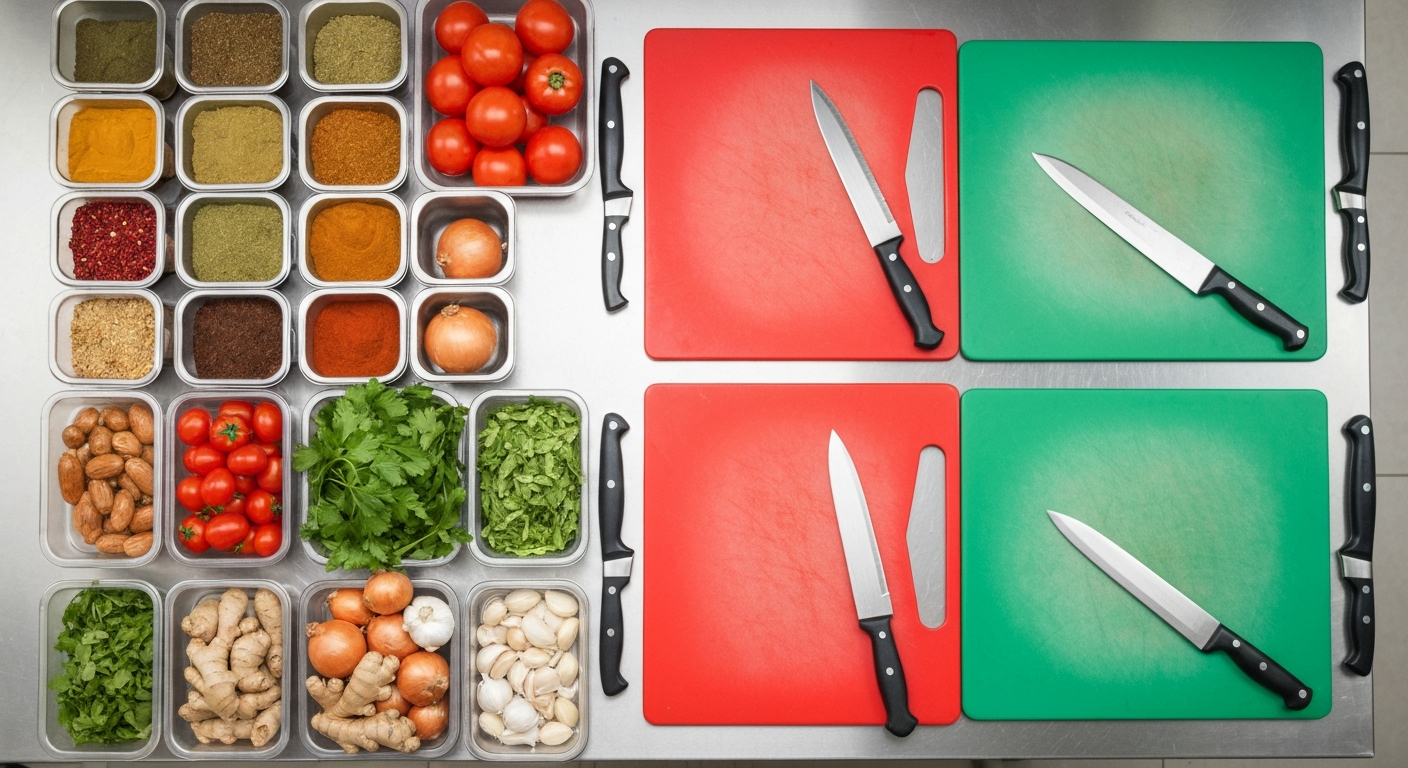
- Color-Coding System: Implement a universal color-coding system for cutting boards, knives, and other utensils. For example, red for raw meat, blue for raw fish, yellow for cooked meat, green for vegetables, and white for dairy/bakery items. Ensure staff are rigorously trained on this system.
- Dedicated Equipment: Use separate blenders, grinders, and mixers for vegetarian and non-vegetarian preparations, especially for items like ginger-garlic paste or nut-based gravies. If shared, ensure meticulous cleaning and sanitization between uses.
- Spice Management: Store whole and ground spices in airtight, labeled containers. Use dedicated measuring spoons for different spice types, and avoid using spoons that have touched raw ingredients or other dishes. Regularly clean and sanitize spice containers and storage areas. Be mindful of potential allergen cross-contamination in bulk-bought ground spices.
3. Cooking and Holding
- Thorough Cooking: Ensure all food, especially meat and poultry, reaches and maintains the appropriate internal cooking temperatures to eliminate pathogens.
- Separate Utensils: Use clean, separate utensils for stirring, tasting, and serving each dish. Never use a utensil that has touched raw food to stir or serve cooked food.
- Hot/Cold Holding: Maintain cooked foods at safe hot (above 135°F / 57°C) or cold (below 41°F / 5°C) holding temperatures to prevent bacterial growth.
4. Personnel Hygiene
- Handwashing: This is the single most critical step. Staff must wash hands thoroughly with soap and water:
- Before starting work.
- After handling raw meat, poultry, or seafood.
- After using the restroom.
- After coughing, sneezing, or blowing their nose.
- After touching hair or face.
- After handling garbage.
- Before handling ready-to-eat food.
- Clean Uniforms: All kitchen staff must wear clean uniforms, aprons, and hairnets/hats to prevent hair or clothing contaminants from entering food.
- Gloves: While gloves can offer an additional barrier, they are not a substitute for handwashing. Gloves must be changed frequently, especially when switching between raw and ready-to-eat foods.
Strategies for Mitigating Hotel Kitchen Indian Food Cross-Contamination
Implementing a comprehensive food safety management system is fundamental. These strategies are crucial for Indian cuisine:
1. Robust Allergen Control Program
Given the prevalence of allergens in Indian cuisine, a detailed allergen management plan is non-negotiable:
- Identify Allergens: Clearly identify all common allergens present in your menu items (dairy, nuts, gluten, mustard, soy, etc.).
- Ingredient Labeling: Ensure all ingredients from suppliers are clearly labeled for allergens. For in-house prepared components, maintain accurate ingredient lists.
- Separate Storage: Store allergen-containing ingredients separately from allergen-free alternatives.
- Dedicated Preparation: For guests with severe allergies, consider dedicated preparation areas, utensils, and cooking equipment. If not feasible, implement stringent cleaning protocols and prepare allergen-free meals first.
- Staff Training: Train all staff—from chefs to servers—on allergen awareness, cross-contamination risks, and how to communicate allergen information accurately to guests.
2. Comprehensive Cleaning and Sanitation SOPs
Standard Operating Procedures (SOPs) for cleaning and sanitization must be detailed and followed rigorously:
- Schedule: Establish daily, weekly, and monthly cleaning schedules for all surfaces, equipment, and storage areas.
- Approved Sanitizers: Use only food-grade sanitizers at correct concentrations. Ensure proper contact time for effective sanitization.
- Dishwashing: Ensure dishwashers operate at appropriate temperatures for both washing and sanitizing cycles. Manual dishwashing must follow a strict wash, rinse, sanitize, air-dry sequence.
- Equipment Disassembly: Regularly disassemble and thoroughly clean complex equipment like slicers, blenders, and mixers.
3. Continuous Staff Training and Education
Human error is a leading cause of cross-contamination. Ongoing training is vital:
- Initial and Refresher Training: All new hires must receive thorough food safety training. Regular refresher courses for existing staff ensure protocols remain top-of-mind.
- Practical Demonstrations: Hands-on training for proper handwashing, knife handling, color-coding, and cleaning procedures is more effective than theoretical instruction alone.
- Certifications: Encourage staff to obtain recognized food handler certifications, reinforcing their understanding of food safety principles.
4. Adherence to Food Safety Certifications
Compliance with international and national food safety standards is a benchmark of a professionally run kitchen. Organizations like ours ensure our products are manufactured under rigorous certifications such as FSSAI, US FDA, ISO, Halal, HACCP, and GMP. Hotel kitchens should similarly aim to meet these high standards in their own operations, as they provide a systematic framework for identifying and controlling food safety hazards.
Leveraging Pre-Prepared Solutions to Enhance Safety
Preparing Indian cuisine from scratch in a high-volume hotel kitchen can be labor-intensive and increase cross-contamination risks due to the sheer number of ingredients and preparation steps. This is where high-quality, pre-prepared solutions can play a transformative role.
MITRA's range of chef-grade Indian gravies, pastes, and sauces are manufactured to stringent food safety and quality standards, holding FSSAI, US FDA, ISO, Halal, HACCP, and GMP certifications. By incorporating these products, hotel kitchens can:
- Reduce Raw Ingredient Handling: Less handling of raw meats, poultry, and vegetables means fewer opportunities for microbial transfer.
- Minimize Prep Time and Labor: Our products significantly cut down on the time and labor required for chopping, grinding, and slow-cooking, allowing your chefs to focus on finishing and presentation.
- Ensure Consistent Quality and Safety: Each batch is produced under controlled conditions, ensuring consistent flavor profiles and, critically, consistent safety standards.
- Simplify Allergen Management: Our products come with clear ingredient lists, simplifying your allergen tracking and reducing the risk of accidental cross-contamination from in-house spice blending or shared equipment.
Whether you're looking to streamline your operations, ensure consistent taste, or enhance food safety, our products offer a reliable solution. We maintain a 50 kg minimum order quantity (MOQ) to serve professional kitchens efficiently. For products in stock in our US (Houston) or local-country warehouses, shipping typically occurs within 2 days. If a product is not in stock, the lead time is 35-60 days, and customers are notified immediately of any delay. We currently serve businesses in the USA, Canada, UK, UAE, Australia, Germany, Italy, India, France, Ireland, Switzerland, and Netherlands, with more countries being added regularly.
Conclusion
Preventing hotel kitchen Indian food cross-contamination is a continuous process that demands vigilance, robust protocols, and ongoing training. By understanding the unique challenges of Indian cuisine and implementing comprehensive food safety measures—from strict ingredient segregation and dedicated equipment to rigorous staff hygiene and leveraging high-quality pre-prepared ingredients—hotel kitchens can confidently serve authentic, delicious, and above all, safe Indian food to their guests. Prioritizing food safety not only protects your patrons but also safeguards your brand's reputation and ensures operational excellence.
To learn more about how MITRA products can enhance your kitchen's efficiency and food safety, or to request a quote or sample, please visit ododgroup.com today. Our team is ready to assist you in elevating your Indian cuisine offerings.