
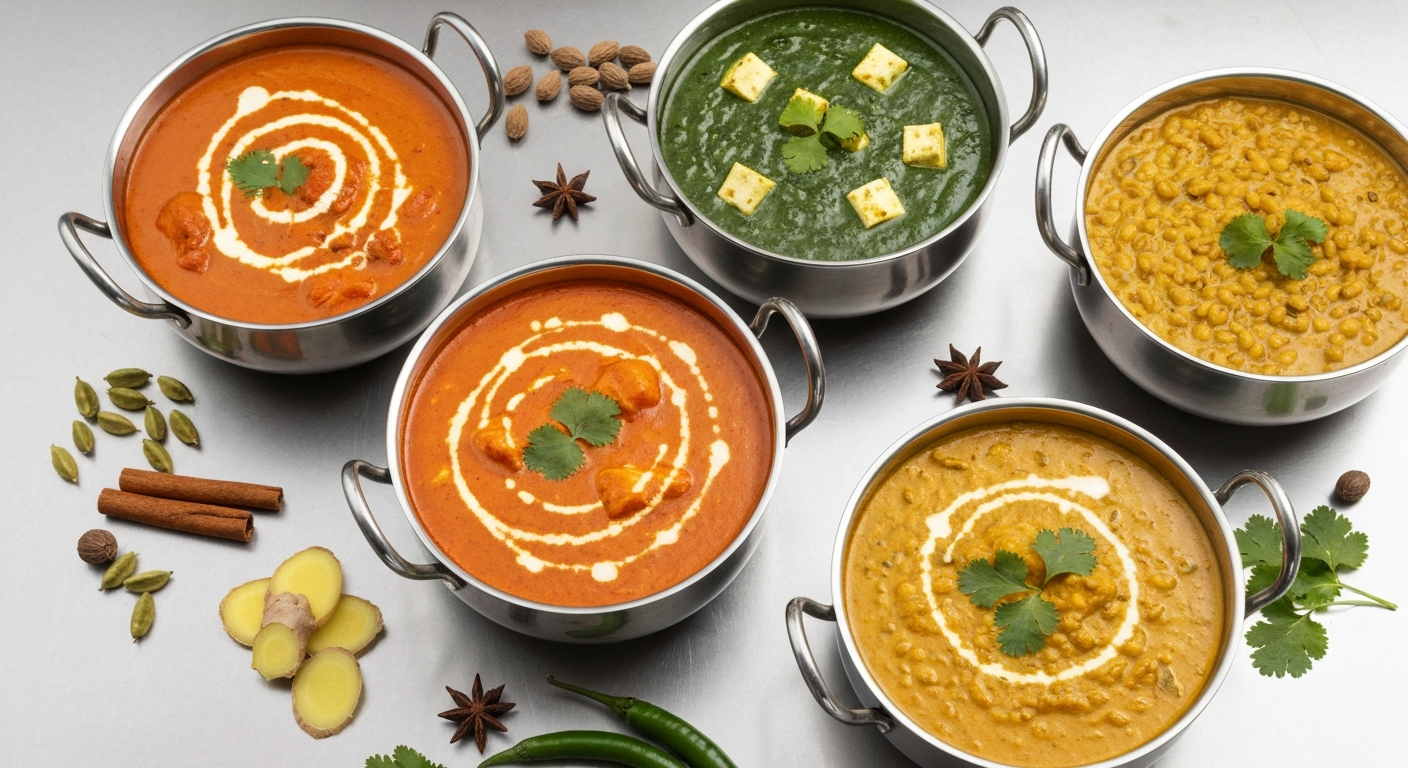
The culinary landscape has been dramatically reshaped by the rise of ghost kitchens, offering entrepreneurs and established restaurant groups unprecedented flexibility to launch multiple virtual brands. For operators aiming to tap into the vibrant and diverse world of Indian cuisine, the potential is immense. However, managing multiple Indian brands within a `ghost kitchen shared kitchen` environment presents unique challenges, particularly around achieving `indian menu efficiency`, consistent flavor profiles, and optimized ingredient utilization. This article explores strategic approaches to overcome these hurdles, ensuring operational excellence and culinary integrity across all your Indian virtual brands.
The Allure and Intricacies of Multi-Brand Indian Concepts
Indian cuisine is globally celebrated for its rich flavors, aromatic spices, and incredible regional diversity. From the creamy gravies of North India to the fiery curries of the South, and the delicate street foods found nationwide, the breadth of dishes offers a compelling foundation for multiple virtual brands. A ghost kitchen can, for instance, operate a 'Classic North Indian Curries' brand, a 'South Indian Street Food' concept, and a 'Modern Indian Fusion' brand simultaneously from the same physical space.
However, this diversification comes with inherent complexities. Traditional Indian cooking often demands extensive mise en place, specific culinary skills, and a vast array of fresh ingredients and spices. Managing these requirements for a single brand is challenging; scaling them across several distinct brands within a high-volume, delivery-focused model amplifies every potential pain point.
Core Challenges for Indian Ghost Kitchens:
- Ingredient Proliferation: A wide range of fresh vegetables, dairy products, and specialized spices can lead to excessive inventory, increased waste, and complex supply chain management.
- Labor Intensity: Authentic Indian cooking is often labor-intensive, requiring skilled chefs for tasks like grinding spices, preparing gravies from scratch, and precise cooking techniques. This can be costly and difficult to staff consistently.
- Flavor Consistency: Replicating precise flavor profiles across multiple chefs, shifts, and locations is a perpetual challenge, yet crucial for brand reputation and customer loyalty.
- Speed of Service: Delivery models demand rapid preparation. Traditional methods can be too time-consuming, impacting order fulfillment times and customer satisfaction.
- Cross-Contamination Risk: In a shared kitchen, managing diverse ingredients and cooking processes for multiple brands requires stringent food safety protocols to prevent cross-contamination.
Pillars of Operational Efficiency for Indian Menus
Achieving `ghost kitchen shared kitchen indian menu efficiency` hinges on streamlining processes without compromising the authenticity or quality that customers expect from Indian food. This involves strategic planning in several key areas:
1. Standardization and Flavor Consistency
Consistency is paramount for any restaurant brand, but especially for virtual brands where the physical experience is absent. Customers rely solely on the food quality and flavor profile. For Indian cuisine, this means ensuring a Chicken Tikka Masala tastes the same whether ordered on Monday or Saturday, regardless of which chef prepared it.
- The Role of Pre-Prepared Bases: Utilizing high-quality, standardized gravies, pastes, and sauces as foundational elements is a game-changer. These products, when manufactured to exacting standards, provide a consistent flavor base that eliminates variability. A single batch of a classic tomato-onion gravy, for instance, can serve as the foundation for Butter Chicken, Paneer Makhani, and even a base for a vegetable curry, ensuring a consistent core flavor across different dishes and brands.
- Standardized Recipes and Procedures: Even with pre-prepared bases, precise recipes for finishing dishes, including protein cooking times, final seasoning, and garnishing, are essential. Detailed recipe cards and visual guides can significantly reduce errors and ensure uniformity.
2. Optimized Ingredient Management and Waste Reduction
Traditional Indian kitchens often deal with a large volume of perishable goods. In a ghost kitchen setting, where space is often limited and efficiency is key, minimizing waste and optimizing inventory are critical.
- Leveraging Shelf-Stable Foundations: By sourcing high-quality, shelf-stable gravies, pastes, and sauces, kitchens can drastically reduce their reliance on highly perishable fresh ingredients for core components. This means less spoilage, fewer emergency grocery runs, and a more predictable inventory cycle.
- Multi-Use Ingredients: Design menus where individual ingredients can be utilized across multiple dishes or even multiple brands. For example, a specific blend of Garam Masala can be used in various curries. This reduces the total number of unique SKUs a kitchen needs to manage.
- Just-in-Time Inventory: With reliable suppliers of pre-prepared bases, kitchens can implement a more efficient just-in-time inventory system, ordering only what's needed for immediate demand, further reducing waste and freeing up valuable storage space.
3. Labor Optimization and Skill Gap Mitigation
Skilled Indian chefs are in high demand, and their expertise comes at a premium. Ghost kitchens, often operating on tight margins, benefit significantly from reducing the reliance on extensive manual prep and highly specialized labor.
- Reduced Prep Time: Pre-prepared gravies and pastes eliminate hours of peeling, chopping, grinding, and slow-cooking. This allows existing staff to focus on final assembly, protein cooking, and quality control, tasks that require less specialized training.
- Empowering Junior Staff: With standardized bases and simplified recipes, junior chefs or kitchen assistants can quickly learn to prepare complex Indian dishes, expanding the talent pool and reducing labor costs. This also allows senior chefs to focus on menu innovation and quality oversight rather than repetitive prep work.
- Faster Training Cycles: New hires can be onboarded and trained much faster when the core components of dishes are already standardized and ready to use.
4. Enhancing Speed of Service and Throughput
Delivery platforms are highly sensitive to preparation and delivery times. Faster service translates directly into higher customer satisfaction and potentially more orders.
- Batch Cooking Efficiencies: While the pre-prepared bases are already 'batch cooked' off-site, in-house processes can still be optimized. For example, cooking proteins in larger batches during slower periods for quick assembly during peak hours.
- Streamlined Assembly Line: With gravies and sauces ready, the kitchen can function more like an assembly line, where different stations handle specific tasks (e.g., protein cooking, sauce heating, final garnishing), drastically cutting down the time from order placement to dispatch.
Strategic Sourcing: The MITRA Solution for Ghost Kitchens
ODOD LLC, under its MITRA brand, offers a comprehensive range of chef-grade Indian gravies, pastes, sauces, rice, and spices specifically designed to meet the demands of professional kitchens, including high-volume ghost kitchen operations. Our products are manufactured to stringent quality controls, adhering to FSSAI, US FDA, ISO, Halal, HACCP, and GMP standards, ensuring both safety and authentic flavor.
By incorporating MITRA's pre-prepared bases, ghost kitchens can directly address the operational challenges of multi-brand Indian concepts:
- Authentic & Consistent Flavors: Our gravies and pastes are crafted using traditional recipes and premium ingredients, providing a reliable and authentic flavor foundation for your dishes. This consistency is crucial for maintaining brand integrity across all virtual brands.
- Significant Labor Savings: Eliminate hours of peeling, chopping, grinding, and slow-cooking. Our ready-to-use products drastically reduce prep time, allowing your team to focus on efficient order fulfillment.
- Reduced Food Waste: With shelf-stable products, you minimize spoilage associated with fresh produce and dairy used in traditional gravy preparation. This contributes directly to improved food cost percentages.
- Enhanced Menu Flexibility: A single MITRA gravy base can be customized to create multiple distinct dishes, allowing for rapid menu diversification and the launch of new virtual brands with minimal additional inventory complexity.
- Scalability: As your ghost kitchen grows or experiences peak demand, MITRA products ensure that you can scale production effortlessly without compromising quality or consistency. This is vital for managing the unpredictable nature of delivery orders.
Implementing a Multi-Brand Indian Strategy with MITRA Products
Successfully integrating pre-prepared Indian bases into a multi-brand ghost kitchen requires a thoughtful approach to menu engineering, training, and logistics.
Menu Design and Diversification
Start by identifying core gravies that can underpin multiple dishes and brands. For example, MITRA's Makhani Gravy can be the base for Butter Chicken, Paneer Makhani, Dal Makhani, or even a creamy vegetable korma. Similarly, a Madras Curry Paste can support a range of South Indian-inspired dishes across different virtual brands. This cross-utilization of ingredients is central to `ghost kitchen shared kitchen indian menu efficiency`.
Training and Recipe Development
Even with pre-prepared bases, your culinary team will need to understand how to finish dishes to your exact specifications. Develop clear, concise recipes that outline: protein cooking methods, precise quantities of MITRA gravies/pastes, final seasoning adjustments, and plating standards. Training should focus on speed, consistency, and maintaining the distinct identity of each virtual brand.
Scaling and Demand Management
One of the greatest advantages of using standardized bases is the ease of scaling. Whether you're experiencing a sudden surge in orders or planning to expand into new markets, the ability to produce consistent dishes quickly is invaluable. With MITRA products, scaling up production becomes a matter of increasing quantities of pre-prepared bases and proteins, rather than adding more skilled labor or complex prep steps.
Reliable Supply Chain
Partnering with a dependable supplier like ODOD LLC ensures a steady flow of high-quality products. We understand the critical nature of supply chain reliability for ghost kitchens. Our minimum order quantity (MOQ) is 50 kg, designed to support professional kitchen volumes. Products in stock in our US (Houston) or local-country warehouses ship within 2 days. For items not immediately in stock, the lead time is typically 35-60 days, and customers are notified immediately of any potential delays. We currently serve businesses in the USA, Canada, UK, UAE, Australia, Germany, Italy, India, France, Ireland, Switzerland, and Netherlands, with our network continuously expanding.
Overcoming Specific Challenges in a Shared Kitchen Environment
Operating multiple Indian brands within a shared kitchen requires careful attention to detail.
- Space Optimization: Pre-prepared bases require less storage space for raw ingredients, freeing up valuable refrigeration and dry storage. Their consistent packaging also makes inventory management more organized.
- Equipment Utilization: With less scratch cooking, the demand on specialized equipment like large tandoors or industrial grinders can be reduced or eliminated, allowing for more efficient use of shared resources.
- Food Safety and Allergen Management: Standardized products from a reputable supplier come with clear ingredient lists, simplifying allergen tracking. Reduced raw ingredient handling also lowers the risk of cross-contamination, a critical concern in shared spaces.
- Maintaining Brand Identity: While using shared core gravies, differentiate your brands through unique protein choices, specific garnishes, distinct spice blends for finishing, and creative menu descriptions. A Butter Chicken from 'North Indian Delights' might have a different garnish or a slightly different spice finish than one from 'Modern Indian Fusion,' even if the base gravy is the same.
The Financial Advantages and ROI of Efficient Indian Menu Operations
Investing in `ghost kitchen shared kitchen indian menu efficiency` through strategic sourcing yields substantial financial benefits:
- Reduced Food Costs: Less waste from spoilage, optimized inventory, and predictable ingredient costs contribute to a healthier bottom line.
- Lower Labor Costs: Significant reduction in prep time allows for leaner staffing and more efficient deployment of culinary talent.
- Increased Revenue Potential: Faster order fulfillment, consistent quality, and the ability to scale quickly mean more satisfied customers and the capacity to handle higher order volumes.
- Faster Market Entry: Launch new Indian virtual brands or introduce new dishes with greater speed and less upfront investment in complex ingredient sourcing and chef training.
- Enhanced Profit Margins: The combination of reduced operational costs and increased revenue capacity directly translates into improved profit margins, essential for sustained growth in the competitive ghost kitchen market.
Partner with ODOD LLC for Your Indian Culinary Success
Mastering multi-brand Indian concepts in a ghost kitchen environment requires a blend of culinary vision and operational pragmatism. By leveraging high-quality, standardized ingredients from a trusted supplier like ODOD LLC, under the MITRA brand, you can achieve unparalleled `ghost kitchen shared kitchen indian menu efficiency`.
Our commitment to authentic flavors, rigorous quality control, and reliable supply chain logistics makes us an ideal partner for your culinary ventures. Focus on creating exceptional dining experiences, and let MITRA provide the consistent, chef-grade foundations you need to thrive.
To learn more about our range of Indian gravies, pastes, sauces, rice, and spices, or to request a quote for your professional kitchen, please visit ododgroup.com. Let's build your multi-brand Indian empire together.