
The rise of ghost kitchens has revolutionized the food service industry, offering unprecedented flexibility and reach for culinary entrepreneurs. Among the diverse cuisines thriving in this model, Indian food stands out for its rich flavors, aromatic spices, and growing popularity. However, delivering authentic Indian dishes from a ghost kitchen presents a unique set of challenges, particularly when it comes to maintaining food safety and quality.
At the core of these challenges lies ghost kitchen Indian food temperature control. Ensuring that hot curries remain piping hot and cold accompaniments stay refreshingly chilled throughout the delivery process is not just about customer satisfaction – it's a critical food safety imperative. This article delves into the best practices for temperature management, providing practical strategies for ghost kitchen operators to master the art of safe and delicious Indian food delivery.
The Unique Temperature Control Demands of Indian Cuisine
Indian cuisine is renowned for its complexity, often featuring a vibrant array of gravies, rich dairy products, slow-cooked meats, and fresh vegetables. Many dishes are designed to be served hot, like a creamy Butter Chicken, a spicy Rogan Josh, or a comforting Dal Makhani. Others, such as raita, chutneys, and certain salads, are meant to be served cold. This duality immediately highlights the intricate balance required for temperature control in an Indian ghost kitchen setting.
Gravies and curries, in particular, with their high moisture content and often protein-rich ingredients, can become breeding grounds for bacteria if allowed to linger in the 'danger zone' – temperatures between 40°F and 140°F (5°C and 60°C). The traditional preparation methods, which often involve simmering for extended periods, also mean these dishes spend a significant amount of time at various temperatures, increasing the need for diligent monitoring.
Successfully managing the temperature of Indian food for delivery requires a comprehensive approach that integrates robust cooking, holding, and transportation protocols. It's about preserving the integrity of the food, from its initial preparation to the moment it arrives at the customer's door, all while adhering to stringent food safety standards.
Understanding the Danger Zone and HACCP Principles
Central to any food safety plan is a clear understanding of the 'danger zone' for bacterial growth. As mentioned, this critical temperature range allows harmful microorganisms to multiply rapidly, potentially leading to foodborne illness. For hot foods, the goal is to keep them above 140°F (60°C), and for cold foods, below 40°F (5°C).
To achieve this, ghost kitchens must implement a Hazard Analysis and Critical Control Points (HACCP) plan. HACCP is a systematic preventive approach to food safety from biological, chemical, and physical hazards in production processes that can cause the finished product to be unsafe, and designs measurements to reduce these risks to a safe level. Key HACCP principles relevant to ghost kitchens include:
- Hazard Analysis: Identifying potential points where temperature abuse could occur (e.g., cooling, holding, transport).
- Critical Control Points (CCPs): Establishing specific points in the process where control can be applied to prevent or eliminate a food safety hazard (e.g., final cooking temperature, hot holding temperature).
- Critical Limits: Setting measurable maximum or minimum values for each CCP (e.g., minimum hot holding temperature of 140°F).
- Monitoring Procedures: Regularly checking and documenting temperatures at CCPs using calibrated thermometers.
- Corrective Actions: Defining steps to take if a critical limit is not met (e.g., reheating, discarding).
Adhering to HACCP principles is paramount for any commercial kitchen, and even more so for ghost kitchens where the last-mile delivery adds another layer of complexity to temperature management.
Pre-Delivery Temperature Control: Hot Foods
Maintaining the ideal temperature for hot Indian dishes begins long before they leave the kitchen. Precision in cooking and holding is key.
1. Rapid Cooking and Holding Strategies
- Cook to Proper Internal Temperatures: Ensure all ingredients, especially meats, reach their safe internal cooking temperatures. Use a food thermometer to verify.
- Hot Holding Equipment: Once cooked, dishes intended for immediate delivery must be held above 140°F (60°C). Utilize commercial-grade equipment such as steam tables, chafing dishes, or warming cabinets. These units are designed to maintain consistent heat without continuing to cook the food, preserving its texture and flavor.
- Batch Cooking: For ghost kitchens, cooking in smaller, more frequent batches closer to predicted dispatch times can significantly reduce the duration food spends in hot holding. This minimizes quality degradation and reduces the risk of temperature fluctuations.
2. Packaging for Optimal Heat Retention
The choice of packaging is crucial for preserving heat during the initial stages of delivery.
- Insulated Containers: Opt for high-quality, food-grade insulated containers. Double-wall construction, often with an air gap, provides superior thermal insulation. Materials like sturdy plastics or aluminum foil containers are common.
- Ventilation (Where Appropriate): While insulation is key, some dishes, particularly those with rice or fried components, can suffer from condensation if completely sealed, leading to sogginess. Consider containers with a small vent or packaging components separately to maintain texture.
- Component Separation: Separate gravies from rice or bread (naan, roti) to prevent the latter from becoming soggy. This also allows the customer to combine components just before eating, enhancing the experience.
- Tight Sealing: Ensure all containers are tightly sealed to prevent heat loss and spills. Lids should fit securely.
Pre-Delivery Temperature Control: Cold Foods
Just as important as keeping hot foods hot is ensuring cold accompaniments remain cold.
1. Rapid Chilling and Refrigeration
- Quick Cooling: Any prepared cold items (e.g., raita, chutneys, salads) should be cooled rapidly from cooking temperatures to below 40°F (5°C) within a safe timeframe (e.g., from 140°F to 70°F within 2 hours, then from 70°F to 40°F within an additional 4 hours). Blast chillers are ideal for this, but an ice bath can also be effective for smaller quantities.
- Dedicated Refrigeration: Store all cold ingredients and prepared cold dishes in dedicated refrigeration units set at or below 40°F (5°C). Avoid overpacking refrigerators, which can impede airflow and lead to inconsistent temperatures.
2. Packaging for Cold Retention
- Airtight and Sealed: Use airtight, leak-proof containers for cold items to prevent contamination and maintain temperature.
- Ice Packs/Gel Packs: For items that require extended cold retention, include food-safe ice packs or gel packs within insulated packaging. These should be placed strategically to surround the cold food items.
- Separate from Hot Items: Never package hot and cold items in the same compartment or bag without adequate insulation and separation. Cross-contamination of temperatures can quickly compromise both.
The Last Mile: Ensuring Temperature Integrity During Delivery
The delivery phase is often the most challenging for temperature control, as food leaves the controlled environment of the kitchen. Effective ghost kitchen Indian food temperature control during transit is crucial.
1. High-Quality Insulated Delivery Equipment
- Professional Delivery Bags/Boxes: Invest in commercial-grade, insulated delivery bags or boxes. These are designed with superior thermal properties to maintain internal temperatures for extended periods. Look for features like thick insulation, durable zippers, and reinforced handles.
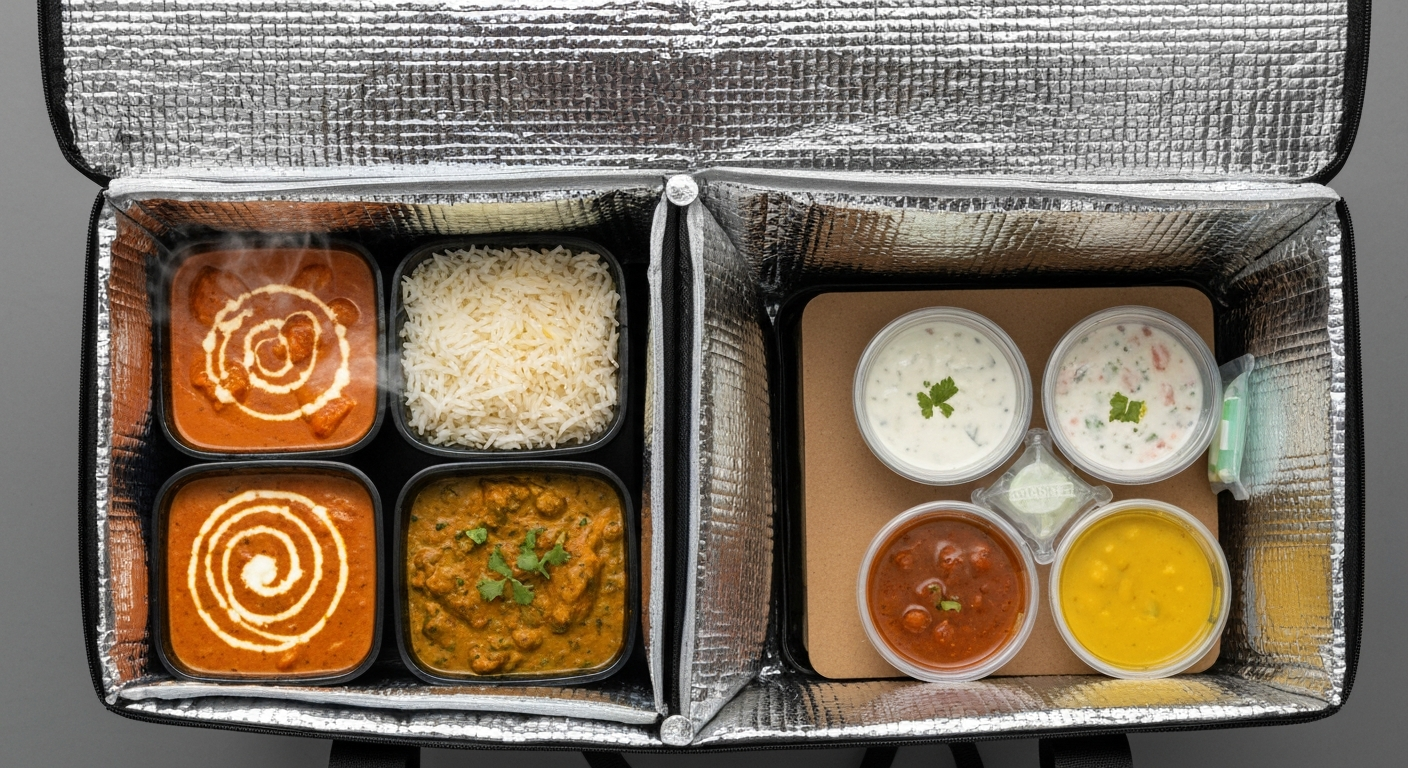
- Dedicated Hot and Cold Compartments: Some advanced delivery bags offer separate insulated compartments for hot and cold items, allowing for optimal temperature maintenance for a diverse order.
2. Vehicle and Route Optimization
- Vehicle Considerations: While not always feasible for every delivery, vehicles with climate control or dedicated hot/cold sections can further aid temperature maintenance. Drivers should be instructed to minimize the time food spends in an uncontrolled vehicle environment.
- Efficient Route Planning: Leverage technology for optimized route planning to minimize transit times. Shorter delivery routes mean less time for food temperatures to drift.
3. Driver Training and Protocols
- Food Safety Education: Delivery drivers are the final link in the food safety chain. They must be thoroughly trained on the importance of temperature control, proper handling of food packages, and the risks associated with temperature abuse.
- Loading Protocols: Train drivers on how to properly load and secure food packages within their delivery bags/vehicles to prevent shifting and maintain insulation effectiveness.
- Temperature Monitoring (Spot Checks): While not always practical for every delivery, implementing a system for spot-checking temperatures upon loading can reinforce vigilance. Drivers should know what to do if a package feels improperly hot or cold.
Leveraging High-Quality Prepared Ingredients for Consistency and Safety
For ghost kitchens, operational efficiency and consistency are paramount. This is where high-quality, pre-made ingredients, like MITRA's chef-grade Indian gravies and pastes, offer significant advantages in maintaining food safety and streamlining ghost kitchen Indian food temperature control.
Using professionally prepared bases means:
- Reduced Prep Time: Less time spent on extensive scratch cooking translates to less time ingredients and finished products are exposed to varying temperatures in the kitchen, reducing the risk of entering the danger zone.
- Consistent Quality and Safety: Our products are manufactured to rigorous international standards, holding certifications such as FSSAI, US FDA, ISO, Halal, HACCP, and GMP. This ensures a consistent, safe, and high-quality starting point for your dishes.
- Simplified Inventory and Operations: Ready-to-use gravies and pastes reduce the complexity of managing numerous raw ingredients, simplifying HACCP compliance and temperature monitoring within your kitchen.
- Predictable Performance: With a reliable base, chefs can focus on finishing dishes quickly and efficiently, moving them through the cooking, holding, and packaging stages with greater control over critical temperatures.
By incorporating such solutions, ghost kitchens can enhance their ability to deliver authentic Indian cuisine safely and consistently, without compromising on flavor or quality. Our products are designed to support professional kitchens in achieving operational excellence.
Operational Efficiency and Compliance: A Holistic Approach
Effective temperature control is not a standalone task but an integral part of a broader food safety culture within your ghost kitchen. This involves:
- Continuous Staff Training: Regular training sessions for all kitchen staff and delivery personnel on food safety protocols, HACCP principles, and temperature monitoring procedures.
- Equipment Maintenance and Calibration: Ensure all cooking, holding, and refrigeration equipment is regularly maintained and calibrated. Thermometers used for monitoring should be calibrated frequently to ensure accuracy.
- Adherence to Regulations: Stay informed and compliant with all local, state, and national food safety regulations relevant to ghost kitchens and food delivery.
- Documentation: Maintain thorough records of temperature logs, equipment maintenance, and staff training. This documentation is vital for demonstrating compliance and for tracing issues if they arise.
For our clients, we ensure a smooth supply chain. Our minimum order quantity is a 50 kg MOQ. If a product is in stock in our US (Houston) or local-country warehouse, it ships in 2 days. If it is not in stock, the lead time is 35-60 days, and the customer is notified immediately of any delay. We currently serve businesses in the USA, Canada, UK, UAE, Australia, Germany, Italy, India, France, Ireland, Switzerland, and Netherlands, with more countries being added regularly.
Conclusion
Mastering ghost kitchen Indian food temperature control is a cornerstone of success for any ghost kitchen specializing in Indian cuisine. It’s a commitment to food safety, culinary excellence, and ultimately, customer trust. By implementing robust strategies for cooking, holding, packaging, and delivery, ghost kitchens can confidently serve authentic, delicious Indian dishes that arrive safely and retain their intended quality.
Leveraging high-quality, certified prepared ingredients, combined with meticulous operational protocols, empowers ghost kitchens to navigate the complexities of temperature management with greater ease and efficiency. The result is not just compliant operations, but a reputation for delivering exceptional Indian food, every time.
Explore how MITRA's chef-grade Indian gravies, pastes, sauces, rice, and spices can elevate your ghost kitchen's offerings and streamline your food safety processes. Inquire today via ododgroup.com to request a quote or sample.