
The rapid growth of ghost kitchens has revolutionized the food service industry, offering unprecedented agility and efficiency. However, operating without a traditional storefront brings unique operational challenges, particularly concerning ingredient management. For ghost kitchens specializing in Indian cuisine, optimizing the ghost kitchen Indian ingredient cold chain is paramount. It's not just about keeping food cold; it's about strategic management that extends shelf life, reduces waste, ensures food safety, and maintains the authentic flavors that define Indian cooking.
Indian cuisine, with its rich tapestry of gravies, pastes, fresh produce, and aromatic spices, presents specific cold chain requirements. Many traditional preparations rely on fresh ingredients that are highly perishable, while pre-prepared bases and gravies, though more stable, still demand careful handling. This article delves into best practices for cold storage and inventory management, empowering ghost kitchen operators to maximize the longevity of their Indian ingredients and streamline their operations.
Why Cold Chain Management is Critical for Indian Cuisine in Ghost Kitchens
Ghost kitchens thrive on efficiency and minimal footprint. Every ingredient must pull its weight, and waste is a direct hit to the bottom line. For Indian cuisine, the stakes are even higher due to:
- Ingredient Diversity: From delicate herbs like cilantro and mint to robust ginger-garlic pastes, dairy products like paneer and yogurt, and a vast array of wet and dry spices, the range of ingredients is broad, each with its own optimal storage conditions.
- Preparation Complexity: Many Indian dishes involve multi-stage preparations, often starting with foundational gravies (e.g., onion-tomato, cashew, spinach) that are made in bulk and stored. Improper cold chain management at this stage can compromise an entire batch.
- Flavor Integrity: Spices and fresh aromatics are the soul of Indian food. Incorrect storage can lead to loss of potency, off-flavors, or spoilage, directly impacting the final dish's authenticity and appeal.
- High Volume and Rapid Turnover: Ghost kitchens often handle significant order volumes with quick turnaround times. A robust cold chain ensures a consistent supply of ready-to-use, high-quality ingredients, preventing bottlenecks and maintaining service speed.
- Food Safety Compliance: Adhering to stringent food safety standards is non-negotiable. The risk of bacterial growth increases significantly with temperature abuse, making a reliable cold chain essential for public health and regulatory compliance.
Core Principles of an Effective Cold Chain for Indian Ingredients
An effective cold chain is built on several foundational principles, applicable across all food service operations but particularly vital in the lean, high-volume environment of a ghost kitchen.
1. Temperature Control: The Golden Rule
Maintaining consistent, appropriate temperatures is the single most important aspect of cold chain management. This involves:
- Receiving: Inspect deliveries immediately. Use calibrated thermometers to check the temperature of perishable items upon arrival. Reject any items that show signs of temperature abuse (e.g., thawed frozen goods, abnormally warm refrigerated items).
- Storage Zones: Utilize different temperature zones within your refrigeration units. Fridges should be kept between 0°C and 4°C (32°F and 40°F). Freezers should be at -18°C (0°F) or colder. Monitor these temperatures regularly with reliable thermometers.
- Air Circulation: Do not overpack refrigerators or freezers. Proper air circulation is essential for maintaining consistent temperatures throughout the unit. Use shelving that allows airflow and avoid placing items directly against cooling vents.
- Rapid Cooling: Cooked gravies or bases must be cooled rapidly before refrigeration. Use shallow pans, ice baths, or commercial blast chillers to bring temperatures down from 60°C to 20°C (140°F to 70°F) within two hours, and then from 20°C to 4°C (70°F to 40°F) within an additional four hours.
2. First-In, First-Out (FIFO) Inventory System
Implementing a strict FIFO system is crucial for minimizing spoilage and ensuring ingredient freshness. Label all incoming ingredients with their delivery date and/or an expiry date. Store newer items behind older ones, ensuring that the oldest stock is used first. This prevents older ingredients from being forgotten and expiring.
3. Proper Packaging and Segregation
Packaging plays a critical role in protecting ingredients from cross-contamination, dehydration, and freezer burn. Use:
- Airtight Containers: For gravies, pastes, and pre-chopped vegetables, use food-grade, airtight containers to prevent moisture loss and absorption of odors.
- Vacuum Sealing: Consider vacuum sealing for certain items, especially meats, fish, and even some pre-portioned gravies, to extend shelf life significantly by removing oxygen.
- Clear Labeling: All containers must be clearly labeled with the item name, date of preparation/receipt, and expiry date. This is essential for FIFO and food safety.
- Segregation: Store raw ingredients (especially meats) separately from cooked or ready-to-eat items to prevent cross-contamination. Use designated shelves or separate refrigeration units if possible.
Tailored Strategies for Key Indian Ingredients
Let's apply these principles to specific categories of Indian ingredients commonly found in ghost kitchens.
Indian Gravies and Pastes
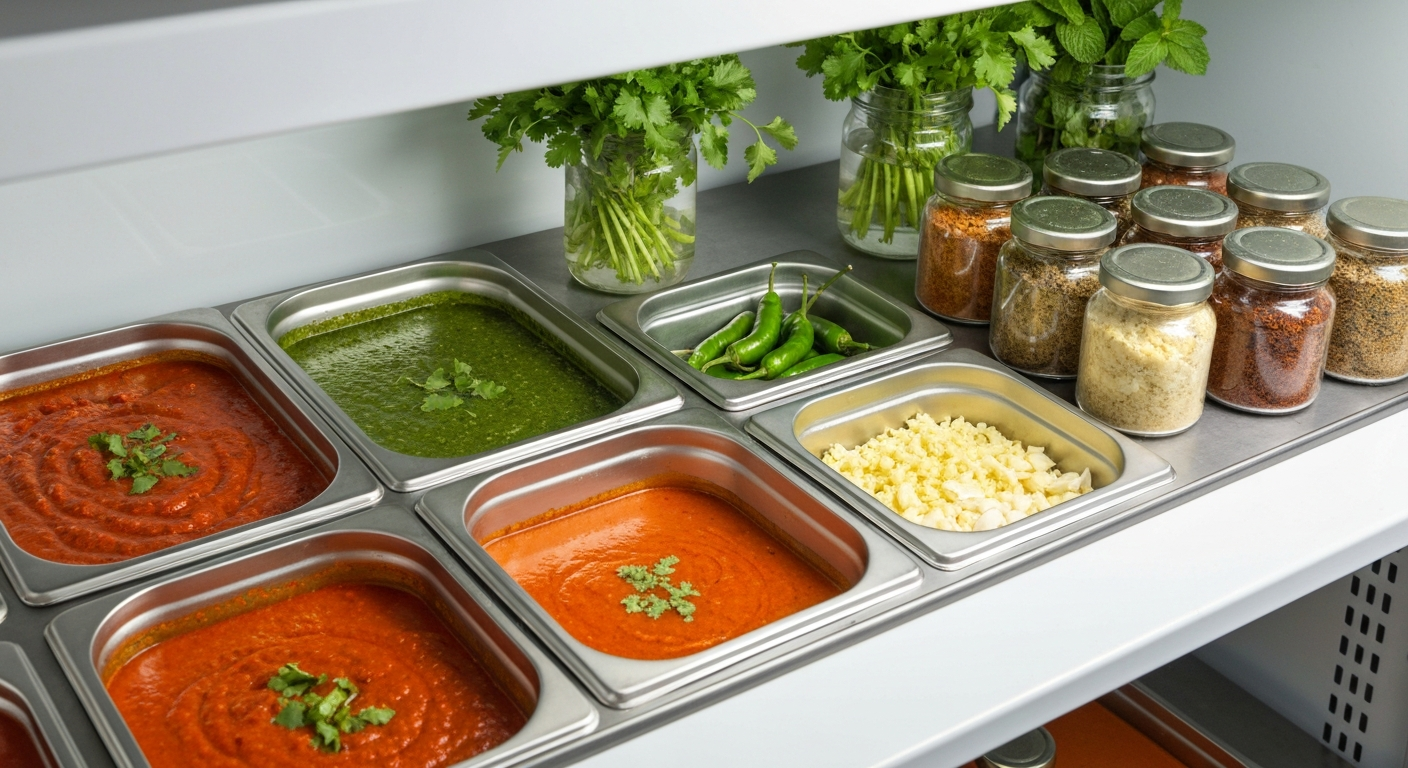
Pre-prepared gravies and pastes are the backbone of efficient Indian ghost kitchen operations. Products like MITRA's chef-grade gravies significantly reduce prep time. To manage their cold chain effectively:
- Bulk Storage: Store large batches of gravies in food-grade containers in walk-in refrigerators or freezers, adhering to rapid cooling guidelines.
- Portioning: For daily service, portion out required amounts into smaller, labeled containers. This minimizes the number of times the bulk batch is exposed to ambient temperatures.
- Thawing: Thaw frozen gravies safely in the refrigerator, under cold running water, or in a microwave (if immediate use is planned). Never thaw at room temperature.
- Shelf Life: Adhere strictly to manufacturer's guidelines for pre-made products. Once opened, transfer contents to an airtight container and use within the recommended timeframe.
Spices (Dry and Wet)
Spices, while often perceived as non-perishable, can lose their potency and flavor if not stored correctly.
- Dry Spices (Whole and Ground): Store in airtight containers away from direct sunlight, heat, and moisture. A cool, dark pantry is ideal. Ground spices have a shorter shelf life than whole spices due to increased surface area.
- Wet Spices/Pastes (e.g., Ginger-Garlic Paste): These are highly perishable. Store in airtight containers in the refrigerator. For longer storage, freeze in ice cube trays or small portions, then transfer to a freezer bag.
Dairy Products (Paneer, Yogurt)
Dairy items are highly sensitive to temperature fluctuations.
- Paneer: Store fresh paneer in airtight containers, ideally submerged in water (changed daily) in the refrigerator. Consume quickly. Frozen paneer should be thawed slowly in the refrigerator to maintain texture.
- Yogurt/Curd: Keep tightly sealed in the refrigerator. Avoid leaving it at room temperature for extended periods.
Fresh Produce (Ginger, Garlic, Chilies, Herbs)
These aromatic essentials are critical for authentic Indian flavors but are prone to spoilage.
- Ginger and Garlic: Store whole in a cool, dark, well-ventilated area. Peeled or chopped versions should be refrigerated in airtight containers or frozen.
- Green Chilies: Store in an airtight container lined with a paper towel in the refrigerator.
- Fresh Herbs (Cilantro, Mint): Wash, dry thoroughly, and store in the refrigerator. One method is to trim stems, place them in a glass of water (like flowers), and cover loosely with a plastic bag. Another is to wrap them in a damp paper towel and place them in a sealed bag or container.
- Pre-prepped Vegetables: If chopping vegetables in advance, store them in airtight containers in the refrigerator and use within 24-48 hours.
Lean Inventory Management and Supplier Relationships
Optimizing your cold chain goes hand-in-hand with smart inventory management. Ghost kitchens, by design, embrace lean operations.
- Just-in-Time (JIT) Principles: While a pure JIT model can be challenging for food, adapt its spirit. Minimize excess stock, especially perishables, to reduce holding costs and waste. This requires accurate forecasting.
- Accurate Forecasting: Analyze sales data to predict demand for specific dishes and ingredients. This allows for more precise ordering, preventing both overstocking and running out of critical items.
- Reliable Suppliers: Partner with suppliers who understand the demands of a ghost kitchen. ODOD LLC, for example, offers a 50 kg minimum order quantity (MOQ) for our chef-grade gravies, pastes, and spices, catering to the needs of professional kitchens. Our products are manufactured under rigorous certifications including FSSAI, US FDA, ISO, Halal, HACCP, and GMP, ensuring quality and safety.
- Understanding Lead Times: Be aware of your supplier's lead times. For products in stock at our US (Houston) or local-country warehouses, shipping typically occurs within 2 business days. If an item is not immediately available, lead times are generally 35-60 days, and customers are promptly notified of any schedule adjustments. This knowledge is crucial for planning your inventory.
Benefits of a Well-Managed Ghost Kitchen Indian Ingredient Cold Chain
Investing time and resources into optimizing your cold chain yields significant returns:
- Reduced Food Waste: Less spoilage means fewer ingredients thrown away, directly impacting your bottom line.
- Cost Savings: Lower waste translates to lower purchasing costs over time. Efficient storage also reduces energy consumption.
- Consistent Quality: Properly stored ingredients maintain their flavor, texture, and nutritional value, ensuring every dish meets your high standards.
- Enhanced Food Safety: Strict temperature control and hygiene practices minimize the risk of foodborne illnesses, protecting your customers and your brand reputation.
- Operational Efficiency: A well-organized cold chain means ingredients are easy to locate, fresh, and ready for use, streamlining kitchen workflow and reducing prep time.
- Scalability: A robust cold chain system is scalable, allowing your ghost kitchen to grow without compromising quality or safety.
Conclusion
For ghost kitchens serving authentic Indian cuisine, mastering the ghost kitchen Indian ingredient cold chain is not merely an operational task; it's a strategic imperative. By implementing strict temperature controls, utilizing FIFO, practicing proper packaging, and partnering with reliable suppliers like ODOD LLC (MITRA brand), operators can significantly extend the shelf life of their ingredients, reduce waste, ensure food safety, and maintain the culinary integrity that defines their brand. This commitment to excellence in cold chain management ultimately contributes to greater profitability, customer satisfaction, and the sustainable growth of your ghost kitchen business.
We proudly serve professional kitchens across the USA, Canada, UK, UAE, Australia, Germany, Italy, India, France, Ireland, Switzerland, and Netherlands, with our network continuously expanding.
To learn more about our range of chef-grade Indian gravies, pastes, sauces, rice, and spices, or to request a quote for your professional kitchen, please visit ododgroup.com today. Optimize your kitchen's efficiency with MITRA.