
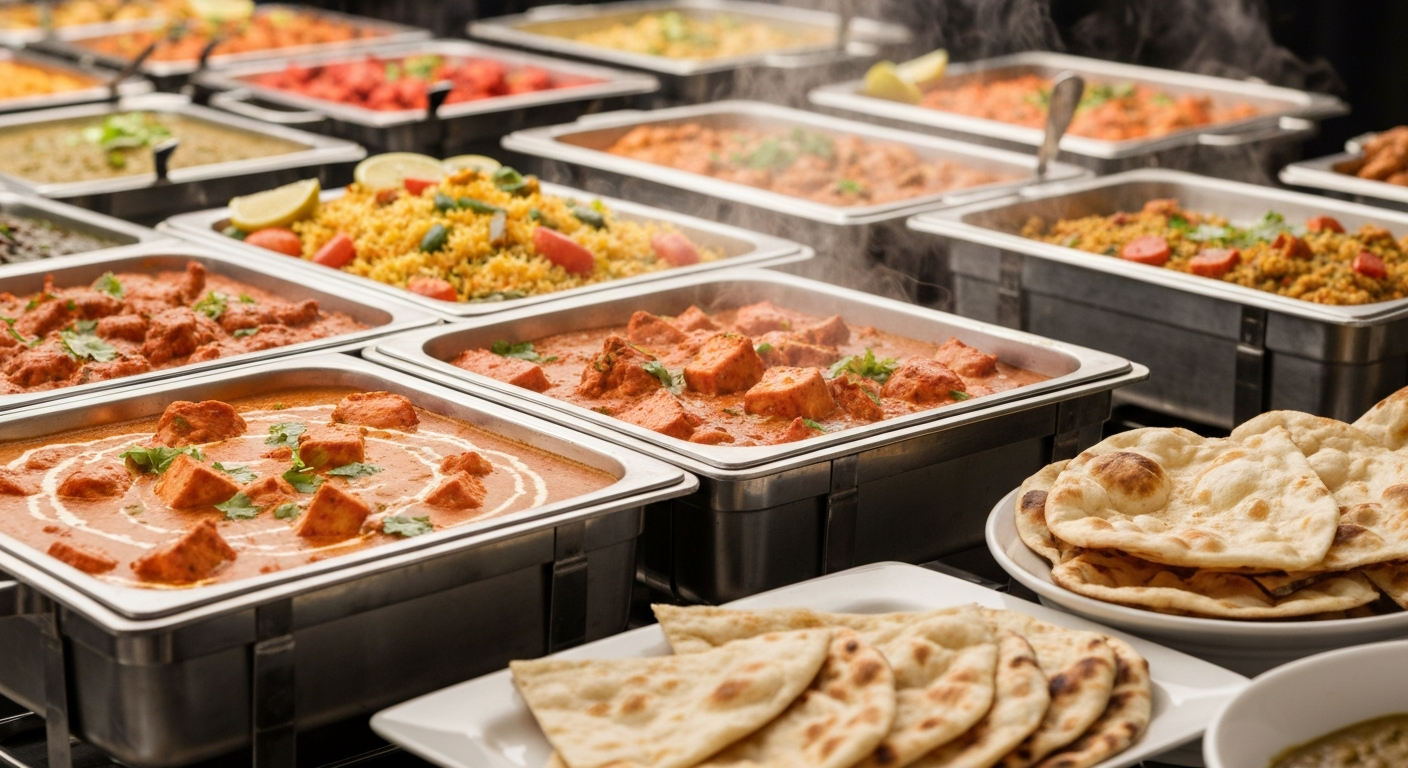
Operating a successful catering business, especially one specializing in Indian cuisine for large events, demands a delicate balance of culinary artistry, logistical precision, and financial acumen. The complexities of preparing authentic Indian dishes for hundreds or even thousands of guests can be daunting, often leading to increased labor costs, inconsistent quality, and substantial food waste. However, with strategic planning and the right operational approach, achieving large event Indian catering efficiency is not only possible but essential for maximizing profitability and reducing operational stress.
This guide explores practical strategies for caterers to streamline their high-volume Indian food preparation, focusing on methods that enhance speed, maintain authenticity, and ultimately boost the bottom line. From intelligent menu design to leveraging high-quality pre-prepared ingredients, we’ll outline how to transform the challenges of large-scale Indian catering into opportunities for growth and sustained success.
The Unique Demands of High-Volume Indian Catering
Indian cuisine, celebrated for its rich flavors and diverse regional specialties, often involves intricate preparation steps, extensive spice blends, and long cooking times. When scaled up for large events, these characteristics present unique challenges:
- Ingredient Complexity: A single Indian meal can require dozens of fresh ingredients, from specific vegetables and legumes to a wide array of whole and ground spices.
- Labor-Intensive Prep: Traditional Indian cooking often involves significant manual labor for chopping, grinding, sautéing base gravies, and slow-cooking.
- Skilled Workforce: Achieving authentic flavors consistently requires chefs with deep knowledge of Indian culinary techniques and regional variations, which can be difficult and expensive to staff.
- Consistency Across Batches: Maintaining uniform taste, texture, and appearance across multiple large batches of a dish is a common hurdle.
- Equipment and Space: High-volume cooking demands specialized equipment and ample kitchen space for prep, cooking, and holding.
- Logistics of Service: Transporting and serving hot, fresh Indian food to hundreds of guests simultaneously, often off-site, requires meticulous planning.
These factors can quickly escalate operational costs and put immense pressure on kitchen staff, potentially impacting both food quality and customer satisfaction. Addressing these challenges head-on with efficient strategies is paramount.
The Foundation of Efficiency: Strategic Menu Planning
Before any cooking begins, a well-thought-out menu is the cornerstone of large event Indian catering efficiency. It’s not just about offering delicious food, but about offering delicious food that can be produced efficiently at scale.
Standardization and Versatility
- Core Gravy System: Design your menu around a set of versatile base gravies (e.g., tomato-onion, cashew-cream, spinach) that can be adapted for multiple dishes. A single rich tomato-onion gravy might serve as the base for Chicken Tikka Masala, Paneer Butter Masala, or even a vegetable curry by simply adding different proteins or vegetables and specific finishing spices.
- Modular Dishes: Break down complex dishes into modular components. For example, a biryani can be prepared with pre-cooked rice, pre-marinated and cooked protein, and then layered and finished on-site or just before transport.
- Smart Side Dishes: Opt for side dishes that require minimal last-minute preparation or can be prepared in large batches well in advance, such as various rice preparations (plain basmati, jeera rice), lentils (dal makhani, dal tadka), and bread (naan, roti, paratha – partially cooked and finished on-site).
Leveraging Pre-Prepared Ingredients for High-Volume Indian Food Prep
One of the most impactful strategies for large event Indian catering efficiency is the integration of high-quality, chef-grade pre-prepared ingredients. This approach significantly reduces the most labor-intensive aspects of Indian cooking:
- Ready-to-Use Gravies and Pastes: Sourcing professionally prepared Indian gravies and pastes eliminates hours of chopping, sautéing, and slow-cooking. These products are manufactured to exact specifications, ensuring consistent flavor profiles and textures across all batches. For example, a ready-made Makhani gravy provides a perfect base for butter chicken or paneer butter masala, saving critical prep time.
- Bulk Spices and Blends: Utilizing pre-ground, high-quality bulk spices and custom spice blends ensures uniformity and saves the time associated with grinding whole spices in-house for large quantities.
- Pre-Cut Vegetables and Meats: While less common for Indian cuisine due to specific cuts, pre-portioned and cut ingredients can reduce prep time for certain dishes.
By incorporating these elements, caterers can shift their skilled labor from foundational prep to finishing, garnishing, and presentation, where their expertise truly shines. This not only speeds up service but also elevates the dining experience.
Optimizing Your Kitchen Workflow and Layout
An efficient kitchen layout and workflow are critical for any high-volume operation. For large-scale Indian catering, this means designing processes that minimize movement, prevent bottlenecks, and ensure food safety.
- Zoned Kitchen: Divide your kitchen into distinct zones for receiving, dry storage, cold storage, prep, cooking, plating, and dishwashing. This reduces cross-traffic and improves organization.
- Dedicated Prep Stations: Set up specialized stations for different tasks: one for gravies (if making from scratch), one for vegetable prep, one for meat marination, and one for rice cooking. When using pre-prepared gravies, these stations can be repurposed for other finishing tasks.
- Batch Cooking Principles: Cook in the largest feasible batches to maximize efficiency. This requires appropriate large-capacity cooking vessels and equipment.
- Cook-Chill-Reheat System: For components that can be prepared in advance, implement a cook-chill-reheat system. Rapid chilling and proper storage are crucial for food safety and quality. This allows for staggered production, reducing pressure on event day.
- Clear Labeling and Inventory: All prepped ingredients and cooked components must be clearly labeled with contents, date of preparation, and use-by date. A robust inventory management system prevents waste and ensures fresh ingredients are used first.
Labor Cost Reduction Through Skill Specialization
The traditional Indian kitchen often relies on highly skilled chefs for every stage of cooking. By integrating pre-prepared ingredients and standardizing recipes, caterers can reallocate labor more effectively, leading to significant cost savings.
- Reduce Reliance on Master Chefs for Base Prep: When high-quality, authentic gravies are sourced externally, the need for a master chef to spend hours on foundational curry bases is greatly reduced. This allows your most skilled chefs to focus on nuanced flavor adjustments, protein preparation, and presentation.
- Upskill General Kitchen Staff: General kitchen staff can be trained to follow standardized recipes using pre-prepared components, enabling them to produce consistent, high-quality dishes with less specialized training.
- Focus on Finishing and Presentation: Shift labor to tasks that add value directly to the guest experience, such as precise plating, garnishing, and ensuring timely service. This enhances the perceived quality of the food without increasing overall labor hours for basic prep.
Ensuring Consistent Quality and Authenticity at Scale
A common concern when discussing pre-prepared ingredients is the potential compromise on authenticity and quality. However, modern manufacturing processes, especially from reputable B2B suppliers, prioritize both.
- Chef-Grade Formulations: High-quality pre-prepared gravies and pastes are developed by culinary experts to deliver authentic Indian flavors. They use premium ingredients and traditional cooking methods scaled for industrial production.
- Strict Quality Control: Products are manufactured under stringent quality control protocols, including FSSAI, US FDA, ISO, Halal, HACCP, and GMP certifications. These ensure safety, consistency, and adherence to high standards from batch to batch.
- Standardized Recipes: When your catering operation uses standardized recipes built around these consistent base ingredients, every dish, regardless of the volume, will taste the same, meeting customer expectations every time.
- The Finishing Touch: The caterer's role then shifts to adding fresh proteins, vegetables, and the final tempering (tadka) or garnishes that personalize the dish and ensure its vibrancy and authenticity.
Inventory Management and Waste Reduction
Efficient inventory management is directly tied to profitability. Large-scale Indian catering often involves many perishable ingredients, making waste a significant concern.
- Predictable Ingredient Usage: Using standardized recipes and pre-prepared gravies makes ingredient forecasting much more accurate. You know exactly how much gravy, spice blend, or base ingredient is needed for a given number of portions.
- Reduced Spoilage: Pre-packaged gravies and pastes typically have a longer shelf life than fresh, raw ingredients, reducing the risk of spoilage and associated financial losses.
- Bulk Purchasing Advantages: Sourcing ingredients in bulk, such as our products with a 50 kg minimum order quantity (MOQ), can lead to better pricing from suppliers. This requires careful planning to ensure storage capacity and usage rates align.
- Minimizing Leftovers: Accurate portioning and consistent production reduce the amount of excess prepared food at the end of an event.
Scaling Your Indian Catering Business with Confidence
By implementing strategies for large event Indian catering efficiency, businesses can achieve significant operational improvements that directly support growth.
- Increased Capacity: With streamlined prep and reduced cooking times, your kitchen can handle more events without needing a proportional increase in staff or infrastructure.
- Consistent Customer Experience: Delivering consistently high-quality food, regardless of event size, builds reputation and encourages repeat business and referrals.
- Geographic Expansion: An efficient, scalable model makes it easier to serve clients across a wider area. Our products, for example, can be shipped to clients in the USA, Canada, UK, UAE, Australia, Germany, Italy, India, France, Ireland, Switzerland, and Netherlands, with more countries being added regularly.
- Faster Turnaround: When products are in stock in our US (Houston) or local-country warehouse, they ship in just 2 days. For items not in stock, the lead time is 35-60 days, with immediate notification of any delays, allowing caterers to plan effectively.
Mastering large event Indian catering efficiency is not just about cutting corners; it's about smart operations. By leveraging high-quality pre-prepared ingredients, optimizing kitchen workflows, and strategically managing labor, caterers can significantly enhance their profitability, maintain culinary excellence, and grow their business with confidence. This approach allows you to focus on the art of presentation and the joy of serving delicious, authentic Indian cuisine, rather than getting bogged down in the endless hours of foundational prep.
Ready to transform your large-scale Indian catering operations? Explore how high-quality, chef-grade Indian gravies, pastes, and spices can simplify your prep and boost your profitability.
Visit ododgroup.com to request a quote, sample, or wholesale inquiry and discover our range of certified products designed for professional kitchens.