
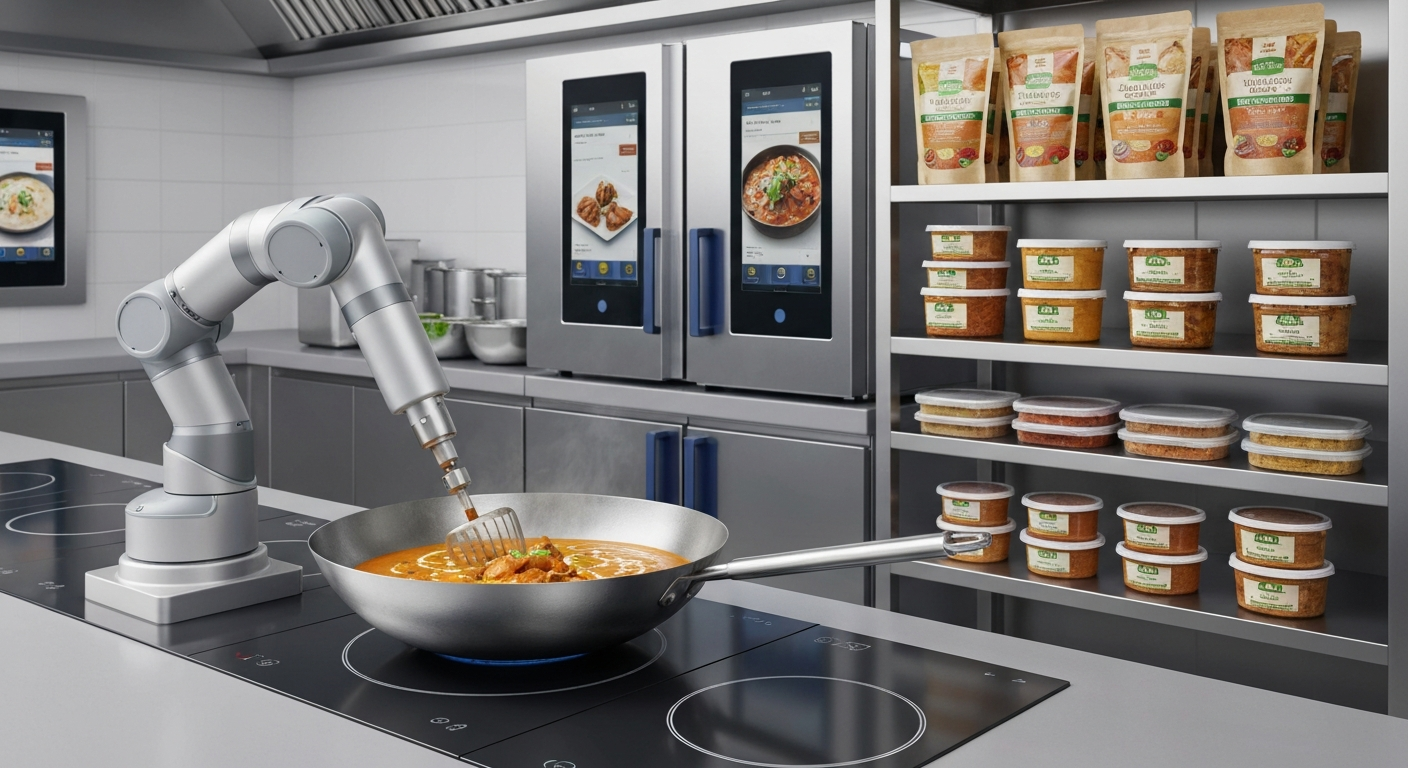
The culinary landscape is rapidly evolving, with ghost kitchens at the forefront of innovation. These delivery-only operations offer immense potential for scalability and market penetration, yet they also present unique challenges, particularly when it comes to cuisines as intricate and labor-intensive as Indian food. For operators in this dynamic sector, the goal is clear: achieve a compelling ghost kitchen Indian cuisine automation ROI.
Traditional Indian cooking, celebrated for its rich flavors and diverse regional specialties, often relies on extensive manual preparation, precise spice blending, and slow-cooking techniques. While these methods yield authentic results, they can hinder the speed, consistency, and profitability required for high-volume ghost kitchen environments. This article explores how strategic kitchen automation, combined with high-quality, pre-prepped Indian ingredients, can transform these operations, driving efficiency, reducing costs, and ultimately maximizing return on investment.
The Rise of Ghost Kitchens and the Demand for Indian Cuisine
Ghost kitchens have fundamentally reshaped the food service industry, allowing businesses to operate with lower overheads, optimize delivery radii, and rapidly adapt to market demand. Simultaneously, Indian cuisine continues to grow in popularity globally, driven by its aromatic spices, diverse vegetarian options, and comforting flavors. This convergence creates a significant opportunity for ghost kitchens specializing in Indian food.
However, meeting this demand at scale, consistently, and profitably requires a departure from traditional kitchen models. The very nature of ghost kitchens – designed for speed and efficiency – demands innovative solutions that can streamline complex culinary processes without compromising authenticity or quality.
Challenges in Scaling Traditional Indian Cuisine
Scaling Indian cuisine in a ghost kitchen environment faces several inherent obstacles:
- Labor Intensity: From chopping dozens of onions and tomatoes for a base gravy to slow-roasting spices and marinating meats, traditional Indian cooking is highly labor-intensive. Skilled chefs are essential but expensive and often in short supply.
- Consistency: Achieving uniform taste and texture across hundreds or thousands of dishes daily is a monumental task. Variations in prep, cooking times, and ingredient ratios can lead to inconsistent customer experiences.
- Prep Time: The foundational elements of Indian cuisine – gravies, masalas, and marinades – require significant preparation time, which directly impacts order fulfillment speed and kitchen throughput.
- Food Waste: Inconsistent portioning, spoilage of fresh ingredients, and errors in preparation can lead to substantial food waste, eroding profit margins.
These challenges highlight the critical need for solutions that can standardize processes, optimize labor, and accelerate production without sacrificing the authentic flavors customers expect.
The Automation Advantage for Indian Ghost Kitchens
Integrating automation into an Indian ghost kitchen addresses these challenges head-on, offering a pathway to significant ROI:
Precision Cooking and Consistency
Automated cooking equipment, such as robotic woks or smart combi ovens, can execute recipes with pinpoint accuracy. Programmed with precise temperatures, cooking times, and stirring patterns, these systems eliminate human error and ensure every batch of curry, biryani, or dal meets exact specifications. This consistency builds customer trust and reduces complaints, leading to repeat business.
Optimized Labor Allocation
Automation doesn't necessarily replace staff but reallocates their skills. Repetitive, time-consuming tasks can be handled by machines, freeing up skilled chefs to focus on menu innovation, quality control, and more complex finishing touches. This maximizes the value of your culinary team and reduces reliance on extensive, costly manual labor for basic prep.
Enhanced Speed and Throughput
Automated systems operate continuously and efficiently, dramatically increasing the volume of dishes a kitchen can produce in a given timeframe. This higher throughput means more orders can be fulfilled, especially during peak hours, directly translating to increased revenue potential. For a ghost kitchen, where speed is paramount, this is a distinct competitive advantage.
Waste Reduction and Cost Control
By ensuring precise portioning and consistent cooking, automation minimizes food waste. Smart inventory systems, often integrated with automated equipment, can track ingredient usage, predict demand, and optimize ordering, further reducing spoilage and overstocking. This tight control over ingredients directly impacts the bottom line, boosting profitability.
Integrating Pre-Prepped Indian Gravies and Pastes: The Foundation for Automation
While automation handles the cooking process, the quality of the input ingredients is equally crucial. This is where chef-grade, pre-prepped Indian gravies, pastes, and sauces become indispensable for a truly efficient and scalable ghost kitchen. They are the perfect complement to automated systems, providing a consistent, high-quality base that saves immense time and labor.
The Foundation for Automation
Automated systems thrive on consistency. Pre-prepped gravies and pastes arrive ready to use, eliminating the variability inherent in manual ingredient preparation. This allows chefs to focus on assembling, finishing, and customizing dishes, rather than spending hours chopping, blending, and slow-cooking base ingredients. For example, a robotic wok can consistently create a butter chicken dish when fed a pre-prepared, high-quality butter chicken gravy, along with pre-cooked chicken and other fresh elements.
Ensuring Authentic Flavor and Quality
Professional-grade pre-prepped ingredients, like those supplied by MITRA, are crafted to deliver authentic Indian flavors. Our products are manufactured to rigorous standards, utilizing traditional recipes and high-quality spices, ensuring that the essence of Indian cuisine is preserved. This means your automated kitchen can produce dishes that taste genuinely authentic, consistently, without the need for an expert Indian chef to prepare every single base from scratch. Our products are produced under strict FSSAI, US FDA, ISO, Halal, HACCP, and GMP certifications, assuring quality and safety.
Streamlining Inventory and Supply Chain
Using pre-prepped ingredients simplifies inventory management. Instead of stocking dozens of raw spices, vegetables, and other components for each gravy base, you can manage fewer, larger-volume items. This reduces complexity, minimizes spoilage, and optimizes storage space. Our commitment to reliable supply chain management ensures that your kitchen receives what it needs, when it needs it. Products in stock in our US (Houston) or local-country warehouses ship in 2 days; for items not in stock, the lead time is 35-60 days, with immediate notification of any delays.
Key Automation Technologies for Indian Cuisine
Several technologies are proving particularly effective in the automated Indian ghost kitchen:
- Automated Wok Stations / Robotic Arms: These systems can stir-fry, sauté, and simmer with precision, handling tasks like cooking rice, vegetables, or even specific curries with programmed consistency.
- Smart Combi Ovens and Fryers: Programmable ovens can handle tandoor-style cooking, baking, and steaming with consistent results. Smart fryers maintain optimal oil temperatures and cooking times for items like pakoras or samosas.
- AI-Powered Inventory Management: Software that tracks ingredient usage, predicts demand based on sales data, and automates reordering. This minimizes waste and ensures optimal stock levels.
- Recipe Management Systems: Digital platforms that store standardized recipes, integrate with automated equipment, and provide real-time data on ingredient usage and dish consistency.
Calculating Your ROI: Beyond the Initial Investment
While the initial investment in automation technology can be significant, the long-term ghost kitchen Indian cuisine automation ROI is compelling. Consider these key areas of return:
Labor Cost Savings
Reducing the need for extensive manual prep and cooking translates directly into lower labor costs. This includes fewer hours, less overtime, and potentially a smaller, more specialized team. The savings can quickly offset equipment costs.
Increased Order Volume Capacity
The ability to produce more dishes faster means your ghost kitchen can handle a significantly higher volume of orders, especially during peak hours. This direct increase in revenue, without a proportional increase in operational costs, is a powerful driver of ROI.
Reduced Food Waste
Precise portioning, optimized inventory management, and consistent cooking dramatically cut down on food waste. The cost of wasted ingredients adds up quickly, and these savings contribute substantially to overall profitability.
Improved Customer Satisfaction and Repeat Business
Consistent quality and faster delivery times lead to happier customers. Satisfied customers are more likely to become repeat customers and recommend your business, building brand loyalty and a stable revenue stream.
Implementing Automation: A Strategic Approach
Implementing automation requires careful planning:
Pilot Programs and Phased Rollouts
Start small. Implement automation for specific dishes or processes first. Gather data, refine workflows, and then gradually expand the automated systems across your menu or kitchen operations. This allows for learning and adaptation without disrupting the entire business.
Staff Training and Adaptation
Automation is a tool, not a replacement for human expertise. Invest in training your staff to operate and maintain new equipment. Empower them to leverage these technologies to enhance their skills and efficiency.
Choosing the Right Partners
Selecting reliable suppliers for both automation technology and high-quality ingredients is crucial. For pre-prepped Indian gravies, pastes, and sauces, look for partners like MITRA who understand the demands of B2B food service and can provide consistent, certified products.
MITRA's Role in Your Automated Indian Kitchen: Pre-Prepped Solutions for Efficiency
At ODOD LLC, under our MITRA brand, we understand the unique needs of professional kitchens and ghost kitchen operators. Our range of chef-grade Indian gravies, pastes, sauces, rice, and spices are designed to integrate seamlessly into modern, automated kitchen workflows. By providing consistent, authentic, and high-quality pre-prepped solutions, we empower your kitchen to maximize its automation investment.
Our products allow your team to focus on assembly, customization, and plating, rather than hours of base preparation. This synergy between advanced automation and premium pre-prepped ingredients is the key to unlocking the full potential of your ghost kitchen Indian cuisine automation ROI.
We serve a growing list of countries, including the USA, Canada, UK, UAE, Australia, Germany, Italy, India, France, Ireland, Switzerland, and Netherlands, with more being added regularly. With a 50 kg minimum order quantity (MOQ), we are equipped to support businesses of all sizes looking to scale their Indian cuisine offerings.
Conclusion
The future of scalable Indian cuisine in ghost kitchens lies in the intelligent integration of automation and high-quality, pre-prepped ingredients. By embracing smart kitchen technology and partnering with reliable B2B food suppliers like MITRA, ghost kitchen operators can overcome traditional challenges, significantly boost efficiency, reduce costs, and deliver consistent, authentic Indian flavors at scale. The result is a substantial ghost kitchen Indian cuisine automation ROI, paving the way for sustainable growth and increased profitability in a competitive market.
Ready to transform your ghost kitchen operations? Inquire about our range of chef-grade Indian gravies, pastes, sauces, and spices by visiting ododgroup.com today. Discover how MITRA can be your partner in achieving culinary excellence and operational efficiency.