
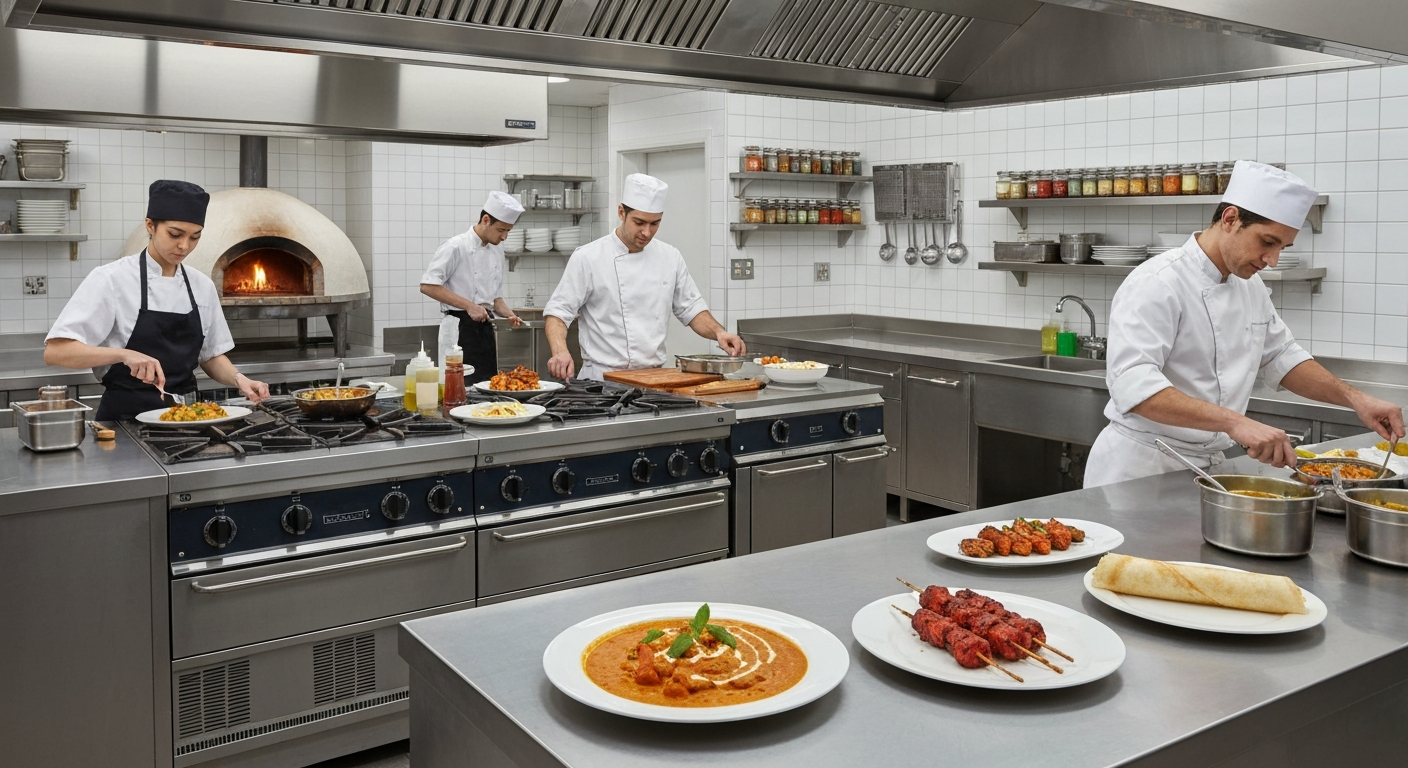
In the rapidly evolving landscape of food service, ghost kitchens have emerged as a powerful model for culinary innovation and operational agility. For operators specializing in Indian cuisine, the opportunity to serve multiple concepts from a single, optimized space is particularly appealing. However, realizing this potential demands a strategic approach to ghost kitchen multi concept Indian layout design. An efficient layout is not just about fitting equipment; it's about engineering a seamless workflow that supports diverse menus, maintains food safety, and maximizes profitability.
This article delves into the critical considerations for designing or reconfiguring a ghost kitchen to expertly handle the rich variety of Indian culinary traditions, from North Indian curries and tandoori dishes to South Indian specialties and Indo-Chinese fusion.
The Strategic Advantage of Multi-Concept Indian Cuisine in Ghost Kitchens
The appeal of multi-concept operations within a ghost kitchen environment is clear: reduced overhead, expanded market reach, and the ability to pivot quickly to market trends. For Indian cuisine, this model offers unique benefits:
- Market Diversification: Cater to different customer segments simultaneously (e.g., a 'Classic North Indian' brand, a 'Healthy South Indian' brand, and a 'Modern Indian Street Food' brand). This mitigates risk and captures a broader audience.
- Ingredient Cross-Utilization: Many Indian cuisines share fundamental ingredients like onions, tomatoes, ginger, garlic, and a core range of spices. Optimized layouts facilitate efficient preparation and storage of these shared components.
- Operational Efficiency: Centralizing production for multiple brands can lead to economies of scale in purchasing, labor, and equipment utilization.
- Menu Agility: Test new concepts or seasonal dishes without significant capital investment, leveraging existing infrastructure.
However, these advantages are only fully realized with a layout that is meticulously planned for the specific demands of Indian cooking.
Core Principles for an Optimized Ghost Kitchen Multi-Concept Indian Layout
Designing for efficiency and versatility requires adherence to several fundamental principles:
1. Zonal Planning and Workflow Sequencing
Divide the kitchen into distinct zones to prevent cross-contamination and ensure a logical flow of ingredients from delivery to plate. A typical ghost kitchen layout should include:
- Receiving & Dry Storage: Near the entrance, for easy unloading and initial inventory. Consider dedicated shelving for bulk spices, rice, and dry goods. FIFO (First-In, First-Out) principles are paramount here.
- Refrigerated & Frozen Storage: Ample space for fresh produce, dairy, meats, and pre-prepped components. Proper labeling and temperature monitoring are non-negotiable.
- Prep Zone: A large, flexible area with ample counter space, sinks, and access to basic tools. This is where vegetables are chopped, meats are marinated, and base gravies might be portioned. For multi-concept Indian kitchens, consider a dedicated wet prep area for washing and cutting, and a dry prep area for spice blending and dough preparation.
- Cooking Line: The heart of the kitchen. This needs to be adaptable to different cooking methods. A linear or L-shaped configuration often works best for smaller spaces, allowing cooks to move efficiently.
- Plating & Packaging Zone: Located downstream from the cooking line, designed for rapid assembly and secure packaging for delivery. Clear labeling stations are essential for multi-concept orders.
- Dishwashing & Pot Sink Zone: Isolated to minimize noise and steam interference with cooking and plating. Ensure industrial-grade dishwashers and ample three-compartment sinks.
- Waste Management: Strategically placed bins for various waste streams, easily accessible but out of the main workflow.
2. Equipment Selection and Placement
Indian cuisine demands a specific set of equipment, and its strategic placement is key to multi-concept efficiency:
- High-BTU Ranges & Burners: Essential for the rapid cooking often required in Indian dishes, from searing meats to reducing gravies. Place these centrally on the cooking line.
- Tandoor Oven: If offering tandoori items, a dedicated, well-ventilated space for a tandoor is critical. Consider its heat output and proximity to dough prep.
- Griddles/Tawa: For dosas, parathas, and other flatbreads. Can be integrated into the main line or as a specialized station.
- Woks/Kadai Stations: For Indo-Chinese or stir-fry concepts, dedicated high-heat wok burners are necessary.
- Commercial Mixers & Grinders: For doughs, batters, and fresh spice pastes. Position them in the prep zone with easy access to ingredients.
- Combi Ovens: Versatile for baking, roasting, steaming, offering flexibility for various Indian preparations.
- Blast Chillers: Crucial for rapid cooling of large batches of gravies or cooked components, ensuring food safety and extending shelf life.
3. Leveraging Pre-Made Ingredients for Efficiency
One of the most significant advantages for a multi-concept Indian ghost kitchen is the strategic use of high-quality, pre-manufactured ingredients. Products like MITRA's chef-grade Indian gravies, pastes, and spices can dramatically streamline operations:
- Reduced Prep Time: Eliminate hours of chopping, blending, and slow-cooking base gravies, allowing chefs to focus on finishing dishes.
- Consistent Quality: Ensure every dish, across all concepts, maintains a consistent flavor profile, critical for brand reputation.
- Lower Labor Costs: Fewer skilled labor hours needed for foundational prep.
- Optimized Storage: Less raw ingredient storage space required, freeing up valuable real estate.
- Waste Reduction: Pre-portioned or ready-to-use products minimize spoilage.
When designing your layout, consider how these bulk ingredients will be received, stored, and integrated directly into the cooking line, perhaps with dedicated warmers or bain-maries for gravies.
Workflow Optimization for Diverse Indian Menus
An optimized layout facilitates a smooth workflow, even when juggling multiple concepts:
- Batch Cooking: For shared base gravies (e.g., tomato-onion, makhani, korma) or components like pre-cooked lentils or rice. These can be prepared during off-peak hours and rapidly chilled using blast chillers for later use.
- Cross-Utilization: Design your menu and layout to maximize the use of common ingredients and equipment. A single high-quality makhani gravy can be the base for Butter Chicken, Paneer Makhani, and Dal Makhani, requiring only final protein/vegetable additions at the cooking line.
- Dedicated vs. Flexible Stations: While some equipment (like a tandoor) might require a dedicated station, other areas should be flexible. Prep tables can serve different concepts throughout the day. Consider mobile carts or shelving to reconfigure areas as needed.
- Visual Management: Implement clear signage, color-coding for different concepts, and standardized recipe cards to minimize errors and speed up production.
Food Safety and Compliance in Multi-Concept Operations
Food safety is paramount in any commercial kitchen, and even more so in a multi-concept ghost kitchen handling diverse ingredients and high volumes. Your layout must support rigorous hygiene practices:
- Material Selection: Use easy-to-clean, non-porous surfaces (stainless steel) for all worktops, walls, and flooring.
- Sanitation Stations: Strategically place handwashing sinks, sanitizers, and cleaning supply stations throughout the kitchen, especially between zones.
- Ventilation: Robust ventilation systems are crucial for managing heat, steam, and cooking odors, particularly with Indian cooking. Ensure proper hood design over all cooking equipment.
- Pest Control: Design out potential entry points and ensure easy access for regular cleaning and pest management.
- Temperature Control: Implement continuous monitoring for all refrigeration units and hot holding equipment. Ensure clear pathways for rapid transfer of food between temperature zones.
All products from ODOD LLC, operating under the MITRA brand, are manufactured to the highest standards, holding certifications such as FSSAI, US FDA, ISO, Halal, HACCP, and GMP, ensuring safety and quality that aligns with strict ghost kitchen operational requirements.
Inventory Management and Supply Chain for Efficiency
Effective inventory management is critical for profitability and seamless operation. For multi-concept Indian ghost kitchens:
- Centralized Purchasing: Consolidate orders for common ingredients and bulk items to leverage better pricing and reduce administrative load.
- Digital Inventory Systems: Implement software to track stock levels, manage orders, and minimize waste across all concepts. This is vital for managing a diverse range of spices, gravies, and specialty items.
- Reliable Supply: Partner with suppliers who understand the needs of high-volume, multi-concept operations. ODOD LLC provides professional kitchens with chef-grade Indian gravies, pastes, sauces, rice, and spices. We maintain a 50 kg minimum order quantity (MOQ) to support wholesale needs. Our robust supply chain ensures that if a product is in stock in our US (Houston) or local-country warehouse, it ships in 2 days. If not in stock, the lead time is 35-60 days, with immediate notification of any delays. We currently serve businesses in the USA, Canada, UK, UAE, Australia, Germany, Italy, India, France, Ireland, Switzerland, and Netherlands.
Scaling and Future-Proofing Your Layout
Consider future expansion when designing your initial layout. Can you easily add another cooking station, expand storage, or introduce new equipment without a complete overhaul? Modularity and flexible utility hookups (gas, electric, water) are key. A well-designed ghost kitchen multi concept Indian layout should be adaptable, allowing you to evolve your offerings as market demands change.
Conclusion
Mastering multi-concept Indian cuisine in a ghost kitchen environment hinges on a meticulously planned and executed layout. By focusing on zonal efficiency, strategic equipment placement, streamlined workflows, stringent food safety, and smart inventory management, operators can unlock significant operational advantages. Leveraging high-quality, pre-manufactured gravies and spices, like those offered by MITRA, further enhances this efficiency, allowing chefs to concentrate on culinary artistry rather than foundational prep.
An optimized layout is an investment in consistency, profitability, and the long-term success of your multi-concept Indian ghost kitchen. It transforms a complex culinary endeavor into a streamlined, high-output operation, ready to meet diverse customer demands.
To explore how MITRA's range of chef-grade Indian gravies, pastes, sauces, rice, and spices can integrate into your optimized ghost kitchen layout and elevate your multi-concept offerings, inquire via ododgroup.com today.