
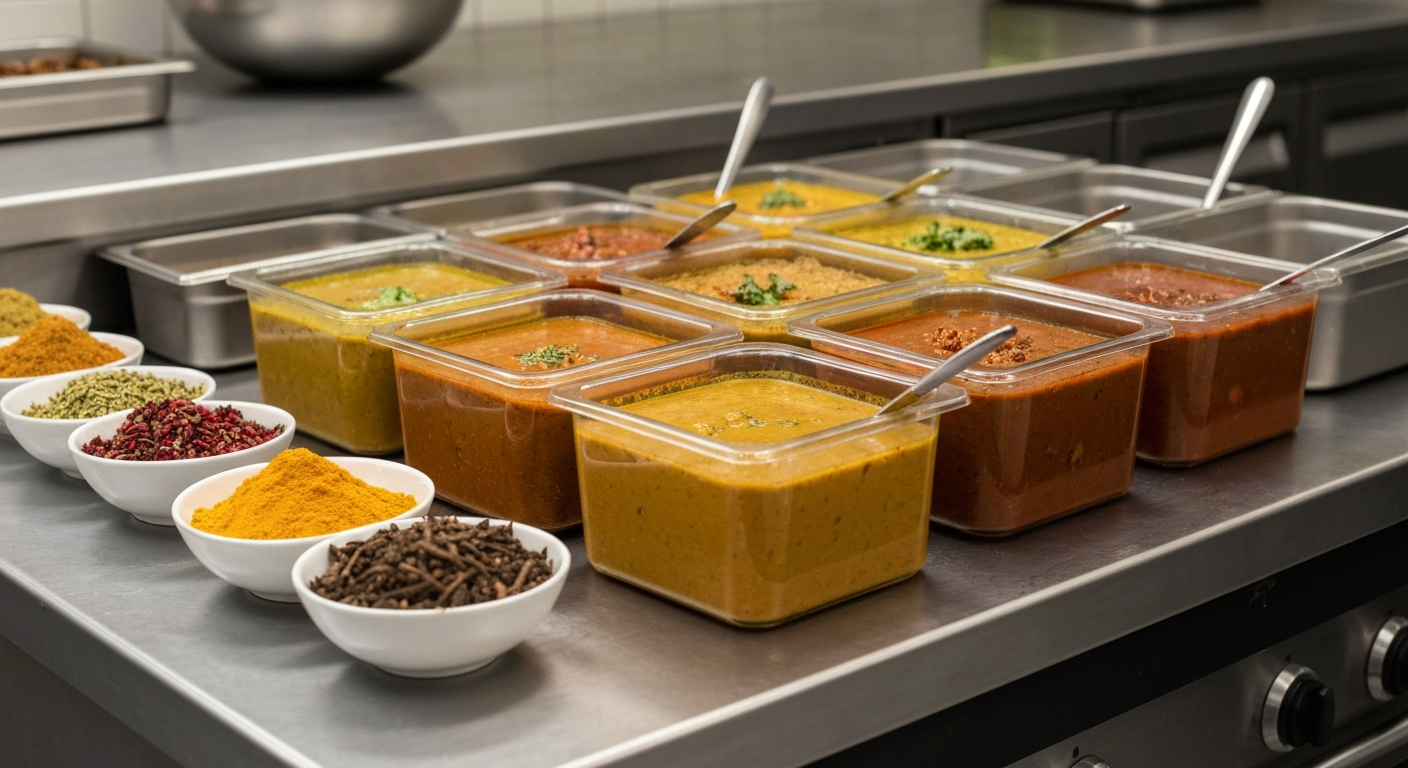
The culinary landscape in the United States and globally is experiencing a profound shift, with Indian cuisine moving from niche to mainstream. This escalating demand presents a significant opportunity for foodservice distributors, but it also introduces complexities in managing foodservice distributor Indian food inventory. Accurately forecasting demand, optimizing stock levels, and ensuring a consistent supply of premium Indian gravies, pastes, sauces, rice, and spices are critical for profitability and sustained growth.
This article explores strategic approaches to predictive inventory management, offering practical insights for distributors to navigate the dynamic market of Indian foodservice products. By leveraging data, technology, and robust supplier partnerships, distributors can transform inventory challenges into a competitive advantage.
The Surging Appetite for Indian Cuisine in Foodservice
The growth of Indian cuisine is driven by several factors:
- Diversifying Palates: Consumers are increasingly adventurous, seeking authentic and diverse culinary experiences beyond traditional offerings.
- Health and Vegetarian Trends: Indian food naturally aligns with plant-based and health-conscious diets, offering a rich array of vegetarian and vegan options.
- Convenience and Quality: Professional kitchens, from independent restaurants to large hotel chains, are seeking high-quality, consistent, and convenient Indian ingredients that reduce prep time without compromising authenticity.
- Global Exposure: Travel, media, and social platforms have elevated the profile of Indian dishes, sparking broader interest.
For foodservice distributors, this surge translates into a need for a wider range of Indian products and a more sophisticated approach to their supply chain. Restaurants, caterers, and cloud kitchens rely on their distributors to provide these essential ingredients reliably and efficiently.
Core Challenges in Foodservice Distributor Indian Food Inventory Management
Managing inventory for Indian foodservice products comes with unique challenges:
- Variety and Complexity: Indian cuisine involves a vast array of spices, herbs, and regional preparations, leading to a high number of SKUs, each with its own demand pattern.
- Perishability and Shelf Life: While many Indian ingredients are shelf-stable, gravies, pastes, and some specialized products have specific shelf-life considerations that impact storage and rotation strategies.
- Demand Volatility: Demand can fluctuate based on seasonality, regional preferences, menu changes by client restaurants, and even cultural events.
- Supply Chain Intricacies: Sourcing authentic, high-quality ingredients can involve a complex supply chain, potentially leading to longer lead times or inconsistent availability if not managed with a reliable partner.
- Capital Tie-up and Obsolescence: Overstocking ties up valuable capital and increases the risk of spoilage or obsolescence, particularly for products with shorter shelf lives. Conversely, understocking leads to lost sales and dissatisfied customers.
Addressing these challenges requires a proactive, predictive approach rather than reactive inventory management.
Foundations of Predictive Inventory for Indian Food Products
Effective predictive inventory management is built on a combination of data analysis, technological integration, and collaborative relationships.
Data-Driven Forecasting: The Distributor's Compass
Accurate forecasting is the cornerstone of predictive inventory. Distributors should leverage:
- Historical Sales Data: Analyze past purchase orders, sales trends by SKU, and client-specific ordering patterns. Look for weekly, monthly, and seasonal variations. For instance, demand for specific gravies might peak during certain festivals or seasons.
- Point-of-Sale (POS) Data from Clients: Encourage key clients to share anonymized POS data. This offers real-time insights into actual consumption, allowing for more precise demand sensing for individual dishes and ingredients.
- Market Intelligence: Monitor culinary trends, restaurant openings, and demographic shifts in your service areas. Are new Indian restaurants opening? Are existing clients expanding their Indian menu offerings?
- Promotional Calendars: Factor in any upcoming promotions or special events planned by your clients that might lead to a surge in demand for specific ingredients.
- Economic Indicators: Understand broader economic trends that might impact restaurant patronage and, consequently, ingredient orders.
For example, if a major client is launching a new menu featuring several regional Indian dishes, understanding their projected sales for those dishes can directly inform your inventory levels for the specific gravies and spices required.
Leveraging Technology for Accuracy
Modern inventory management is inefficient without robust technological support:
- Enterprise Resource Planning (ERP) Systems: Integrate sales, purchasing, and inventory data into a single system for a holistic view.
- Warehouse Management Systems (WMS): Optimize storage, picking, and packing processes, improving efficiency and reducing errors.
- Advanced Analytics and AI/ML: Utilize specialized software that employs algorithms to analyze complex data sets, identify patterns, and generate more accurate demand forecasts than traditional methods. These systems can account for multiple variables simultaneously, including promotions, weather, and economic factors.
- Automated Reordering: Set up systems that automatically trigger purchase orders when inventory levels hit predetermined reorder points, based on historical data and current forecasts.
These technologies provide real-time visibility into stock levels, track product movement, and flag potential issues before they become critical, which is particularly valuable for managing the diverse range of foodservice distributor Indian food inventory.
Collaborative Planning with Clients and Suppliers
Effective inventory management is not a solitary effort. It requires strong communication across the supply chain:
- Client Collaboration: Establish open lines of communication with your restaurant clients. Understand their menu cycles, projected demand for new dishes, and any planned expansions. This proactive engagement allows you to anticipate their needs rather than react to last-minute orders.
- Supplier Partnership: Work closely with your primary suppliers, like ODOD LLC (MITRA brand). Share your forecasts and discuss potential demand fluctuations. A strong supplier relationship ensures you are informed about lead times, production schedules, and any potential supply chain disruptions. This is crucial for managing products with varying lead times; for instance, if a product is in stock in our US (Houston) or local-country warehouse, it ships in 2 days. However, if it is not in stock, the lead time is 35-60 days, and the customer is notified immediately of any delay.
Advanced Strategies for Optimizing Indian Food Inventory
Beyond the foundational elements, distributors can implement more nuanced strategies to refine their inventory management.
SKU Rationalization and Portfolio Management
Given the wide variety of Indian ingredients, it's essential to strategically manage your product portfolio:
- Categorize SKUs: Classify your Indian food products based on demand volume, profitability, and shelf life (e.g., high-turnover gravies, specialty spices, staple rice varieties). Focus your predictive efforts most intensely on high-volume, critical items.
- Analyze Performance: Regularly review the sales performance of each Indian SKU. Identify fast-movers and slow-movers. Consider phasing out consistently low-demand items that tie up capital and warehouse space, or explore opportunities to bundle them with higher-demand products.
- Strategic Sourcing: For essential, high-volume items, consider primary and secondary sourcing options to mitigate risk. For specialty items, a single, reliable supplier like MITRA can simplify procurement.
Safety Stock and Buffer Inventory
Even with the best forecasting, unforeseen events can occur. Safety stock acts as a buffer:
- Calculate Optimal Safety Stock: Determine appropriate safety stock levels for each Indian food product SKU based on demand variability, lead time variability, and desired service level. Higher variability or longer lead times necessitate more safety stock. For example, a popular ready-to-use gravy might require a higher safety stock than a less frequently ordered spice blend.
- Buffer for Promotions and Peaks: Maintain additional buffer inventory for anticipated peak seasons or client promotions that might exceed average demand. This prevents stockouts during critical periods.
- Dynamic Adjustments: Regularly review and adjust safety stock levels based on updated forecasts, supplier performance, and market conditions.
Lead Time Management and Supplier Reliability
Managing lead times is paramount, especially when sourcing specialized ingredients:
- Understand Supplier Lead Times: Have a clear understanding of the lead times for each product from your suppliers. This includes order processing, production, and shipping time. As an American company, ODOD LLC works diligently to ensure efficient logistics for MITRA products, which are manufactured to FSSAI, US FDA, ISO, Halal, HACCP, and GMP standards.
- Reliable Supplier Partnerships: Partnering with a supplier known for consistency and reliability significantly reduces lead time uncertainty. A supplier that communicates proactively about any potential delays allows you to adjust your plans and inform your clients accordingly. ODOD LLC ensures immediate notification of any shipping delays.
- Minimum Order Quantities (MOQs): Be aware of and plan around supplier MOQs. For MITRA products, a 50 kg minimum order quantity (MOQ) applies. Integrate this into your purchasing strategy to optimize order size and frequency.
The MITRA Advantage: Partnering for Predictable Supply
As a foodservice distributor, your success hinges on the quality and reliability of your suppliers. ODOD LLC, through its MITRA brand, offers a compelling partnership for managing your foodservice distributor Indian food inventory:
- Chef-Grade Quality: MITRA supplies premium, authentic Indian gravies, pastes, sauces, rice, and spices specifically formulated for professional kitchens. This ensures consistency in flavor and quality for your restaurant clients.
- Ready-to-Use Solutions: Our range of ready-to-use gravies and pastes significantly reduces preparation time for chefs, allowing them to focus on customization and plating, which is a key selling point for your clients.
- Simplified Sourcing: We streamline the procurement of complex Indian ingredients, providing a single, reliable source for a diverse product range. Our products are manufactured to stringent quality standards, holding certifications including FSSAI, US FDA, ISO, Halal, HACCP, and GMP.
- Global Reach and Efficient Logistics: ODOD LLC serves a growing list of countries, including USA, Canada, UK, UAE, Australia, Germany, Italy, India, France, Ireland, Switzerland, and Netherlands. This extensive network, combined with our US (Houston) warehouse, supports efficient distribution.
- Consistent Supply Chain: We understand the critical importance of a stable supply chain for distributors. Our commitment to transparent communication regarding lead times and proactive management helps you maintain optimal inventory levels.
By partnering with MITRA, distributors can confidently meet the surging demand for authentic Indian cuisine, knowing they are backed by a supplier committed to quality, consistency, and efficient service.
Benefits of a Robust Predictive Inventory System
Implementing advanced predictive inventory strategies for your foodservice distributor Indian food inventory yields substantial benefits:
- Reduced Operating Costs: Minimize carrying costs, reduce waste from spoilage or obsolescence, and optimize warehouse space.
- Improved Cash Flow: Free up capital that would otherwise be tied up in excess inventory.
- Enhanced Customer Satisfaction: Ensure consistent product availability, leading to fewer stockouts and more reliable service for your restaurant clients.
- Increased Sales and Profitability: Meet demand effectively, capitalize on market growth, and avoid lost sales opportunities.
- Competitive Advantage: Position your distribution business as a reliable and efficient partner in the rapidly expanding Indian foodservice market.
Conclusion
The rising popularity of Indian cuisine presents an unparalleled opportunity for foodservice distributors. However, realizing this potential requires sophisticated inventory management. By embracing data-driven forecasting, leveraging technology, fostering strong partnerships, and implementing advanced inventory strategies, distributors can master the complexities of foodservice distributor Indian food inventory. This proactive approach not only optimizes operational efficiency and reduces costs but also strengthens client relationships and secures a leading position in this vibrant culinary segment.
Ready to enhance your Indian foodservice product offerings with a reliable partner? Inquire about MITRA's chef-grade Indian gravies, pastes, sauces, rice, and spices. Visit ododgroup.com to request a quote, sample, or discuss wholesale opportunities.