
In the rapidly evolving landscape of food service, multi-brand ghost kitchens represent a powerful model for maximizing reach and revenue. However, their success hinges on operational efficiency, particularly in managing diverse menus and complex ingredient inventories. For ghost kitchens specializing in Indian cuisine, mastering indian ghost kitchen ingredient cross-utilization is not just an advantage—it's a fundamental strategy for reducing waste, streamlining operations, and significantly boosting profitability.
The multi-brand ghost kitchen concept thrives on agility and variety. Operators can launch several virtual brands from a single kitchen, each with its own distinct identity and menu. While this offers immense flexibility, it also introduces challenges: managing multiple ingredient lists, preventing waste from underutilized components, and maintaining consistency across a broad culinary spectrum. Indian cuisine, with its rich array of gravies, spices, and foundational preparations, offers a unique opportunity for strategic cross-utilization that can turn these challenges into strengths.
The Strategic Advantage of Indian Cuisine for Cross-Utilization
Indian cuisine is inherently built upon a foundation of versatile components. Unlike many other cuisines that rely on a vast number of unique, dish-specific ingredients, Indian cooking frequently utilizes a core set of gravies, spice blends, and pastes that can be adapted and flavored to create an astonishing diversity of dishes. This characteristic makes Indian food particularly well-suited for a cross-utilization strategy in a multi-brand ghost kitchen environment.
Consider the common building blocks: a few fundamental gravies can be transformed into dozens of distinct curries, stews, and braises. Standardized spice blends, when combined with different main ingredients and cooking methods, yield an endless variety of flavors. This inherent versatility means that a well-planned Indian ghost kitchen can drastically reduce its raw ingredient inventory while expanding its menu offerings across multiple virtual brands.
Core Components for High-Impact Cross-Utilization
To effectively implement cross-utilization, ghost kitchens must identify and standardize these core components:
- Foundational Gravies: These are the backbone of many Indian dishes. A well-prepared Makhani (butter gravy), Onion-Tomato (basic curry base), Green Masala (herb-based), or Korma (cashew/yogurt-based) gravy can serve as the starting point for numerous curries, paneer dishes, and even lentil preparations across different brands.
- Versatile Pastes & Marinades: Ginger-garlic paste is ubiquitous. A mint-coriander chutney base can be used as a marinade, a condiment, or a flavor enhancer. Tandoori marinades, once prepared, can be applied to chicken, fish, paneer, or vegetables, yielding different dishes for various virtual brands.
- Standardized Spice Blends: Garam Masala, Curry Powder, Cumin Powder, Coriander Powder, Turmeric, and Chili Powder are staples. Pre-blended and consistent spice mixes ensure flavor uniformity and reduce the need for individual spice management per dish.
- Staple Ingredients: Rice (Basmati, Sona Masoori), various lentils (Dal Makhani, Toor Dal, Moong Dal), yogurt, paneer, and common vegetables (onions, tomatoes, potatoes, spinach, cauliflower) are used across a wide spectrum of Indian dishes.
Strategies for Effective Indian Ghost Kitchen Ingredient Cross-Utilization
Implementing a robust cross-utilization strategy requires careful planning and execution. Here are key approaches:
1. Menu Engineering for Synergy Across Brands
The most effective cross-utilization begins at the menu development stage. Instead of creating isolated menus for each virtual brand, design them with shared core ingredients in mind. For example:
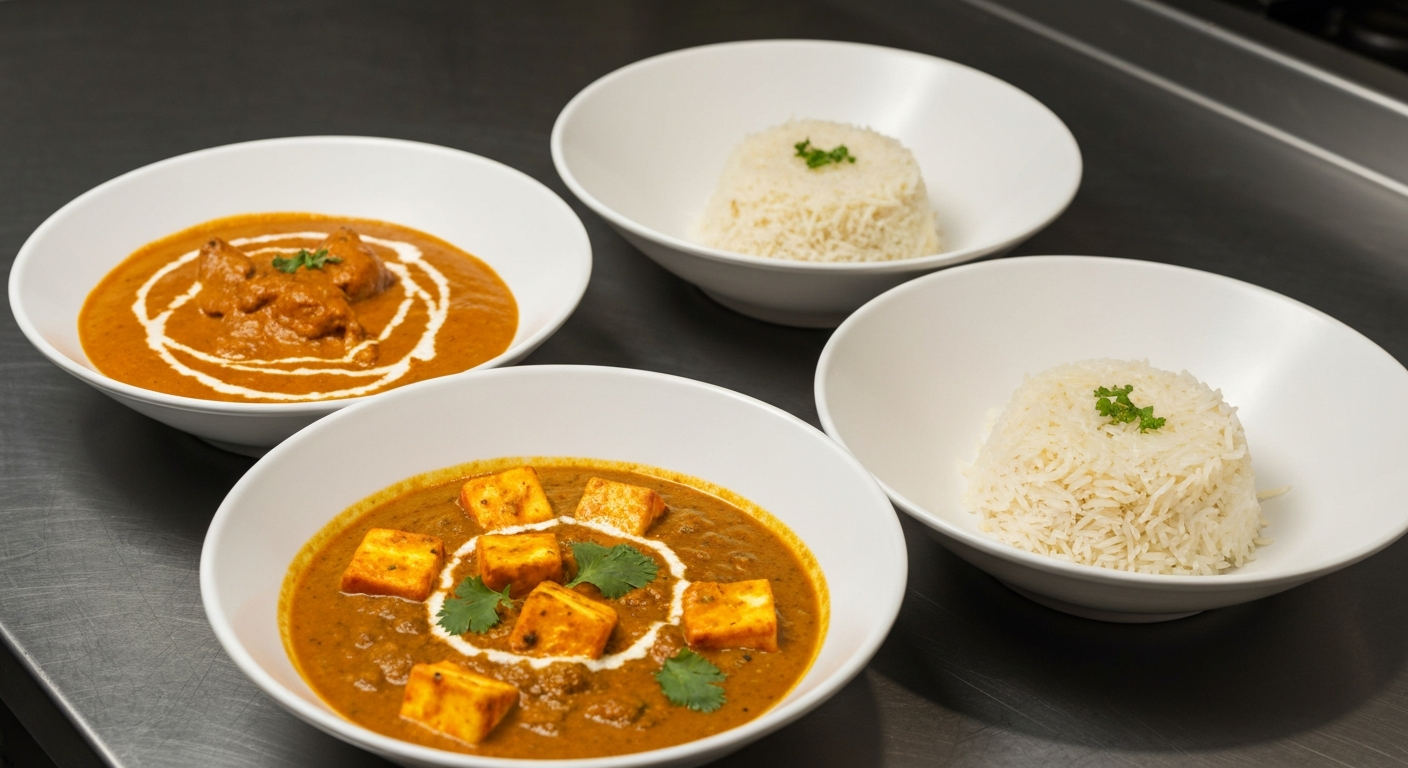
- Makhani Gravy: Brand A offers Butter Chicken. Brand B features Paneer Makhani. Brand C provides Dal Makhani. Brand D introduces Malai Kofta. All four distinct dishes leverage the same foundational Makhani gravy, minimizing prep time and ingredient variety.
- Onion-Tomato Gravy: Brand A serves Chicken Curry. Brand B offers Aloo Gobi (potato and cauliflower curry). Brand C presents Chana Masala (chickpea curry). These utilize a common onion-tomato base, with variations in spices and main ingredients.
This approach not only reduces ingredient complexity but also ensures a consistent quality baseline across your Indian offerings.
2. Centralized Prep and Batch Cooking
For multi-brand ghost kitchens, a centralized prep model is crucial. Instead of individual brands preparing their own bases, a dedicated team or station can focus on batch cooking the core gravies, pastes, and spice blends that will be distributed to various brand lines within the kitchen. This maximizes efficiency, reduces labor costs, and guarantees consistency.
Batch cooking large quantities of foundational gravies, such as a basic onion-tomato masala or a rich cashew-based korma, allows for significant economies of scale. These prepared bases can then be portioned and customized on demand for specific dishes and brands, drastically cutting down on order fulfillment times.
3. Leveraging Pre-Made & Standardized Ingredients
To elevate consistency and efficiency, professional kitchens are increasingly turning to high-quality, chef-grade pre-made ingredients. ODOD LLC's MITRA brand offers a range of authentic Indian gravies, pastes, sauces, and spices specifically designed for professional kitchen use. Our products are manufactured to FSSAI, US FDA, ISO, Halal, HACCP, and GMP standards, ensuring unparalleled quality and safety.
By incorporating these standardized, ready-to-use components, ghost kitchens can:
- Ensure Consistency: Every batch of Butter Chicken or Paneer Tikka Masala will taste the same, regardless of who is cooking.
- Reduce Prep Time: Eliminate hours of chopping, grinding, and slow-cooking gravies from scratch.
- Minimize Waste: Pre-portioned or easily measurable gravies and pastes reduce spoilage and over-preparation.
- Simplify Training: New staff can quickly learn to assemble dishes using consistent bases.
With a 50 kg minimum order quantity, MITRA's offerings are tailored for professional kitchens seeking to optimize their supply chain and operational workflows.
4. Robust Inventory Management and Forecasting
Effective cross-utilization is supported by precise inventory management. Implement systems that track ingredient usage across all virtual brands. This data allows for more accurate forecasting of demand for core components, preventing both shortages and overstocking. Utilizing inventory software can help identify which ingredients are shared most frequently and optimize ordering cycles.
By consolidating purchasing for shared ingredients, ghost kitchens can often secure better bulk pricing and reduce the number of individual supplier relationships, further streamlining operations and contributing to food cost optimization.
5. Staff Training and Standardization
Even with the best ingredients and systems, human error can undermine efficiency. Comprehensive training for kitchen staff on standardized recipes, portion control, and the principles of cross-utilization is essential. Ensure all team members understand how each core component is used across different dishes and brands.
Clear, visual recipe cards that highlight shared ingredients and customization steps can be invaluable tools. Regular audits of preparation and cooking processes help maintain adherence to standards and identify areas for improvement.
Tangible Benefits Beyond Cost Savings
The advantages of mastering Indian ghost kitchen ingredient cross-utilization extend far beyond mere cost reduction:
- Reduced Food Waste: By using a smaller number of ingredients more comprehensively, kitchens drastically cut down on spoilage and unused inventory.
- Improved Consistency Across Brands: Standardized bases ensure that quality and flavor profiles remain consistent, enhancing customer satisfaction and brand loyalty.
- Faster Order Fulfillment: With pre-made gravies and prepped components, dishes can be assembled and cooked much more quickly, leading to faster delivery times and higher customer throughput.
- Simplified Supply Chain: Fewer unique ingredients mean fewer suppliers to manage, fewer deliveries, and less complexity in ordering and receiving.
- Easier Training and Onboarding: New kitchen staff can be trained more quickly on a streamlined set of core preparations and assembly techniques.
- Enhanced Scalability: As demand grows or new virtual brands are introduced, the kitchen can scale operations more easily without a proportional increase in ingredient complexity or labor.
- Greater Menu Flexibility: The ability to quickly pivot and introduce new dishes or limited-time offers by simply adapting existing bases provides a competitive edge.
Partnering for Operational Excellence
For multi-brand ghost kitchens, the decision to invest in high-quality, pre-made Indian gravies and pastes from a reliable supplier like ODOD LLC is a strategic move towards operational excellence. Our commitment to authentic flavors and rigorous quality control means you can focus on creativity and customer satisfaction, knowing your foundational ingredients are consistently superior.
Our efficient supply chain ensures that if a product is in stock in our US (Houston) or local-country warehouse, it ships in 2 days. For items not immediately available, the lead time is 35-60 days, with immediate notification of any delay, ensuring transparent planning for operations across the USA, Canada, UK, UAE, Australia, Germany, Italy, India, France, Ireland, Switzerland, and Netherlands.
Conclusion
Optimizing indian ghost kitchen ingredient cross-utilization is a cornerstone strategy for any multi-brand operator aiming for peak efficiency and profitability. By systematically engineering menus, leveraging centralized prep, and utilizing high-quality standardized ingredients, ghost kitchens can transform the inherent versatility of Indian cuisine into a powerful competitive advantage. This approach not only slashes waste and operational costs but also enhances consistency, speeds up service, and positions your brands for sustainable growth in a dynamic market.
To explore how MITRA's chef-grade Indian gravies, pastes, and spices can optimize your multi-brand ghost kitchen operations, visit ododgroup.com to request a quote or sample.