
In the demanding world of travel catering—whether for airlines, cruise lines, or large-scale event caterers—efficiency and consistency are paramount. When it comes to serving Indian cuisine, these challenges are amplified by the inherent complexity and multi-component nature of many dishes. Achieving travel catering Indian meal plating efficiency is not just about speed; it's about delivering authentic flavors with impeccable presentation, all while adhering to rigorous operational standards and tight timelines. This article explores strategies and solutions to streamline Indian meal plating, ensuring both visual appeal and rapid throughput in high-volume travel environments.
The Unique Challenges of Plating Indian Meals in Travel Catering
Indian cuisine is celebrated for its vibrant flavors, aromatic spices, and diverse textures. However, translating this culinary richness into a high-volume travel catering setting presents distinct hurdles:
- Multi-Component Meals: A typical Indian meal often includes a main gravy or curry, a lentil dish (dal), rice, bread (naan or roti), a vegetable side, and sometimes raita or a dessert. Each component requires precise portioning and placement.
- Maintaining Authenticity and Flavor Integrity: The distinct flavors of each dish must be preserved without undesirable mixing, especially important when meals are prepared off-site and reheated.
- Consistency in Presentation: Every passenger or guest expects a meal that looks as appealing as it tastes. Achieving uniform presentation across thousands of meals per service requires meticulous planning and execution.
- Speed and Throughput: Service windows in travel catering are often extremely limited. Plating thousands of meals quickly, accurately, and without compromising quality is a major operational challenge.
- Space Constraints: Galley kitchens on aircraft or cruise ships, and even off-site catering facilities, often have limited space, making efficient workflow and ergonomic plating stations crucial.
- Temperature Control and Food Safety: Ensuring that all components are held and served at optimal temperatures, while strictly adhering to food safety protocols, is non-negotiable.
MITRA's Role in Enhancing Plating Efficiency
ODOD LLC, through its MITRA brand, provides chef-grade Indian gravies, pastes, sauces, rice, and spices specifically designed to meet the demands of professional kitchens. For travel caterers, leveraging these ready-to-use, standardized components offers a significant advantage in achieving travel catering Indian meal plating efficiency.
Our products are manufactured to stringent quality controls, ensuring consistent flavor profiles and textures every time. This consistency eliminates variability often associated with scratch cooking, allowing your culinary team to focus on assembly and presentation rather than lengthy preparation. By incorporating MITRA's pre-made gravies and bases, kitchens can drastically reduce prep time, simplify ingredient management, and standardize portioning—all critical factors for high-volume operations.
Key Strategies for Optimizing Indian Meal Plating Efficiency
1. Modular Plating Design and Ergonomic Workstations
Designing a plating process that breaks down the meal into distinct, manageable modules is fundamental. This often involves:
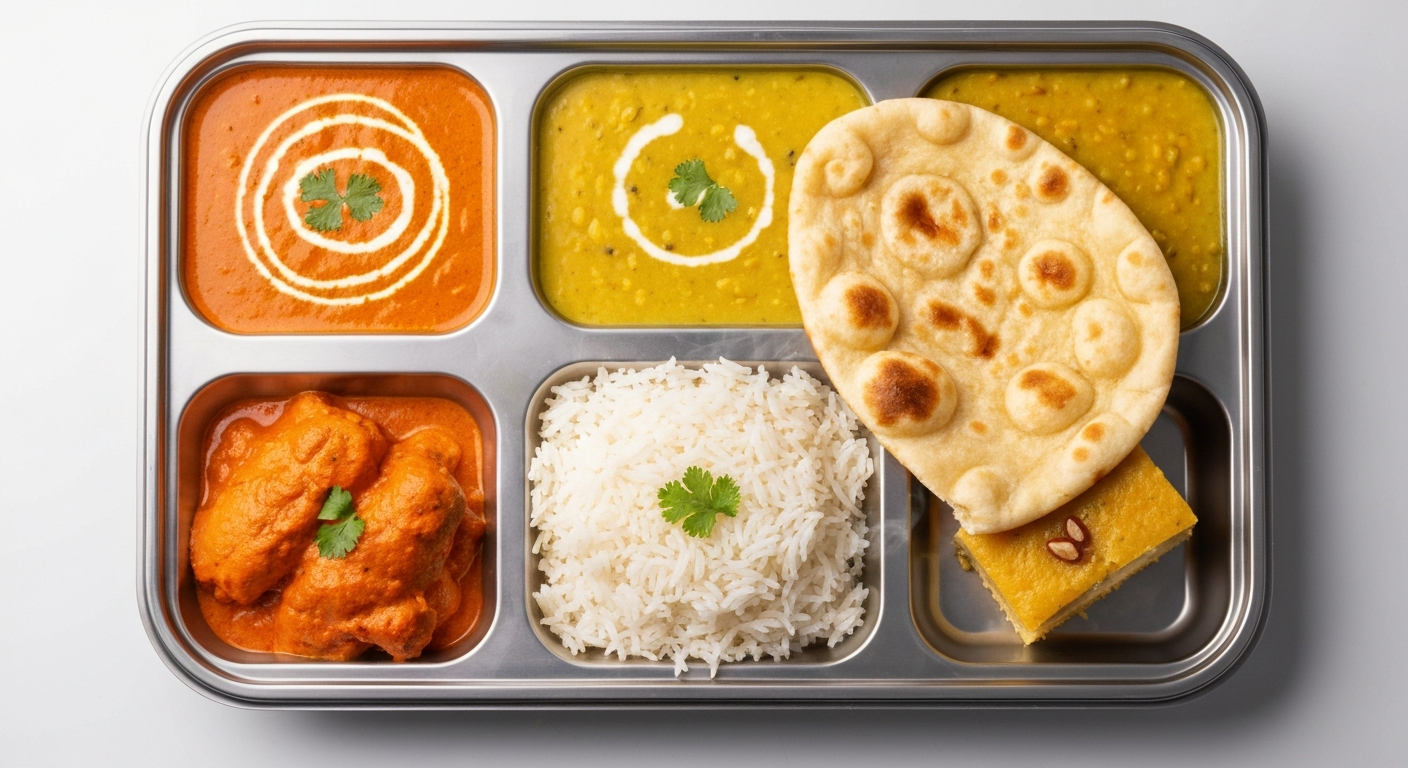
- Multi-Compartment Trays: Utilizing trays or dishes with separate compartments is essential for Indian meals, preventing gravies from mixing and maintaining the integrity of each component. Ensure compartments are sized appropriately for standard portions.
- Pre-Portioned Components: Where feasible, portioning rice, gravies, dals, and sides into individual containers or using automated dispensers before the main plating sequence can dramatically speed up assembly.
- Linear Workflow: Set up plating stations in a logical, linear flow where each team member adds a specific component. This minimizes movement and reduces bottlenecks. For example, one station for rice, one for a main gravy, one for dal, and a final station for bread and garnish.
- Ergonomic Setup: Ensure all ingredients, tools, and dishes are within easy reach of plating staff to minimize strain and maximize speed.
2. Standardized Recipes and Portion Control
Consistency begins with standardization. Developing precise, standardized recipes for assembly, complete with visual guides or photographs, ensures that every plate looks identical.
- Visual Guides: Provide clear, laminated visual guides at each plating station showing the exact placement and quantity of each item. This is invaluable for training and maintaining consistency, especially with rotating staff.
- Calibrated Scoops and Ladles: Use color-coded or clearly marked scoops and ladles for specific components to ensure accurate portion sizes, minimizing waste and guaranteeing consistent customer experience.
- Leveraging Standardized Products: Products like MITRA's gravies and sauces arrive ready to heat and serve, offering inherent portion control and flavor consistency that scratch-made alternatives cannot match in a high-volume setting.
3. Rigorous Temperature Management and Food Safety
Maintaining food safety and optimal serving temperatures is critical, particularly in travel catering where meals may be prepared hours before consumption. Our products are produced under strict certifications including FSSAI, US FDA, ISO, Halal, HACCP, and GMP, ensuring the highest standards of safety and quality.
- Hot Holding Equipment: Utilize high-quality hot holding cabinets and bain-maries to keep gravies, dals, and cooked vegetables at safe temperatures until plating.
- Rapid Chilling and Reheating Protocols: For meals prepared in advance, implement strict rapid chilling protocols to minimize bacterial growth and precise reheating instructions to ensure food safety and quality.
- Temperature Monitoring: Regular temperature checks at various stages—cooking, holding, plating, and serving—are essential to comply with safety regulations and maintain food quality.
4. Skilled Labor and Targeted Training
Even with the best systems, a skilled and well-trained team is indispensable. Invest in comprehensive training programs that cover:
- Plating Techniques: Train staff on specific plating patterns, garnish application, and the importance of a clean plate edge.
- Speed and Accuracy Drills: Conduct regular drills to improve plating speed while maintaining accuracy and presentation standards.
- Cross-Training: Cross-train staff across different stations to ensure flexibility and resilience in case of unexpected staff shortages.
5. Menu Engineering for Plating Success
Menu design plays a crucial role in plating efficiency. When developing Indian menus for travel catering, consider dishes that:
- Hold Well: Select gravies and dishes that maintain their texture and consistency during holding and reheating.
- Plate Easily: Opt for components that are easy to portion and place neatly within tray compartments.
- Balance Aesthetics: Choose a variety of colors and textures to create an appealing plate. For example, a vibrant yellow dal alongside a rich red butter chicken and white basmati rice.
- Minimize Spillage: Dishes with less liquid content or thicker gravies are generally safer for travel environments to prevent spillage during transport or turbulence.
The MITRA Advantage: Streamlined Operations Beyond Plating
Beyond optimizing the plating line, partnering with MITRA offers broader operational benefits for travel caterers:
- Reduced Labor Costs: By using pre-prepared gravies and bases, your kitchen can significantly reduce the labor required for chopping, grinding, and slow-cooking, allowing chefs to focus on menu development, finishing touches, and other value-added tasks.
- Consistent Quality, Global Reach: Our commitment to quality ensures that whether your operations are in the USA, Canada, UK, UAE, Australia, Germany, Italy, India, France, Ireland, Switzerland, or the Netherlands (with more countries being added), your Indian meals will taste consistently excellent.
- Efficient Inventory Management: Our products are available for wholesale, with a 50 kg minimum order quantity (MOQ). This allows for bulk purchasing, reducing ordering frequency and simplifying inventory. If a product is in stock in our US (Houston) or local-country warehouse, it ships in 2 days. For items not immediately in stock, the lead time is 35-60 days, and customers are notified immediately of any potential delay.
- Enhanced Food Safety: With products manufactured under FSSAI, US FDA, ISO, Halal, HACCP, and GMP certifications, you gain peace of mind regarding the safety and quality of your ingredients, reducing risks associated with raw ingredient handling and extensive on-site preparation.
- Menu Innovation: With the foundational gravies and bases handled, your culinary team has more bandwidth to experiment with garnishes, regional specialties, and innovative presentations, keeping your offerings fresh and exciting for passengers and guests.
Conclusion
Achieving travel catering Indian meal plating efficiency is a multi-faceted challenge that requires a strategic approach encompassing modular design, standardization, rigorous food safety, and skilled labor. By integrating high-quality, pre-prepared components like those offered by MITRA, travel caterers can significantly streamline their operations, ensure consistent presentation, and deliver authentic Indian culinary experiences at scale.
Elevate your travel catering operations with MITRA's chef-grade Indian food solutions. Inquire today via ododgroup.com to request a quote, sample, or discuss your wholesale needs. Transform your Indian meal service into a model of efficiency and excellence.