
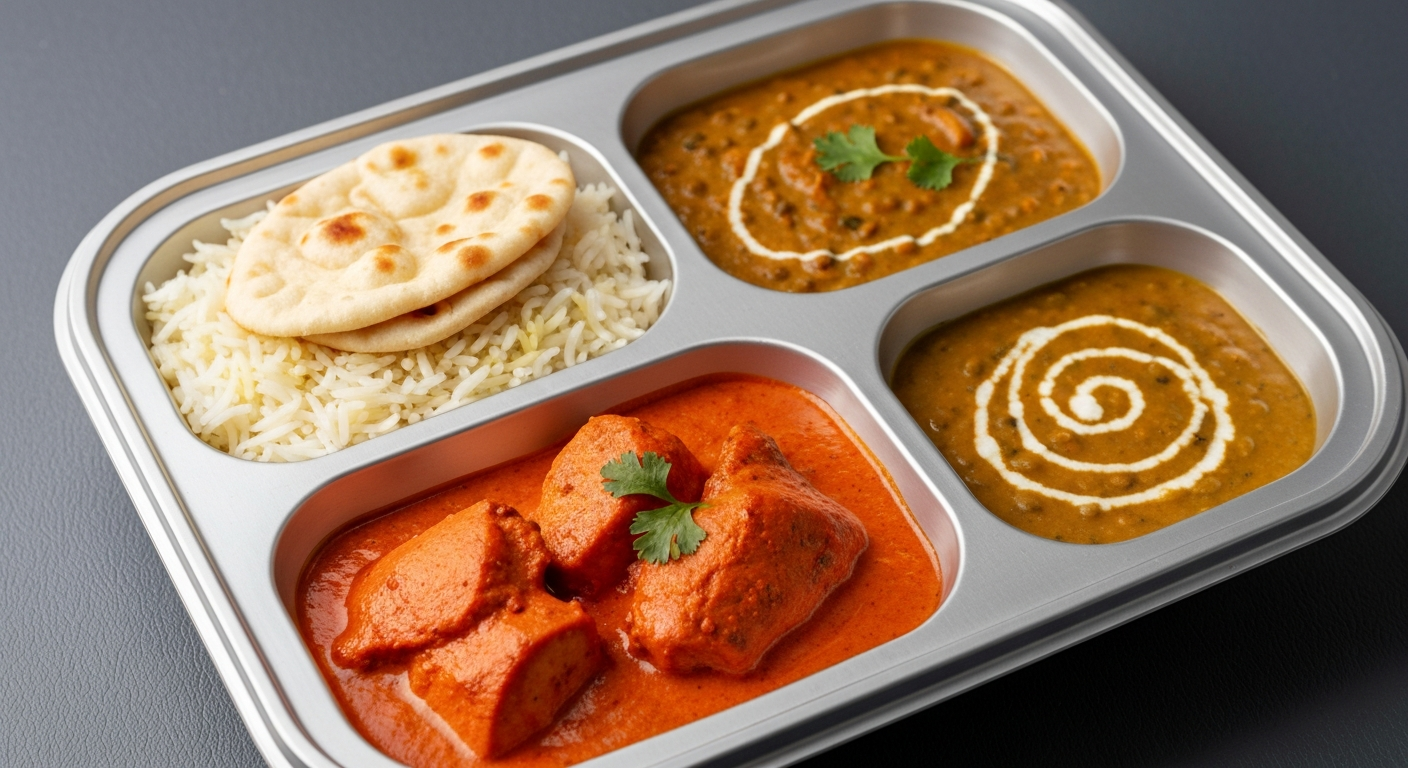
Travel catering presents a unique set of challenges and opportunities for culinary operations. From the confined galleys of an aircraft to the vast kitchens of a cruise ship, the demand for consistent quality, operational efficiency, and diverse menu offerings is constant. Among the most sought-after cuisines is Indian food, celebrated globally for its rich flavors and aromatic spices. However, delivering authentic Indian meals at scale, while maintaining strict standards for indian travel catering portion control and food safety, requires strategic planning and reliable sourcing.
This guide explores how professional kitchens in the travel catering sector – including airlines, cruise lines, and large-scale caterers serving these industries – can achieve peak performance in their Indian meal production. We'll delve into the intricacies of portion management, efficient production workflows, and how to preserve the authenticity that discerning travelers expect.
The Unique Demands of Indian Cuisine in Travel Catering
Indian cuisine, with its regional variations, complex spice blends, and often multi-component dishes, poses specific considerations for travel caterers. Unlike a restaurant setting where dishes are often made to order, travel catering demands mass production without compromising on taste, texture, or presentation. Key challenges include:
- Consistency Across Batches: Ensuring that a Chicken Tikka Masala served on a flight from New York tastes identical to one served on a flight from London, or that a Paneer Butter Masala on a cruise ship is uniform across hundreds of servings.
- Stringent Food Safety Standards: Travel catering operates under some of the most rigorous food safety regulations. Maintaining temperature control, preventing cross-contamination, and adhering to global certifications like FSSAI, US FDA, ISO, Halal, HACCP, and GMP are paramount.
- Space and Equipment Constraints: Production kitchens, especially on board, have limited space, making efficient workflow and ingredient storage critical.
- Dietary Diversity: Indian cuisine naturally offers many vegetarian and vegan options, but caterers must also manage requests for gluten-free, nut-free, and other specific dietary needs while maintaining flavor integrity.
- Maintaining Authenticity: The perceived authenticity of Indian dishes is a major draw. Replicating traditional flavors and textures at scale, often with a reduced list of ingredients for operational simplicity, is a delicate balance.
Mastering Indian Travel Catering Portion Control
Precision in portioning is not merely about aesthetics; it's a cornerstone of financial viability, customer satisfaction, and operational integrity in travel catering. Effective indian travel catering portion control directly impacts food cost, reduces waste, and ensures a consistent dining experience for every passenger or guest.
Why Precision Matters in Travel Catering
For airline and cruise line caterers, the implications of inconsistent portioning are significant:
- Cost Management: Over-portioning, even slightly, across thousands of meals daily can lead to substantial financial losses. Under-portioning can lead to customer dissatisfaction and complaints.
- Customer Satisfaction: A consistent portion size meets expectations. Guests appreciate knowing they are receiving a fair and satisfying amount of food, regardless of their seat number or cabin class.
- Regulatory Compliance: Some contracts or regulations may stipulate minimum portion sizes or calorie counts, making accurate measurement essential.
- Waste Reduction: Precise portioning minimizes excess food preparation and plate waste, aligning with sustainability goals and cost-saving initiatives.
- Logistical Efficiency: Standardized portions simplify packing, inventory management, and loading processes.
Strategies for Consistent Indian Meal Portioning
Achieving precise portion control for complex Indian dishes requires a multi-faceted approach:
- Standardized Recipes and Yields: Every Indian dish must have a meticulously documented recipe specifying exact ingredient quantities and expected yield. This includes not just the main gravy but also accompaniments like rice, bread, and garnishes.
- Utilizing Pre-Prepared Bases and Gravies: This is where strategic sourcing becomes invaluable. Chef-grade, ready-to-use Indian gravies and pastes, such as those offered by MITRA, provide a consistent foundation. They eliminate variability in spice blending and cooking times, ensuring that the base flavor is always identical, regardless of who is preparing the final dish. This consistency is crucial for `indian travel catering portion control` as it standardizes the most variable component of many Indian meals.
- Calibrated Tools and Equipment: Investing in and regularly calibrating scales, measuring cups, scoops, and ladles is fundamental. Staff must be trained to use these tools accurately for every component of the meal.
- Visual Guides and Training: Develop visual aids (e.g., photos of correctly portioned meals) and conduct regular training for kitchen staff. Emphasize the importance of consistency and the financial and reputational impact of deviation.
- Gravy-to-Protein Ratios: Many Indian dishes involve a protein (chicken, lamb, paneer, vegetables) simmered in a rich gravy. Standardizing the ratio of gravy to protein is critical for both flavor balance and consistent portion size. Pre-cooked proteins can be added to pre-portioned gravies, further streamlining this process.
- Pre-Portioning Components: For high-volume operations, consider pre-portioning individual components (e.g., rice, dal, a specific amount of gravy) into containers or pouches before final assembly into meal trays. This reduces on-the-line errors.
Optimizing Production for Peak Performance
Efficiency in the kitchen is about more than just speed; it's about smart workflows, reducing bottlenecks, and maximizing output while upholding quality. For indian travel catering portion control, this means leveraging technologies and ingredients that simplify complex processes.
The Role of Ready-to-Use Indian Bases and Gravies
One of the most impactful strategies for `consistent Indian meal production` in travel catering is the incorporation of high-quality, ready-to-use Indian gravies, pastes, and sauces. Products like MITRA's range of chef-grade solutions offer several advantages:
- Reduced Prep Time: Eliminates the time-consuming process of roasting, grinding, and blending spices, sautéing aromatics, and slow-cooking gravies from scratch.
- Consistent Flavor Profile: Each batch of gravy is identical in flavor, color, and texture, ensuring that the final dish maintains authenticity and quality across all servings.
- Scalability: Allows caterers to easily scale production up or down based on demand without needing to adjust complex recipes or significantly increase skilled labor.
- Reduced Labor Costs: Minimizes the need for highly specialized chefs to execute base gravy preparations, freeing them to focus on finishing and presentation.
- Simplified Inventory Management: Fewer raw ingredients to source, store, and manage for the core of Indian dishes.
- Enhanced Food Safety: Products manufactured under stringent controls (FSSAI, US FDA, ISO, Halal, HACCP, GMP) reduce the risk of contamination associated with extensive in-house raw ingredient handling.
Batch Cooking and Blast Chilling for Efficiency and Safety
For `scalable Indian food solutions`, batch cooking is essential. Large volumes of gravies, dals, and rice can be prepared in advance. However, safe handling after cooking is critical, especially for travel catering:
- Rapid Cooling: After cooking, food must be cooled rapidly to inhibit bacterial growth. Blast chillers are indispensable for bringing large batches down to safe temperatures quickly.
- Proper Storage: Chilled foods must be stored in appropriate containers, clearly labeled, and held at precise temperatures until rethermalization.
- Streamlined Rethermalization: Recipes should account for rethermalization methods (e.g., combi ovens, steamers) to ensure the food reaches serving temperature safely and maintains its quality.
Optimized Kitchen Workflow and Layout
A well-designed kitchen workflow minimizes unnecessary movement and potential for error. For Indian meal production, consider:
- Dedicated Zones: Separate areas for raw ingredient prep, cooking, cooling, portioning, and plating. This is crucial for `food safety travel catering`.
- Logical Flow: Arrange equipment and workstations in a logical sequence that matches the production steps, from ingredient receiving to final tray assembly.
- Ergonomics: Ensure workstations are designed for efficiency and comfort, reducing staff fatigue and improving accuracy, particularly for repetitive tasks like portioning.
Ensuring Authenticity and Quality at Scale
While efficiency and portion control are vital, they must never come at the expense of authenticity and quality. Travelers expect a genuine culinary experience, even at 30,000 feet or in the middle of an ocean.
Sourcing High-Quality Ingredients
Even when using pre-prepared bases, the quality of other ingredients matters. Fresh vegetables, quality proteins, and aromatic garnishes contribute significantly to the final dish. A reliable supplier ensures consistent quality in their ready-to-use products, which forms the backbone of `authentic Indian flavors B2B`.
Maintaining Flavor Profiles with Customization
Ready-to-use gravies provide a consistent base, but caterers can still add their signature touch. This might involve:
- Fresh Aromatics: Adding a final tempering (tarka) of fresh garlic, ginger, chilies, or whole spices.
- Garnishes: Fresh cilantro, mint, fried onions, or a squeeze of lime can elevate a dish.
- Protein Integration: Marinating and cooking proteins separately before adding them to the gravy can enhance texture and flavor.
Rigorous Quality Control Throughout the Process
Quality checks should be embedded at every stage:
- Ingredient Receiving: Inspect all incoming ingredients, including pre-made gravies, for quality and adherence to specifications.
- During Production: Regular checks on seasoning, consistency, and temperature of batches.
- Post-Portioning: Visual inspection of portioned meals for accuracy and presentation.
- Sensory Evaluation: Regular tasting panels to ensure the flavor profile remains consistent and meets expectations.
- Adherence to Certifications: Continuously monitor and document compliance with FSSAI, US FDA, ISO, Halal, HACCP, and GMP standards.
Logistics and Supply Chain for Travel Catering
For large-scale operations like airline and cruise line catering, a robust and predictable supply chain is as important as culinary expertise. Reliable sourcing of key ingredients, especially specialized Indian gravies and spices, can make or break operational continuity.
Reliable Supply and Inventory Management
Partnering with a supplier that understands the demands of your industry is crucial. This means a supplier who can provide consistent product quality, predictable lead times, and has the capacity to meet your volume requirements. Effective inventory management, informed by accurate demand forecasting, helps prevent stockouts and minimizes waste, directly contributing to `reducing food waste catering`.
Shipping and Lead Times
Understanding and planning for shipping logistics is vital. For MITRA products, if an item is in stock in our US (Houston) or local-country warehouse, it ships in just 2 days. For items not currently in stock, the lead time is typically 35-60 days, and customers are always notified immediately of any potential delays. We proudly serve clients in the USA, Canada, UK, UAE, Australia, Germany, Italy, India, France, Ireland, Switzerland, and Netherlands, with our network continuously expanding to reach more global kitchens.
Minimum Order Quantity (MOQ)
To ensure efficient processing and delivery for our B2B partners, we operate with a 50 kg minimum order quantity (MOQ). This allows us to provide competitive pricing and streamline our logistics for large-volume purchasers in the travel catering sector.
Conclusion
Mastering Indian meal production for travel catering hinges on a strategic blend of culinary excellence, operational efficiency, and stringent quality control. By focusing on indian travel catering portion control, leveraging high-quality ready-to-use gravies and pastes, optimizing kitchen workflows, and partnering with reliable suppliers, caterers can consistently deliver authentic, delicious Indian meals to a global audience.
Adopting solutions that standardize flavor, reduce prep time, and ensure food safety not only elevates the dining experience for passengers and guests but also drives significant operational savings and enhances brand reputation. The journey to peak performance in Indian travel catering begins with precision and a commitment to quality at every step.
To discover how MITRA's chef-grade Indian gravies, pastes, sauces, rice, and spices can transform your travel catering operations, we invite you to inquire via ododgroup.com. Request a quote or sample today and experience the difference that consistent quality and authentic flavor can make.