
In the rapidly evolving landscape of the foodservice industry, ghost kitchens stand out for their agility and reliance on efficiency. Success in this model hinges on precision, from order fulfillment to inventory management. For ghost kitchens specializing in Indian cuisine, mastering these operational aspects while maintaining authenticity and consistency presents a unique challenge. This is where the strategic use of consistent, high-quality Indian ingredients intersects with advanced data analytics to provide invaluable foodservice operational insights Indian cuisine businesses need to thrive.
Traditional kitchen operations often grapple with variability in raw ingredients, chef techniques, and prep times. This variability creates noise in operational data, making it difficult to extract reliable insights for forecasting, cost control, and performance optimization. Ghost kitchens, by their very nature, are designed to minimize such inconsistencies, but the choice of ingredients plays a pivotal role in amplifying this advantage, particularly when dealing with complex flavor profiles like those found in Indian cooking.
The Ghost Kitchen Imperative: Consistency as the Foundation for Data
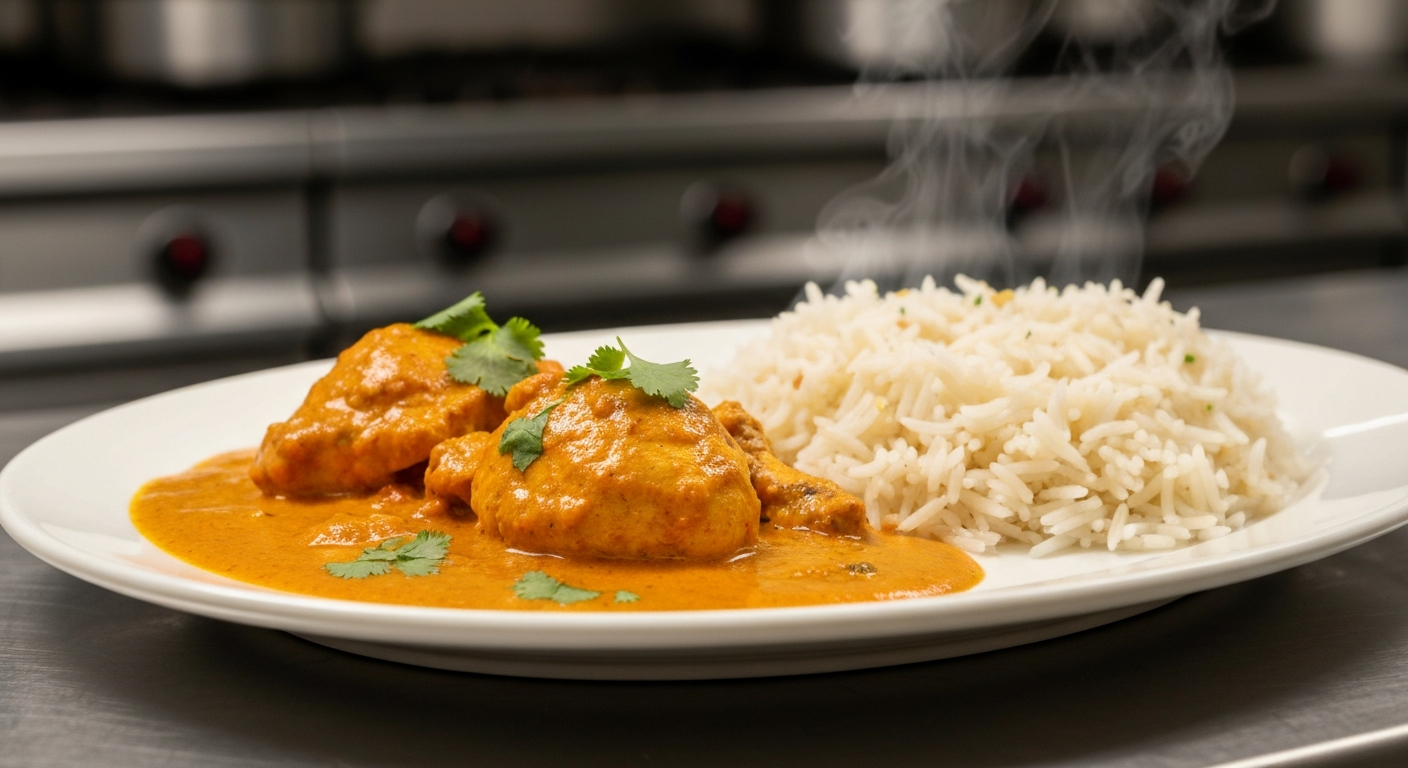
Ghost kitchens operate without a storefront, relying heavily on online presence, delivery platforms, and, crucially, repeat customer orders. Consistency in product quality and flavor is not just a preference; it's a fundamental requirement for building a loyal customer base and positive brand reputation. A customer who orders a Chicken Tikka Masala expects the same rich, aromatic experience every time, regardless of which shift prepared it or which location fulfilled the order.
When ingredients vary in quality, quantity, or preparation, the end product becomes inconsistent. This inconsistency directly impacts customer satisfaction and, consequently, revenue. More importantly, it introduces significant challenges for data collection and analysis. If the input (ingredients, prep time) is unstable, the output (dish quality, customer feedback, food cost) becomes unreliable for generating actionable insights. Standardizing ingredients therefore becomes the bedrock upon which robust data-driven decision-making can be built.
Standardized Indian Ingredients: Enabling Predictive Performance
The complexity of Indian cuisine, with its intricate spice blends, slow-cooked gravies, and diverse regional variations, can be a hurdle for ghost kitchens aiming for consistency and efficiency. Preparing authentic Indian dishes from scratch involves significant labor, specialized culinary skills, and a high degree of variability in results. This is where chef-grade, pre-prepared Indian gravies, pastes, and sauces offer a transformative solution.
By utilizing products like MITRA's range of consistent Indian ingredients, ghost kitchens can achieve:
- Flavor Consistency Across Batches and Locations: Each batch of a MITRA gravy, for example, adheres to precise formulations, ensuring that the final dish tastes identical, whether prepared today or next month, or at one ghost kitchen hub versus another. This eliminates the variability introduced by different chefs mixing spices or simmering gravies.
- Predictable Yields and Portion Control: When the base ingredient is consistent, so too are the yields. This predictability simplifies portion control, making it easier to manage food costs per dish and minimize over-portioning or under-portioning.
- Reduced Prep Time Variability: Ready-to-use gravies and pastes drastically cut down on the labor-intensive initial preparation steps. This reduces the time variability associated with dicing, sautéing, grinding spices, and slow cooking, leading to more predictable kitchen workflows.
- Simplified Inventory Management: Fewer raw ingredients to stock means a streamlined inventory. When a single consistent product replaces multiple raw components, inventory counts become more accurate and easier to manage.
These inherent qualities of consistent ingredients directly feed into the data systems of a ghost kitchen, transforming raw operational data into meaningful, actionable foodservice operational insights Indian cuisine businesses can use for strategic planning.
From Consistent Inputs to Actionable Foodservice Operational Insights Indian Cuisine
With a foundation of standardized Indian ingredients, ghost kitchens can leverage their operational data to gain unprecedented insights. The consistency of MITRA products means that the data collected on food costs, labor, waste, and customer feedback is no longer obscured by ingredient variability. Instead, it offers clear signals for optimization.
Inventory Management and Waste Reduction
One of the most immediate benefits of consistent ingredients is improved inventory management. When the exact quantity of gravy needed for 100 portions of Butter Chicken is known and consistent, forecasting becomes significantly more accurate. This leads to:
- Optimized Ordering: Reduced instances of over-ordering perishable raw ingredients, minimizing spoilage and waste. Data can accurately predict demand for specific gravies or pastes.
- Precise Stock Levels: Maintain optimal stock levels, preventing both stockouts that lead to lost sales and excess inventory that ties up capital and risks expiration.
- Reduced Food Waste: Consistent yields and predictable portioning directly translate to less food waste at the prep and plating stages. Tracking waste metrics becomes more meaningful when the input is stable.
Cost Control and Profitability Analysis
Food cost is a primary driver of profitability in any kitchen, especially ghost kitchens operating on tight margins. Consistent ingredients provide the data accuracy needed for rigorous cost control:
- Accurate Food Costing Per Dish: With predictable ingredient costs and yields, calculating the precise food cost for each menu item becomes straightforward. This enables informed pricing strategies and accurate gross profit margin calculations.
- Identification of Cost Variances: Any deviations in food cost can be more easily attributed to factors other than ingredient variability (e.g., portioning errors, theft, or equipment issues), allowing for targeted corrective actions.
- Supplier Performance Monitoring: Consistent ingredient quality allows for better evaluation of supplier reliability and pricing, ensuring optimal value.
Menu Engineering and Performance Optimization
Data-driven menu engineering is crucial for maximizing revenue. Consistent Indian ingredients make it possible to analyze sales data with a high degree of confidence:
- Performance Tracking by Dish: Accurately track which specific Indian dishes are selling best, their profitability, and their popularity trends. This helps identify stars, puzzles, plow horses, and dogs on the menu.
- A/B Testing Menu Changes: When a new dish is introduced or a price point is adjusted, the impact can be measured reliably because the core product consistency is maintained. This allows for data-backed decisions on menu evolution.
- Personalization and Customer Preferences: Over time, consistent product data can be linked to customer demographics and ordering habits, enabling more personalized promotions or menu recommendations.
Labor Optimization and Efficiency
Labor costs represent another significant expense for ghost kitchens. By reducing the complexity and variability of Indian cuisine preparation, consistent ingredients offer substantial labor efficiencies:
- Reduced Skilled Labor Dependency: Less reliance on highly experienced chefs for foundational gravy and paste preparation. Standardized products allow more junior staff to execute complex dishes consistently.
- Predictable Prep Times: With pre-made bases, the time required for dish assembly becomes highly predictable, allowing for optimized staff scheduling and allocation across multiple orders or locations.
- Faster Order Fulfillment: Streamlined prep contributes to quicker dish assembly, reducing ticket times and improving overall throughput, which is critical for meeting delivery platform SLAs.
Quality Control and Customer Satisfaction Metrics
Ultimately, the goal of operational efficiency is to deliver a superior customer experience. Consistent Indian ingredients contribute directly to this by ensuring a reliable product:
- Reliable Quality Metrics: Data on customer reviews, ratings, and repeat order rates become direct indicators of product quality. Any dips or spikes can be investigated with confidence that ingredient consistency isn't the primary variable.
- Proactive Problem Solving: If a quality issue arises, the consistent nature of ingredients helps narrow down the potential causes quickly, allowing for rapid resolution and minimal disruption.
Implementing Data-Driven Strategies with MITRA's Consistent Indian Ingredients
For ghost kitchens ready to harness the power of foodservice operational insights Indian cuisine offers, partnering with a reliable supplier of high-quality, consistent ingredients is the first step. ODOD LLC, an American food-supply company, provides chef-grade Indian gravies, pastes, sauces, rice, and spices under the MITRA brand, specifically designed to meet the rigorous demands of professional kitchens.
Our products are manufactured to stringent quality standards, holding certifications such as FSSAI, US FDA, ISO, Halal, HACCP, and GMP. This commitment to quality and consistency ensures that every batch you receive provides the stable input necessary for accurate data analysis and superior operational performance.
ODOD LLC supports ghost kitchens with flexible supply chain solutions. We require a 50 kg minimum order quantity (MOQ) to accommodate various operational scales. Products in stock in our US (Houston) or local-country warehouses typically ship within 2 business days. For items not immediately in stock, the lead time is 35-60 days, and customers are notified immediately of any potential delays. We currently serve a growing list of countries including the USA, Canada, UK, UAE, Australia, Germany, Italy, India, France, Ireland, Switzerland, and Netherlands.
By integrating MITRA's consistent Indian ingredients into your ghost kitchen operations, you are not just purchasing food products; you are investing in a foundation for predictive performance, enabling more accurate data collection, better decision-making, and ultimately, a more profitable and sustainable business model.
Conclusion
In the competitive ghost kitchen market, leveraging data for operational excellence is no longer optional—it's essential. For Indian cuisine concepts, achieving this requires a commitment to consistency at the ingredient level. By utilizing high-quality, standardized Indian gravies, pastes, and sauces, ghost kitchens can transform their raw operational data into precise, actionable foodservice operational insights Indian cuisine businesses need to optimize inventory, control costs, refine menus, and enhance customer satisfaction. This strategic approach not only streamlines kitchen workflows but also paves the way for scalable growth and sustained success.
Ready to elevate your ghost kitchen's performance with consistent Indian ingredients and unlock deeper operational insights? Inquire about MITRA's product range and wholesale solutions today at ododgroup.com.