
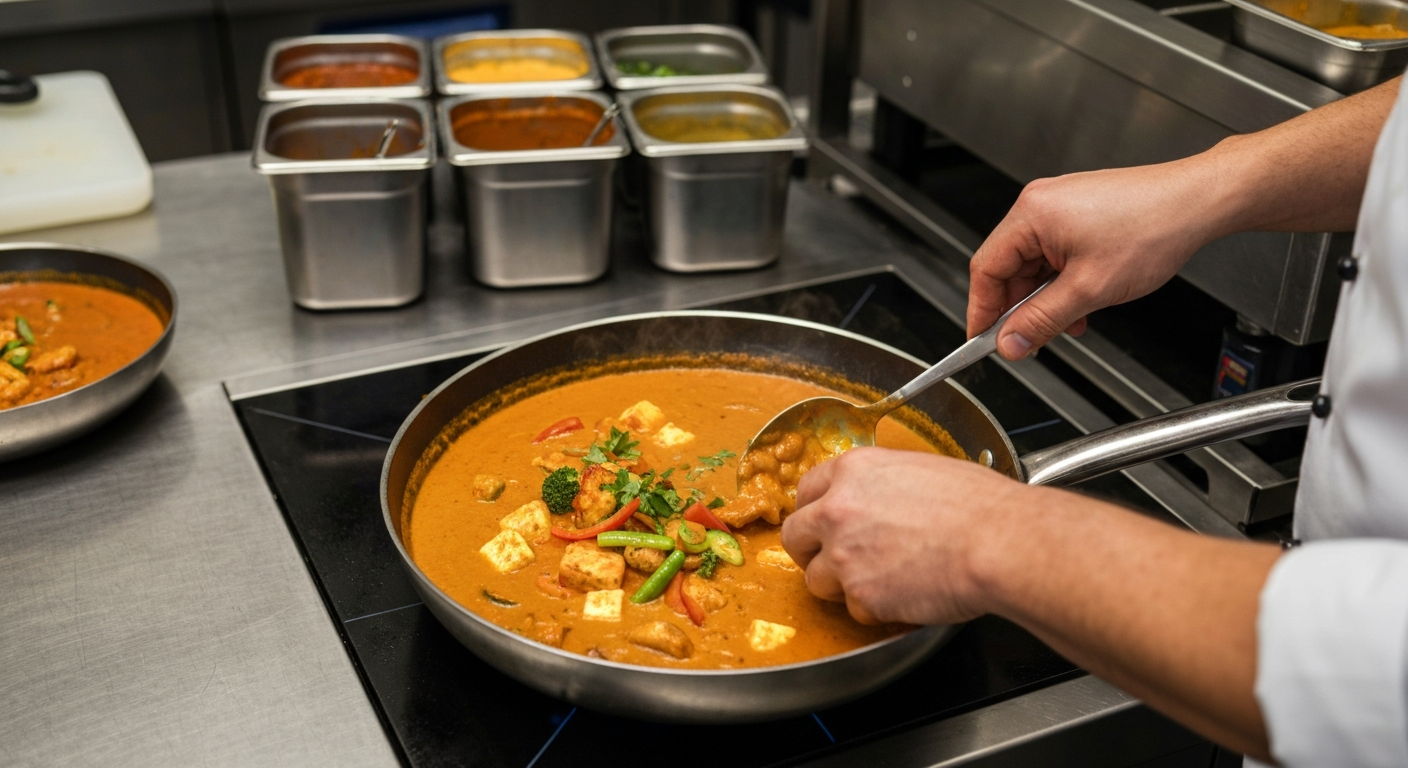
In the competitive culinary landscape, restaurants specializing in Indian cuisine face a unique challenge: maintaining authenticity and consistency while rapidly onboarding new kitchen staff. The intricate layering of spices, the precise cooking techniques, and the regional variations of Indian dishes demand a significant learning curve. Achieving true indian cuisine staff training efficiency is not merely about speed; it's about empowering new hires to confidently produce high-quality, authentic dishes quickly, without compromising flavor or consistency.
Traditional kitchen training, often relying on lengthy apprenticeships and hands-on experience with every base ingredient, can be a time-consuming and costly endeavor. For modern B2B food service operations – from bustling restaurants and cloud kitchens to large-scale caterers and hotel chains – this traditional model can hinder growth and impact profitability. The solution lies in strategic operational adjustments, leveraging both advanced culinary products and structured training methodologies to streamline the path from novice to proficient chef.
The Nuance of Authentic Indian Cuisine: A Training Hurdle
Indian cuisine is renowned for its complexity, depth of flavor, and regional diversity. A single dish can involve dozens of ingredients, a multi-stage cooking process, and a nuanced understanding of spice profiles. Consider a classic Hyderabadi Biryani, a rich Rogan Josh, or a delicate Malai Kofta. Each requires specific techniques, precise timing, and an intimate knowledge of how spices interact and transform during cooking. This inherent complexity presents significant hurdles for new staff:
- Extensive Ingredient Knowledge: Identifying, understanding, and correctly using a vast array of spices, herbs, and staple ingredients.
- Multi-Stage Cooking Processes: Many Indian dishes involve marinating, sautéing, simmering, tempering (tadka), and slow-cooking, often in sequence.
- Spice Blending Mastery: Achieving the right balance and depth of flavor requires experience in toasting, grinding, and combining spices.
- Consistency Challenges: Without standardized procedures, individual interpretations can lead to variations in taste, texture, and appearance.
- Time Investment: Traditional training methods demand significant time from experienced chefs, diverting them from core production tasks.
These factors collectively highlight why indian cuisine staff training efficiency is not just desirable, but essential for operational success and maintaining a consistent culinary brand.
Traditional Training vs. Modern Kitchen Demands
The traditional apprenticeship model, while valuable for deep culinary immersion, is often incompatible with the fast-paced, high-volume demands of today's commercial kitchens. Modern operations require speed, scalability, and predictable output. Relying solely on a senior chef to personally mentor every new hire through every scratch-made dish creates bottlenecks and inconsistencies. The cost of labor during extended training periods, coupled with potential waste from errors, can quickly erode profit margins.
Moreover, the high turnover rates sometimes seen in the food service industry mean that kitchens are perpetually in a cycle of training. Without an efficient system, this becomes a perpetual drain on resources and a constant threat to menu consistency and customer satisfaction. The imperative, then, is to bridge the gap between the intricate nature of Indian cooking and the operational realities of a contemporary commercial kitchen.
Elevating Indian Cuisine Staff Training Efficiency with Standardized Ingredients
One of the most impactful strategies for boosting indian cuisine staff training efficiency is the strategic adoption of high-quality, chef-grade ready-to-use ingredients. Products like pre-made Indian gravies, pastes, and sauces offer a foundational solution that addresses many of the complexities inherent in Indian cooking.
The Role of Chef-Grade Gravies and Pastes
Imagine a new hire, within days, confidently preparing a consistent Butter Chicken or a robust Madras Curry. This is achievable when the most intricate and time-consuming components – the base gravies and spice pastes – are sourced from a reliable, quality-controlled supplier. Here’s how these ingredients contribute to efficiency:
- Consistency at the Core: Standardized gravies and pastes ensure that the foundational flavor profile of a dish is identical every time, regardless of the individual preparing it. This eliminates the variability that often plagues scratch-made bases.
- Reduced Preparation Time: The most labor-intensive steps – chopping, sautéing onions and tomatoes for hours, slow-cooking spice blends – are bypassed. Staff can focus on final assembly, protein preparation, and plating.
- Authenticity Guaranteed: When sourced from a supplier committed to authentic regional recipes, these ingredients deliver genuine Indian flavors, crafted by culinary experts.
- Simplified Training Focus: Training shifts from teaching complex base preparations to focusing on proper heating, ingredient combination, and finishing techniques.
- Quality Assurance: Products manufactured to strict international standards provide peace of mind. Our products, for example, are produced under certifications such as FSSAI, US FDA, ISO, Halal, HACCP, and GMP, ensuring safety and quality that simplifies kitchen operations and reduces internal scrutiny requirements.
By providing a consistent, authentic, and high-quality foundation, these specialized ingredients transform the training process from an arduous culinary apprenticeship into a streamlined operational onboarding. This allows new staff to quickly grasp the nuances of Indian cuisine assembly, rather than spending weeks mastering complex spice blends.
Designing an Effective Onboarding Program for Indian Kitchens
Beyond ingredient sourcing, a structured training program is crucial for maximizing indian cuisine staff training efficiency. This program should be modular, practical, and focused on rapid skill acquisition.
1. Standard Operating Procedures (SOPs) for Dish Assembly
Develop clear, visual SOPs for every dish. These should detail:
- Ingredient List: Specify pre-made gravies, proteins, vegetables, and garnishes.
- Quantities: Exact measurements for each component.
- Step-by-Step Instructions: Concise, actionable steps for combining, heating, and finishing.
- Equipment Usage: Specific tools and settings.
- Plating Standards: Visual guides for consistent presentation.
When using pre-made gravies, the SOPs become significantly simpler, focusing on combining and heating rather than intricate cooking processes.
2. Ingredient Familiarization (Beyond the Base)
Even with pre-made gravies, new staff need to understand the role of fresh ingredients, specific spices for tempering or garnishing, and the overall flavor profiles. Training should cover:
- Spice Recognition: Identify common whole and ground spices.
- Fresh Produce Handling: Proper chopping, storage, and preparation of vegetables and herbs.
- Protein Preparation: Marinating (if applicable), searing, and cooking techniques for various meats or paneer.
3. Equipment Proficiency
Ensure staff are proficient with all relevant kitchen equipment, from induction cooktops and tandoors to blenders and food processors. Safety protocols are paramount.
4. Quality Control and Plating Standards
Train staff on sensory evaluation – how a dish should look, smell, and taste. Implement a final quality check before dishes leave the pass. Consistent plating is vital for brand image and customer expectations.
5. Cross-Training and Continuous Learning
Encourage cross-training across different stations to build versatility. Implement regular, short refreshers on new menu items or improved techniques. This fosters a culture of continuous improvement.
The Tangible Benefits of High Indian Cuisine Staff Training Efficiency
Implementing these strategies yields significant advantages for any B2B food service operation:
- Reduced Training Time & Costs: New hires become productive much faster, minimizing labor costs associated with extended training periods.
- Consistent Product Quality: Standardized ingredients and SOPs ensure every dish meets your restaurant's high standards, building customer loyalty.
- Increased Kitchen Throughput & Output: A more efficient team can handle higher volumes, reducing wait times and increasing revenue potential during peak hours.
- Lower Staff Turnover: Empowered and confident staff are more likely to be satisfied and remain with the organization, reducing recruitment and retraining expenses.
- Enhanced Menu Versatility: With foundational gravies readily available, kitchens can more easily introduce new dishes or seasonal specials without extensive re-training.
- Improved Operational Scalability: The ability to quickly train new teams makes expansion into new locations or services (e.g., catering, delivery-only concepts) much more feasible.
Strategic Sourcing: A Foundation for Training Success
The success of rapid onboarding for Indian cuisine hinges significantly on the quality and reliability of your supply chain partners. Choosing a supplier that provides chef-grade, authentic, and consistent ingredients is paramount. A robust B2B food supplier offers not only premium products but also the logistical support necessary for smooth kitchen operations.
When selecting a partner, consider their commitment to quality and service. Our products, for instance, are manufactured to the highest standards, ensuring consistency and safety. We understand the demands of commercial kitchens and offer a flexible supply chain. Our minimum order quantity (MOQ) is 50 kg, designed to meet the needs of professional operations. For products in stock at our US (Houston) or local-country warehouses, shipping occurs within 2 days. If a product is not immediately available, we notify customers promptly, with a typical lead time of 35-60 days to ensure fresh production and delivery. We proudly serve a growing list of countries, including the USA, Canada, UK, UAE, Australia, Germany, Italy, India, France, Ireland, Switzerland, and Netherlands, ensuring broad market access for our partners.
Conclusion
Achieving high indian cuisine staff training efficiency is a strategic imperative for modern B2B food service operators. By combining the power of chef-grade, standardized Indian gravies and pastes with a structured, practical onboarding program, kitchens can transform their training process. New staff can quickly master the art of preparing authentic Indian dishes, leading to enhanced kitchen productivity, unwavering menu consistency, and significant cost savings. This approach not only streamlines operations but also empowers culinary teams to deliver exceptional Indian cuisine with confidence and speed.
Ready to optimize your kitchen's training and production? Inquire today to learn how our range of chef-grade Indian gravies, pastes, and sauces can support your operational goals. Visit ododgroup.com to request a quote, sample, or wholesale inquiry.