
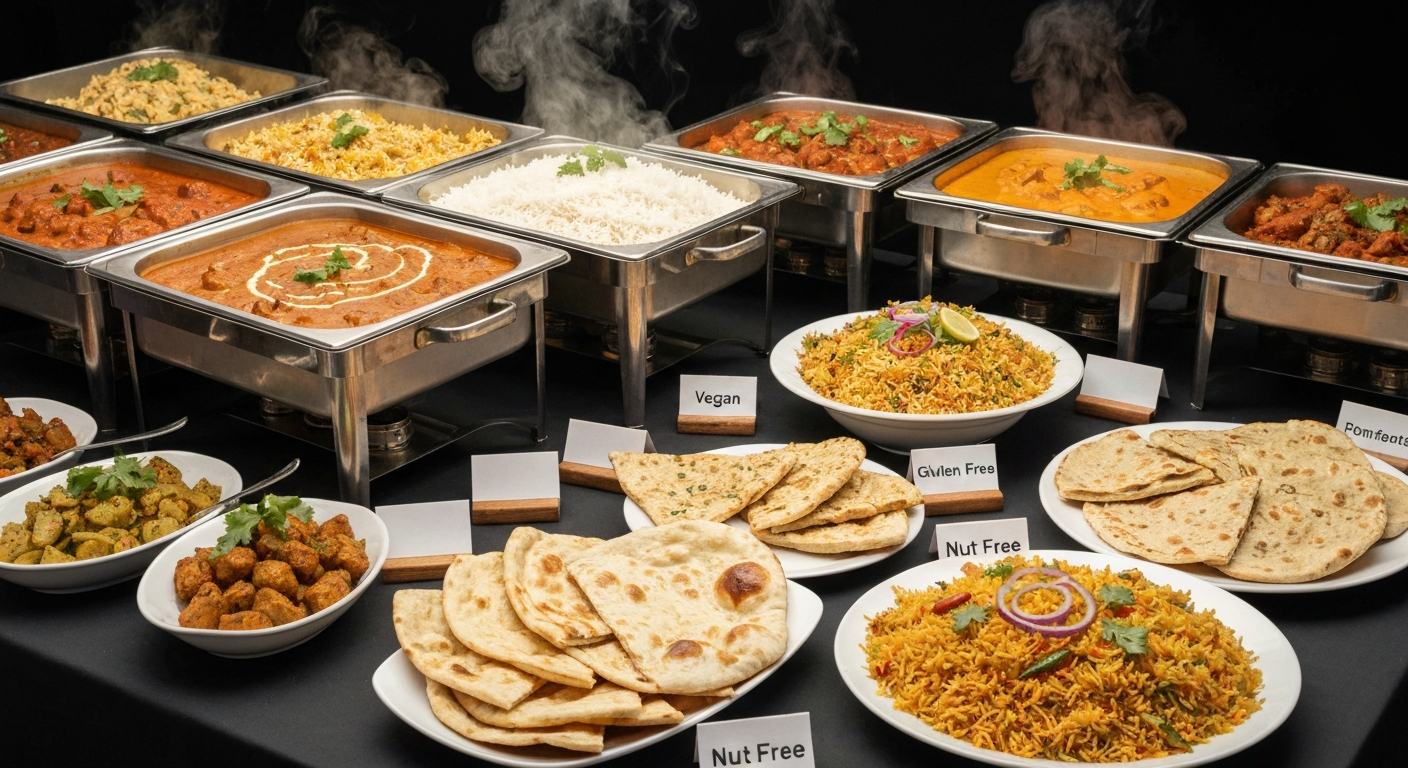
In the dynamic world of event catering, meeting diverse dietary needs is no longer an optional add-on but a fundamental expectation. For caterers specializing in Indian cuisine, this challenge comes with its own unique complexities and opportunities. Indian food, celebrated globally for its rich flavors and aromatic spices, offers a vast array of naturally vegetarian and vegan options, yet it also extensively uses dairy, nuts, and gluten in many traditional preparations. Mastering Indian catering dietary management is crucial for ensuring every guest enjoys an authentic and safe culinary experience.
This guide provides practical, actionable strategies for caterers to efficiently navigate dietary restrictions, from initial menu planning to final presentation, all while maintaining the integrity and authentic flavors of Indian cuisine. By implementing streamlined processes and leveraging high-quality ingredients, you can elevate your service, enhance client satisfaction, and expand your market reach.
The Unique Landscape of Indian Cuisine and Dietary Needs
Indian cuisine is inherently adaptable, making it a favorite for diverse groups. However, caterers must understand its common ingredients to effectively manage dietary requirements:
- Dairy: Ghee (clarified butter), yogurt, paneer (Indian cheese), and cream are staples in many North Indian dishes like Butter Chicken, Paneer Makhani, and various kormas. South Indian dishes also feature yogurt in raitas and curd rice.
- Nuts: Cashews, almonds, and peanuts are frequently used as thickeners in gravies, for texture in biryanis, or as garnishes. Examples include Korma, Shahi Paneer, and many dessert items.
- Gluten: While many curries are naturally gluten-free, wheat-based breads like naan, roti, and paratha are central to Indian meals. Dishes like samosas and certain pakoras also contain gluten.
- Legumes: Lentils and chickpeas (dals and chole) are foundational, providing excellent protein for vegetarian and vegan diets.
- Vegetables: A vast array of fresh vegetables forms the backbone of countless Indian dishes, offering natural plant-based options.
Recognizing these common components allows caterers to proactively design menus that are both inclusive and authentic.
Proactive Menu Planning for Dietary Inclusivity
The most effective approach to Indian catering dietary management begins long before the event day: with thoughtful menu design.
1. Design with Flexibility from the Outset
Instead of creating a standard menu and then modifying it, consider dietary needs during the initial planning phase. Can a dish be easily adapted? For example:
- Base Gravies: Utilize versatile base gravies that can be finished with different proteins or vegetables. A rich tomato-onion gravy can become a vegan Chana Masala, a dairy-free Aloo Gobi, or a Chicken Tikka for non-veg guests.
- Oil vs. Ghee: Offer key dishes prepared with oil (e.g., vegetable oil or coconut oil) instead of ghee to accommodate dairy-free and vegan guests. Clearly label these alternatives.
- Coconut Milk Alternatives: For creamy dishes, coconut milk can often substitute dairy cream, providing a rich texture suitable for vegan diets without compromising flavor.
2. Highlight Naturally Compliant Dishes
Showcase the breadth of Indian cuisine by featuring dishes that are inherently suitable for common dietary needs. This reduces the need for extensive modifications and highlights the natural diversity of the food.
- Vegan: Chana Masala, Dal Tadka (prepared with oil), Aloo Gobi, Baingan Bharta, many vegetable stir-fries (sabzis), plain rice, and certain rotis (if made without ghee).
- Gluten-Free: Most lentil dishes (dals), rice dishes (biryanis, pulao), many vegetable and meat curries (ensure no wheat-based thickeners), and papadums.
- Nut-Free: Many South Indian dishes, simple vegetable curries, and lentil-based preparations often avoid nuts, but always verify ingredients.
3. Implement a 'Build-Your-Own' Concept
For larger events, consider a station-based approach where guests can customize their plates. This empowers them to choose items that fit their dietary needs.
- Rice & Bread Station: Offer plain basmati rice, biryani, and a selection of breads (naan, roti, gluten-free flatbreads).
- Curry Bar: Present various curries, clearly labeled for allergens and dietary categories (e.g., vegan lentil curry, nut-free chicken curry, dairy-free vegetable curry).
Ingredient Sourcing and Transparency
The foundation of effective Indian catering dietary management lies in knowing your ingredients. Reliable sourcing and detailed product information are paramount.
1. Partner with Reputable Suppliers
Choose suppliers who can provide comprehensive ingredient lists and allergen information for all their products. This is especially critical for processed items, spices, and pre-prepared bases.
2. Leverage High-Quality, Certified Bulk Ingredients
Using professionally prepared bulk gravies, pastes, and sauces, like those offered by MITRA, brings significant advantages:
- Consistent Formulations: Products manufactured to strict standards ensure consistent ingredient composition, making allergen tracking much simpler.
- Reduced Risk: Knowing the exact ingredients in your base products minimizes the risk of unexpected allergens.
- Certifications: Our products are manufactured under rigorous quality and safety certifications including FSSAI, US FDA, ISO, Halal, HACCP, and GMP. These certifications provide an extra layer of assurance regarding ingredient quality and production standards, crucial for catering operations where food safety is paramount.
Kitchen Protocols and Cross-Contamination Prevention
Even with meticulous menu planning and sourcing, improper kitchen practices can lead to cross-contamination, jeopardizing guest safety.
1. Dedicated Prep Areas and Equipment
Whenever possible, designate separate areas, cutting boards, utensils, and even fryers for preparing allergen-free or specific dietary dishes. If dedicated equipment isn't feasible, ensure thorough cleaning and sanitization between uses.
2. Staff Training and Awareness
All kitchen and front-of-house staff must be thoroughly trained on:
- Common Allergens: Understanding the 8 major allergens (milk, eggs, peanuts, tree nuts, soy, wheat, fish, shellfish) and other common sensitivities.
- Dietary Labels: Knowing how to identify and interpret ingredient labels.
- Cross-Contamination Risks: Recognizing situations where cross-contamination can occur and how to prevent it.
- Guest Communication: How to confidently answer guest questions or direct them to someone who can.
3. Clear Labeling Throughout the Process
From storage to serving, clear and accurate labeling is non-negotiable:
- Storage: Label all raw and prepared ingredients with contents, preparation date, and any known allergens.
- Prep: Use color-coded labels or tags for dishes being prepared for specific dietary needs.
- Serving: At the buffet, prominently display ingredient lists and allergen information for each dish. Use symbols or a key for quick identification of vegetarian, vegan, gluten-free, and nut-free options.
Communication with Clients and Guests
Effective communication is the linchpin of successful Indian catering dietary management.
1. Pre-Event Consultation
During initial discussions with clients, proactively inquire about any dietary restrictions or allergies among their guests. Document these meticulously and confirm the agreed-upon solutions.
2. Detailed Buffet Labeling
Beyond basic dish names, provide comprehensive labels at the buffet. For instance:
- "Chicken Tikka Masala (Contains Dairy, Tree Nuts)"
- "Chana Masala (Vegan, Gluten-Free, Nut-Free)"
- "Plain Basmati Rice (Vegan, Gluten-Free, Nut-Free)"
Consider having a staff member dedicated to guiding guests through the buffet and answering questions regarding dietary information.
3. Empowering Front-of-House Staff
Your serving staff are the direct point of contact for guests. Ensure they are knowledgeable enough to confidently respond to dietary inquiries or know exactly who to consult (e.g., the chef or catering manager) for complex questions.
Leveraging Prepared Indian Gravies and Pastes for Enhanced Efficiency
For caterers, the demands of large-scale events can be overwhelming. This is where high-quality, chef-grade Indian gravies and pastes become an invaluable asset for efficient Indian catering dietary management.
MITRA's range of products offers a strategic advantage:
- Consistent Quality and Flavor: Our gravies and pastes are crafted to deliver authentic Indian flavors consistently, batch after batch. This means your guests will experience the same high-quality taste, regardless of dietary modifications.
- Simplified Allergen Management: With pre-prepared bases, you have precise control over the ingredients. Each product comes with a clear ingredient list, allowing you to easily identify and manage allergens. For example, selecting a dairy-free base for a vegan curry or a nut-free option for allergy concerns becomes straightforward.
- Reduced Prep Time and Labor Costs: Eliminating the need to prepare complex gravies from scratch frees up your kitchen staff to focus on specialized dietary preparations, ensuring accuracy and reducing the risk of errors.
- Scalability: Whether you're catering for 50 or 500, our bulk gravies and pastes ensure you can scale your operations efficiently while maintaining consistency in dietary compliance.
- Assured Safety Standards: Our products are manufactured to rigorous safety standards, holding certifications such as FSSAI, US FDA, ISO, Halal, HACCP, and GMP. This commitment to quality and safety is crucial when managing varied dietary needs for large groups.
We understand the operational needs of professional kitchens. Our minimum order quantity (MOQ) is 50 kg, designed to support caterers and large-scale operations. If a product is in stock in our US (Houston) or local-country warehouse, it ships in 2 days. For items not currently in stock, the lead time is typically 35-60 days, and customers are notified immediately of any potential delays. We proudly serve clients in the USA, Canada, UK, UAE, Australia, Germany, Italy, India, France, Ireland, Switzerland, and Netherlands, with our network continuously expanding to reach more markets.
Conclusion
Mastering Indian catering dietary management is a testament to a caterer's professionalism and commitment to client satisfaction. By adopting proactive menu planning, meticulous kitchen protocols, transparent communication, and leveraging high-quality, certified bulk ingredients, you can confidently serve every guest, regardless of their dietary needs. This not only enhances your reputation but also positions your business as a leader in inclusive and authentic Indian event catering.
Empower your kitchen with solutions that ensure safety, consistency, and unparalleled flavor. Explore how our range of chef-grade Indian gravies, pastes, and sauces can streamline your operations and elevate your dietary management capabilities.
Ready to enhance your catering efficiency and expand your menu's inclusivity? Inquire today via ododgroup.com to request a quote or sample.