
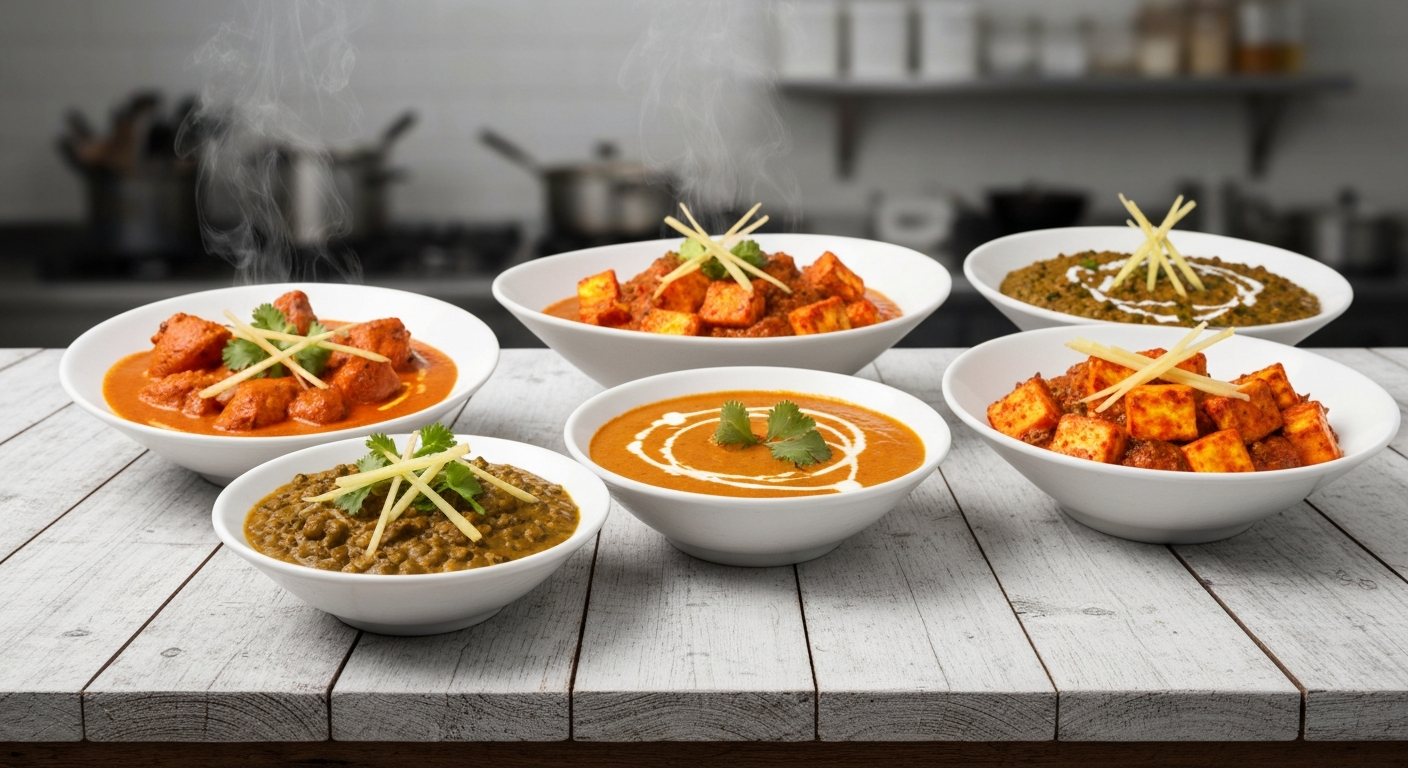
In an increasingly competitive culinary landscape, restaurant operators are constantly seeking strategies to reduce restaurant labor costs, Indian food establishments being no exception. The complexity and ingredient-intensive nature of authentic Indian cuisine often translate to significant demands on skilled kitchen staff, from extensive mise en place to precise spice blending and long simmering times for base gravies.
While the allure of scratch cooking is undeniable, the economic realities of running a successful restaurant often necessitate a re-evaluation of traditional kitchen workflows. This article explores the compelling return on investment (ROI) offered by incorporating high-quality, pre-made Indian sauces into professional kitchens, demonstrating how they can be a strategic asset for profitability and operational efficiency.
The True Cost of Scratch-Made Indian Cuisine
Before delving into solutions, it's crucial to understand the full spectrum of costs associated with preparing Indian dishes entirely from scratch. Beyond raw ingredient expenses, labor is often the single largest variable cost in a restaurant, and Indian cuisine, with its rich tapestry of flavors and textures, demands considerable human effort.
Extensive Ingredient Preparation (Mise en Place)
Consider the foundational elements of many Indian dishes: finely chopped onions, ginger-garlic paste, pureed tomatoes, and toasted spices. Preparing these components from scratch daily involves:
- Washing and peeling: Onions, garlic, ginger, tomatoes.
- Chopping and dicing: Requiring significant knife skills and time.
- Grinding and blending: Creating pastes and purees, often in batches.
- Spice Roasting and Grinding: Dry roasting whole spices to unlock their aroma, then grinding them fresh – a labor-intensive process that requires specific equipment and expertise.
Each step, while contributing to the final flavor profile, adds cumulative hours to the kitchen payroll.
The Art of Base Gravies
Many classic Indian dishes, from Butter Chicken to Dal Makhani, rely on complex, slow-cooked base gravies. These are not quick preparations:
- Long Simmering Times: Gravies like makhani or korma bases can simmer for hours, requiring intermittent stirring and monitoring.
- Multi-Stage Cooking: Often involving sautéing aromatics, adding spices, incorporating purees, and then slow-cooking to develop depth of flavor.
- Consistency Challenges: Achieving the exact color, texture, and flavor profile consistently across batches and shifts is a significant challenge, even for experienced chefs.
These processes demand dedicated staff time that could otherwise be allocated to plating, managing other stations, or developing new menu items.
Skill and Training Demands
Authentic Indian cooking requires specialized skills. Training new staff to master the nuances of spice balancing, tempering, and gravy preparation is a substantial investment in time and resources. High staff turnover can exacerbate this, leading to ongoing training costs and potential inconsistencies in dish quality.
How Pre-Made Indian Sauces Directly Reduce Restaurant Labor Costs Indian Food Operations
Integrating high-quality, pre-made Indian sauces and gravies directly addresses the labor challenges outlined above. Here's how:
Eliminating Extensive Mise en Place
With pre-made gravies, the time spent on peeling, chopping, grinding, and blending foundational ingredients is virtually eliminated. A chef can bypass hours of prep work, moving directly to the cooking stage. For example, instead of spending an hour preparing ginger-garlic paste and onion puree, a chef opens a container of a rich, pre-made Onion-Tomato gravy base.
Drastically Cutting Cooking Time and Skill Requirements
Pre-made sauces come with their base flavor profiles already developed. This means:
- Reduced Cooking Time: Dishes can be assembled and cooked much faster. A Chicken Tikka Masala, which might typically take an hour or more from scratch, can be prepared in minutes using a pre-made Tikka Masala gravy, simply by adding pre-cooked chicken.
- Lower Skill Barrier: While culinary skill is always valued, the reliance on highly specialized Indian cooking techniques is reduced. This allows more junior staff to execute complex dishes consistently, freeing up senior chefs for more strategic tasks.
- Batch Consistency: Every dish prepared with a pre-made sauce will have the same foundational flavor and texture, ensuring a consistent customer experience regardless of which chef is on duty.
Streamlining Inventory and Waste Management
- Fewer Raw Ingredients: Less need to stock large quantities of onions, tomatoes, ginger, garlic, and a vast array of individual whole spices. This simplifies ordering and reduces spoilage risk.
- Reduced Food Waste: Less raw produce sitting in storage means less potential for waste due to spoilage or improper preparation.
- Predictable Yields: Pre-made products offer predictable yields, making portion control and costing more accurate.
Beyond Labor Savings: Additional ROI Factors
While reducing restaurant labor costs for Indian food operations is a primary driver, the benefits of pre-made sauces extend to several other areas crucial for profitability and growth.
Enhanced Menu Consistency and Quality
In a competitive market, consistency is paramount. Customers expect the same high quality and flavor profile every time they order a specific dish. Pre-made sauces are manufactured to precise specifications, ensuring that every batch delivers identical taste, color, and texture. This eliminates the variability that can arise from different chefs, ingredient quality fluctuations, or time constraints in a busy kitchen.
Faster Speed of Service
In both dine-in and takeout/delivery models, speed is a significant advantage. With pre-made bases, kitchens can produce dishes much faster, leading to:
- Higher Table Turnover: More customers served per shift.
- Increased Takeout/Delivery Volume: Meeting demand efficiently, especially during peak hours.
- Improved Customer Satisfaction: Shorter wait times contribute to a better dining experience.
Expanded Menu Offerings with Minimal Effort
Pre-made sauces can serve as versatile bases, allowing chefs to easily introduce new dishes or variations without significant additional labor. A single Korma gravy base, for instance, can be quickly adapted for chicken, lamb, vegetable, or paneer korma. This agility allows restaurants to respond to customer trends and diversify their menu without overtaxing the kitchen staff or requiring extensive recipe development.
Reduced Training and Onboarding Time
Simplified cooking processes mean new kitchen staff can be trained and onboarded much faster. Instead of teaching complex gravy preparations, training can focus on assembly, finishing, and plating techniques. This reduces the time and resources spent on training, allowing new hires to become productive members of the team more quickly.
Addressing Concerns: Quality and Authenticity
A common concern among chefs is whether pre-made sauces can truly deliver authentic, high-quality Indian flavors. The answer lies in choosing the right supplier and product. Modern culinary technology, combined with traditional recipes and premium ingredients, allows for the creation of chef-grade pre-made sauces that rival scratch-made versions.
Look for suppliers who:
- Use authentic recipes: Developed by experienced Indian culinary experts.
- Source high-quality ingredients: Ensuring superior flavor and aroma.
- Employ advanced manufacturing processes: To preserve freshness, flavor, and nutritional integrity without compromising authenticity.
- Adhere to strict quality standards: Our products are manufactured under strict adherence to international standards, holding certifications such as FSSAI, US FDA, ISO, Halal, HACCP, and GMP. These certifications are a testament to our commitment to food safety and consistent quality.
These factors ensure that the pre-made sauces provide a robust, authentic foundation that chefs can confidently build upon, adding their personal touch through fresh garnishes, protein choices, and finishing spices.
Calculating the ROI: A Practical Example
To illustrate the ROI, consider a typical Indian restaurant that prepares its base gravies from scratch.
Scenario 1: Scratch Cooking
- Labor for gravy prep: 4 hours/day @ $20/hour = $80/day
- Ingredient waste (spoilage, over-prep): $15/day
- Inconsistent batches (leading to re-dos or customer dissatisfaction): Estimated $10/day
- Total Daily Cost: $105
- Annual Cost (300 operating days): $31,500
Scenario 2: Using Pre-Made Sauces
- Labor for gravy prep: 0.5 hours/day (for heating/minor adjustments) @ $20/hour = $10/day
- Cost of pre-made sauces: Let's assume this offsets raw ingredient cost and adds a premium for convenience, say $50/day (this is a simplified estimate for illustration)
- Ingredient waste: Minimal, say $2/day
- Consistency issues: Virtually eliminated
- Total Daily Cost: $62
- Annual Cost (300 operating days): $18,600
In this simplified example, the annual savings are over $12,000, not including the benefits of increased speed of service, potential for higher sales volume, and reduced training costs. This clearly demonstrates how pre-made Indian sauces can significantly reduce restaurant labor costs, Indian food operations becoming more profitable as a result.
Choosing the Right Partner for Your Kitchen
When considering a switch to pre-made Indian sauces, selecting the right supplier is paramount. Look for a partner who understands the professional kitchen environment and can meet your operational demands. Key considerations include:
- Quality and Authenticity: As discussed, ensure the products are chef-grade and true to regional Indian flavors.
- Certifications: Verify adherence to international food safety and quality standards (e.g., FSSAI, US FDA, ISO, Halal, HACCP, GMP).
- Minimum Order Quantity (MOQ): Understand their wholesale requirements. We cater to professional kitchens with a minimum order quantity of 50 kg, ensuring you can scale your orders efficiently.
- Shipping and Logistics: Reliable and timely delivery is critical. For products in stock at our US (Houston) or local-country warehouses, shipping typically occurs within 2 business days. If a product is not immediately available, the lead time is 35-60 days, and customers are notified promptly of any delays. We proudly serve clients across the USA, Canada, UK, UAE, Australia, Germany, Italy, India, France, Ireland, Switzerland, and Netherlands, with our network continuously expanding.
- Product Range: A diverse range of gravies, pastes, and sauces allows for greater menu flexibility.
Conclusion
The decision to incorporate pre-made Indian sauces into a professional kitchen is not about sacrificing quality, but rather about strategic efficiency and maximizing profitability. By significantly reducing labor costs, enhancing consistency, accelerating service, and streamlining operations, these products offer a clear and measurable return on investment for Indian restaurants.
For restaurant owners and chefs looking to reduce restaurant labor costs, Indian food kitchens stand to gain immensely from high-quality, pre-made solutions. They free up valuable kitchen time, allowing skilled culinary professionals to focus on innovation, plating, and the overall dining experience, rather than the repetitive, time-consuming foundational prep work. This shift empowers kitchens to operate more leanly, consistently, and profitably in today's demanding food service environment.
Discover how MITRA brand chef-grade Indian gravies and sauces can transform your kitchen's efficiency and profitability. Inquire today via ododgroup.com to request a quote or sample.