
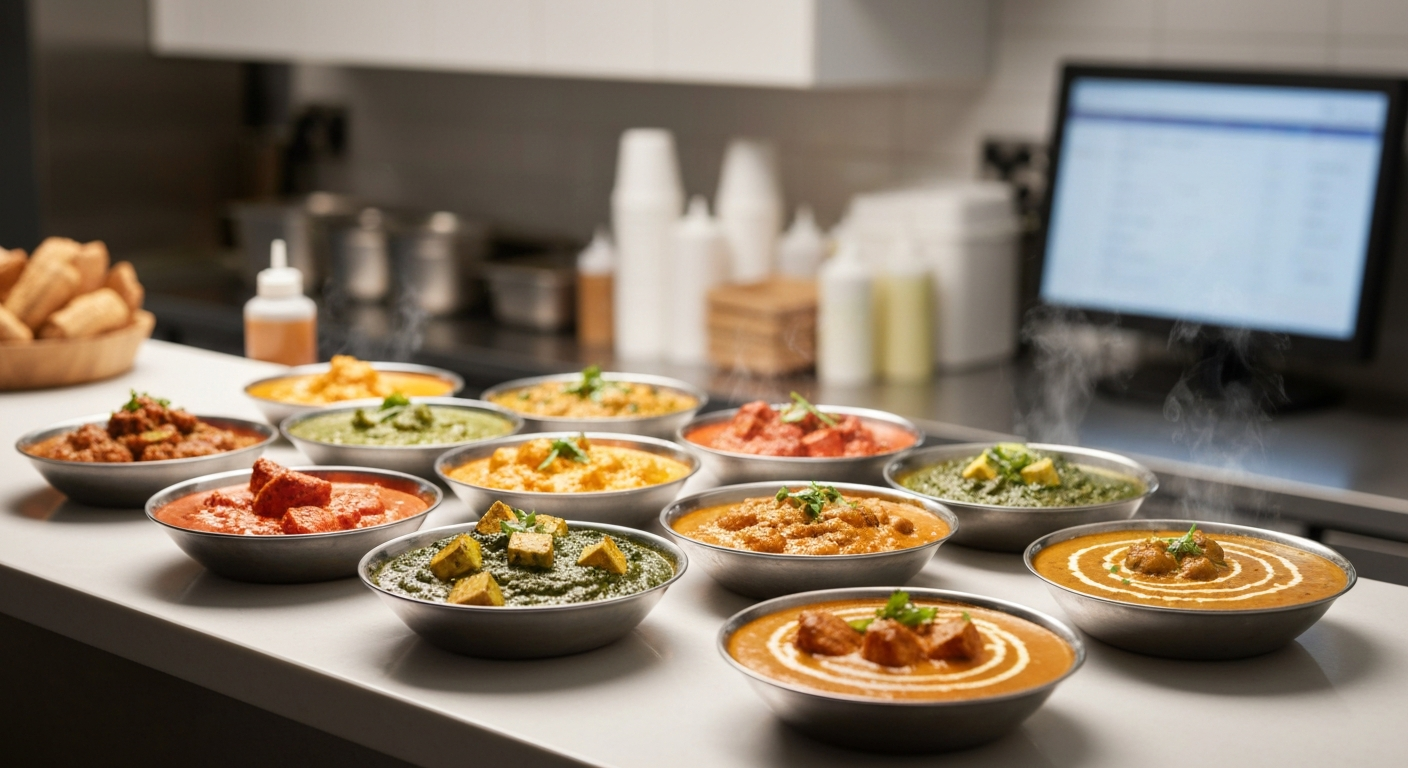
The landscape of food service has been dramatically reshaped by ghost kitchens, offering a lean, delivery-focused model. For these operations, peak hours are a make-or-break period. The ability to fulfill a high volume of orders quickly, without sacrificing quality, is paramount. When it comes to ghost kitchen Indian food throughput, the unique demands of Indian cuisine—its layered flavors, complex preparations, and often lengthy cooking times—present distinct challenges that require strategic solutions.
Maximizing throughput isn't just about speed; it's about intelligent workflow, optimized ingredient use, and a commitment to consistent excellence even under pressure. For ghost kitchens specializing in Indian food, success hinges on transforming traditional, time-intensive dishes into highly efficient, high-volume offerings without compromising authenticity or taste. This article explores practical strategies to achieve just that, ensuring your ghost kitchen can meet surging demand during peak hours.
The Unique Throughput Challenge for Indian Cuisine
Traditional Indian cooking is celebrated for its depth of flavor, which often comes from slow-cooked gravies, freshly ground spices, and multi-stage preparations. While this artisanal approach yields incredible results in a conventional restaurant setting, it can become a bottleneck in a high-volume ghost kitchen aiming for rapid dispatch. Consider the typical Indian kitchen workflow:
- Extensive Prep Work: Chopping onions, garlic, ginger; grinding fresh spices; blanching tomatoes – these initial steps are labor-intensive.
- Multi-Stage Cooking: Many dishes involve sautéing aromatics, adding purees, simmering gravies, and then finishing with specific tempering or garnishes. Each stage adds time.
- Skilled Labor Dependency: Crafting authentic Indian dishes often requires experienced chefs who understand the nuances of spice ratios and cooking times, which can be a limiting factor during peak demand.
- Cross-Contamination Risk: Managing numerous ingredients and preparations simultaneously in a compact ghost kitchen environment requires meticulous organization to prevent flavor transfer or allergen issues.
These factors can severely limit ghost kitchen Indian food throughput, making it difficult to scale operations during busy periods. The solution lies in a blend of strategic menu design, process optimization, and leveraging high-quality, pre-prepared ingredients.
Strategic Menu Design for Peak Efficiency
Your menu is the first line of defense against peak-hour bottlenecks. A well-designed menu for a ghost kitchen focuses on dishes that are inherently efficient to prepare and assemble. This doesn't mean simplifying to the point of sacrificing authenticity, but rather smart selection and componentization.
- Component-Based Dishes: Break down complex dishes into their core components. Can a single base gravy serve as the foundation for multiple curries? Can a specific marinade be used for both tandoori chicken and paneer tikka?
- Batch-Cookable Elements: Prioritize dishes where major components can be cooked in large batches during off-peak hours. Think about slow-cooked dal, rice, or foundational gravies that only need final assembly and protein integration during service.
- Limited Customization: While some flexibility is good, excessive customization requests can severely slow down throughput. Offer curated options rather than a build-your-own model for every dish.
- Strategic Use of Sides: Offer sides that are quick to plate, such as pre-portioned rice or pre-made naan that only needs reheating. Avoid complex, made-to-order side dishes during peak times.
By designing a menu with efficiency in mind, you inherently increase your capacity for ghost kitchen Indian food throughput.
Leveraging High-Quality Pre-Made Bases for Unmatched Throughput
This is where a significant leap in ghost kitchen Indian food throughput can be achieved. High-quality, chef-grade pre-made gravies, pastes, and sauces are a game-changer for Indian ghost kitchens. Products like those from the MITRA brand offer a consistent, authentic foundation that eliminates the most time-consuming steps of Indian cooking.
Imagine the impact of having a perfectly balanced Butter Chicken gravy or a robust Biryani base ready to use. This immediately:
- Reduces Prep Time Dramatically: No more hours spent chopping, grinding, and slow-cooking gravies from scratch. Chefs can focus on protein preparation and final assembly.
- Ensures Consistency: Every dish tastes the same, every time. This is crucial for customer satisfaction and brand reputation, especially in a delivery-focused model where quality control can be challenging.
- Lowers Labor Costs: Less skilled labor is required for foundational cooking, freeing up experienced chefs for more intricate tasks or allowing for a smaller, more efficient kitchen crew.
- Minimizes Waste: Pre-portioned or easily measurable bases reduce ingredient waste, contributing to better cost control.
- Expands Menu Potential: With core gravies ready, kitchens can offer a wider variety of dishes without increasing prep complexity.
MITRA offers a comprehensive range of chef-grade Indian gravies, pastes, sauces, rice, and spices, designed specifically for professional kitchens. Our products are manufactured to stringent quality standards, holding certifications such as FSSAI, US FDA, ISO, Halal, HACCP, and GMP, ensuring both safety and authentic flavor. This allows ghost kitchens to achieve remarkable ghost kitchen Indian food throughput without compromising on the rich, complex flavors that define Indian cuisine.
Optimizing Kitchen Layout and Workflow
Even with the best ingredients, an inefficient kitchen layout can cripple throughput. Ghost kitchens should adopt principles of lean manufacturing to create a seamless workflow.
- Dedicated Stations: Set up specialized stations for different tasks: prep, protein cooking (tandoor, stovetop), gravy finishing, plating, and packaging. This minimizes movement and cross-traffic.
- Logical Flow: Arrange stations in a linear or U-shaped flow that mirrors the cooking process. Ingredients should move from storage to prep, to cook, to plate, and finally to dispatch with minimal backtracking.
- Ergonomics: Ensure all tools, ingredients, and equipment are within easy reach at each station. Reduce bending, reaching, and unnecessary steps.
- Clear Labeling and Storage: Implement clear labeling for all ingredients and finished components. Utilize vertical space for storage to keep workstations clear.
An optimized layout directly translates into faster order fulfillment and improved ghost kitchen Indian food throughput.
Staff Training and Skill Specialization
Your team is central to achieving high throughput. Invest in comprehensive training and consider skill specialization.
- Standard Operating Procedures (SOPs): Develop detailed SOPs for every dish, from assembly to plating. This ensures consistency and allows new staff to quickly get up to speed.
- Cross-Training: While specialization is good, cross-training staff on multiple stations or tasks provides flexibility during peak hours or staff shortages.
- Focus on Speed and Accuracy: Train staff not just on how to cook, but how to cook efficiently and accurately under pressure. Practice peak-hour simulations.
- Communication Protocols: Implement clear communication systems (e.g., KDS, verbal cues) to ensure seamless handoffs between stations.
Empowering your team with the right skills and processes is crucial for maximizing ghost kitchen Indian food throughput.
Technology Integration for Seamless Operations
Technology can significantly enhance efficiency in a ghost kitchen environment.
- Kitchen Display Systems (KDS): A KDS replaces paper tickets, providing real-time order information, tracking cooking times, and streamlining communication between front-of-house (virtual) and back-of-house.
- Point-of-Sale (POS) Systems: Integrate your POS with your KDS and delivery platforms to centralize orders and reduce manual entry errors.
- Inventory Management Software: Track ingredient usage, monitor stock levels, and automate reordering to prevent stockouts and minimize waste. This is especially important for managing bulk gravies and spices.
- Delivery Platform Integration: Seamless integration with multiple delivery platforms ensures orders flow directly into your system without manual intervention, reducing errors and saving time.
By embracing technology, ghost kitchens can create a data-driven, highly efficient operation that supports exceptional ghost kitchen Indian food throughput.
Supply Chain and Inventory Management
Consistent throughput relies on a robust supply chain. Running out of a key ingredient can halt your entire operation.
- Reliable Suppliers: Partner with suppliers who can consistently deliver high-quality ingredients, including specialized items like chef-grade Indian gravies and spices.
- Just-In-Time (JIT) Inventory: While not always feasible for every item, apply JIT principles where possible to minimize storage space and reduce spoilage. For shelf-stable items like MITRA gravies, strategic bulk ordering can be highly efficient.
- Safety Stock: Maintain a reasonable safety stock of critical ingredients to buffer against unexpected demand spikes or supply chain disruptions.
- Order Lead Times: Understand and account for supplier lead times. For example, ODOD LLC offers efficient shipping: products in stock at our US (Houston) or local-country warehouses ship in just 2 days. For items not immediately available, the lead time is 35-60 days, and customers are notified immediately of any delay. Plan your orders accordingly, keeping our 50 kg minimum order quantity (MOQ) in mind, which is designed to support the operational scale of professional kitchens.
Effective supply chain management ensures that your kitchen always has what it needs to maintain high ghost kitchen Indian food throughput.
Quality Control at Scale
Increasing throughput should never come at the expense of quality. Maintaining consistent quality is paramount for customer retention and brand loyalty.
- Standardized Recipes: Even when using pre-made bases, standardize the final assembly process, portion sizes, and garnishes. This ensures every dish meets your quality benchmarks.
- Regular Taste Tests: Conduct regular blind taste tests of dishes, especially during peak hours, to ensure flavor profiles remain consistent.
- Feedback Loops: Establish mechanisms for collecting customer feedback and promptly addressing any quality concerns. Use this feedback to refine your processes.
- Supplier Quality: Rely on suppliers like ODOD LLC, whose MITRA products are produced under stringent quality controls and hold certifications like FSSAI, US FDA, ISO, Halal, HACCP, and GMP. This ensures the foundational quality of your ingredients.
By integrating these quality control measures, ghost kitchens can confidently scale their ghost kitchen Indian food throughput without compromising the authentic taste and experience customers expect.
Conclusion
Maximizing ghost kitchen Indian food throughput during peak hours is a multi-faceted challenge that requires a holistic approach. By strategically designing your menu, leveraging high-quality pre-made gravies and pastes, optimizing your kitchen layout, empowering your staff, integrating technology, and managing your supply chain effectively, your ghost kitchen can transform into a high-efficiency operation capable of handling intense demand. The MITRA brand, supplied by ODOD LLC, stands ready to be a crucial partner in this endeavor, providing the chef-grade foundations you need to deliver authentic Indian cuisine with unparalleled speed and consistency. Equip your kitchen with the tools and strategies to not just survive, but thrive, during your busiest moments.
Ready to elevate your ghost kitchen's efficiency and output? Inquire about our range of chef-grade Indian gravies, pastes, sauces, rice, and spices at ododgroup.com today. Discover how MITRA can revolutionize your peak-hour performance.